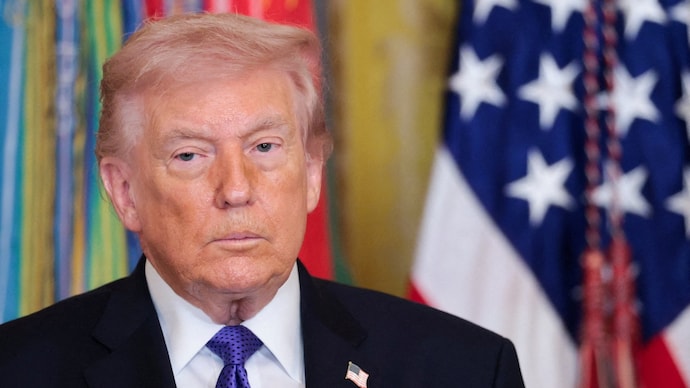
U.S. President Donald Trump has declared that Iran’s navy and air force have been effectively destroyed following several days of intense military operations carried out by the United States and its ally Israel. The statement comes amid escalating conflict between the U.S., Israel, and Iran that has rapidly expanded across the Middle East.
Speaking to reporters at the White House, Trump claimed the military campaign had successfully eliminated much of Iran’s ability to conduct naval and aerial operations. According to the president, a coordinated series of strikes targeted Iranian warships, airbases, radar systems, and command facilities.
“They have no navy — it’s been knocked out. They have no air force — it’s been knocked out,” Trump said while describing the impact of the strikes.
The remarks signal the administration’s view that the operation has significantly weakened Iran’s conventional military capabilities, particularly in the air and at sea.
Large-Scale Military Campaign
The attacks reportedly involved multiple waves of airstrikes and naval operations targeting critical components of Iran’s military infrastructure. Defense officials say the strikes focused on disabling key assets such as aircraft, naval vessels, and air defense systems.
Military analysts believe the campaign targeted facilities belonging to Iran’s regular armed forces as well as units connected to the Islamic Revolutionary Guard Corps, a powerful branch of Iran’s military that oversees many of the country’s strategic weapons programs.
By striking these targets, U.S. and Israeli forces aimed to reduce Iran’s ability to launch large-scale military operations or project power across the Persian Gulf and nearby shipping lanes.
Iran Still Retaliating
Despite Trump’s claims that Iran’s naval and air capabilities have been destroyed, the conflict remains far from over. Iranian forces have continued to launch missile and drone attacks against U.S. bases and allied targets in the region.
Security experts note that even if large portions of Iran’s conventional forces have been damaged, the country still maintains missile units, ground forces, and allied militias throughout the Middle East. These groups could continue to play a role in the ongoing conflict.
The fighting has also raised concerns about the safety of international shipping routes and the stability of global energy markets, particularly around the strategically important Strait of Hormuz.
Global Concerns Over Escalation
International leaders and analysts are closely monitoring the situation as the war threatens to spread beyond Iran’s borders. Rising tensions have already contributed to volatility in global oil markets and increased fears of broader regional instability.
While the Trump administration has described the strikes as a major success, officials have not yet outlined a clear long-term strategy for ending the conflict or stabilizing the region once the current military operations conclude.
For now, Trump maintains that the United States and its allies have delivered a decisive blow to Iran’s military capabilities. However, with hostilities continuing and retaliatory attacks still underway, the situation remains highly volatile and unpredictable.
Watch video below :