The United States has launched strikes against Iran’s space-related military infrastructure during the early phase of Operation Epic Fury, a large-scale campaign aimed at weakening Iran’s ability to conduct missile and drone warfare.
According to U.S. military officials, several of the initial strikes targeted facilities linked to Iran’s military space and communications capabilities. The goal was to disrupt the systems Iran uses to track targets, coordinate attacks, and transmit battlefield data.
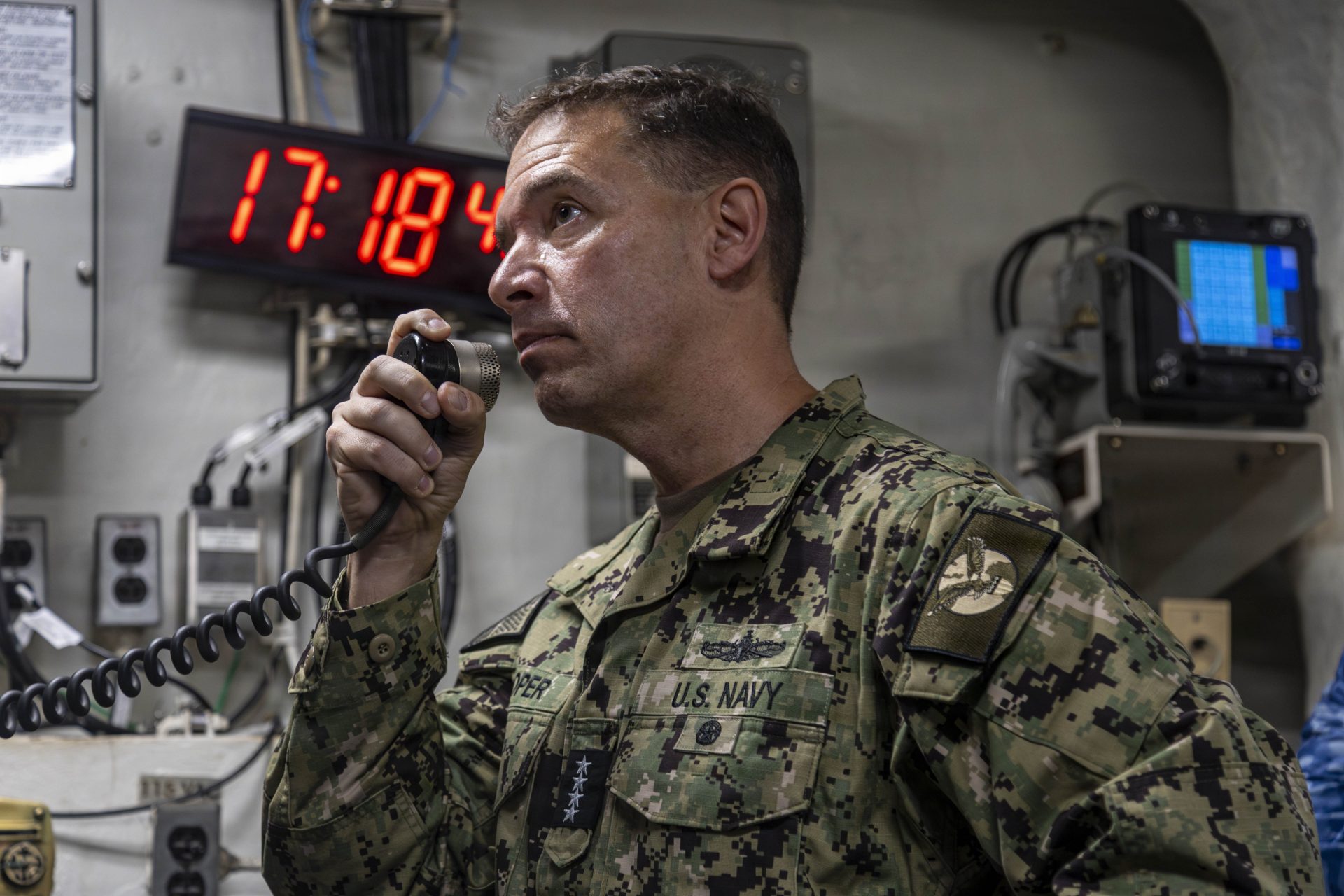
Admiral Brad Cooper, commander of United States Central Command (CENTCOM), said the operation has already struck key facilities responsible for managing Iran’s space-related military operations. These systems are believed to play an important role in supporting missile launches, surveillance, and drone coordination.
“Notably, we’ve also struck Iran’s equivalent of Space Command, which degrades their ability to threaten Americans,” Cooper said during a briefing with defense officials.
Space Systems Key to Modern Warfare
Military analysts say space infrastructure has become a crucial part of modern warfare. Satellites and space-based communication systems allow countries to monitor missile launches, guide drones, track targets, and coordinate military units in real time.
By targeting Iran’s space command facilities early in the campaign, U.S. forces aim to disrupt the country’s command-and-control networks and reduce its ability to organize coordinated attacks.
In addition to destroying physical facilities on the ground, U.S. forces are reportedly using cyber operations and electronic warfare to interfere with Iranian communications and data networks linked to space systems.
These capabilities help American forces maintain what military officials describe as an “information advantage” over Iranian forces during the conflict.
Massive Strike Campaign Across Iran
Operation Epic Fury began on February 28, when U.S. forces and allies launched a large-scale bombing campaign against Iranian military targets.
During the first days of the operation, American bombers struck hundreds of targets across Iran, including missile launch sites, command centers, air defense systems, naval vessels, and drone facilities.
Within just 72 hours, U.S. aircraft reportedly attacked nearly 200 targets deep inside Iran, while additional strikes targeted underground missile launchers using heavy bunker-penetrating bombs.
Pentagon officials say the overall objective of the campaign is to eliminate Iran’s ability to threaten U.S. forces and allies in the region.
Impact on Iran’s Military Operations
U.S. commanders claim the strikes have already significantly reduced Iran’s ability to launch attacks.
According to CENTCOM officials, ballistic missile attacks from Iran have dropped by about 90% since the beginning of the operation, while drone attacks have decreased by more than 80%.
Despite those claims, the conflict remains ongoing, with Iran continuing to launch missiles and drones against regional targets and U.S. bases in the Middle East.
War Expanding Beyond Traditional Battlefields
The targeting of space infrastructure highlights how modern conflicts increasingly extend beyond traditional land, sea, and air battlefields.
Today’s wars often involve cyber warfare, satellite systems, electronic jamming, and advanced surveillance technologies, all working together to shape the battlefield.
As Operation Epic Fury continues, analysts say the role of space-based systems will remain central to determining which side gains the strategic advantage in the evolving conflict.
Watch video below :