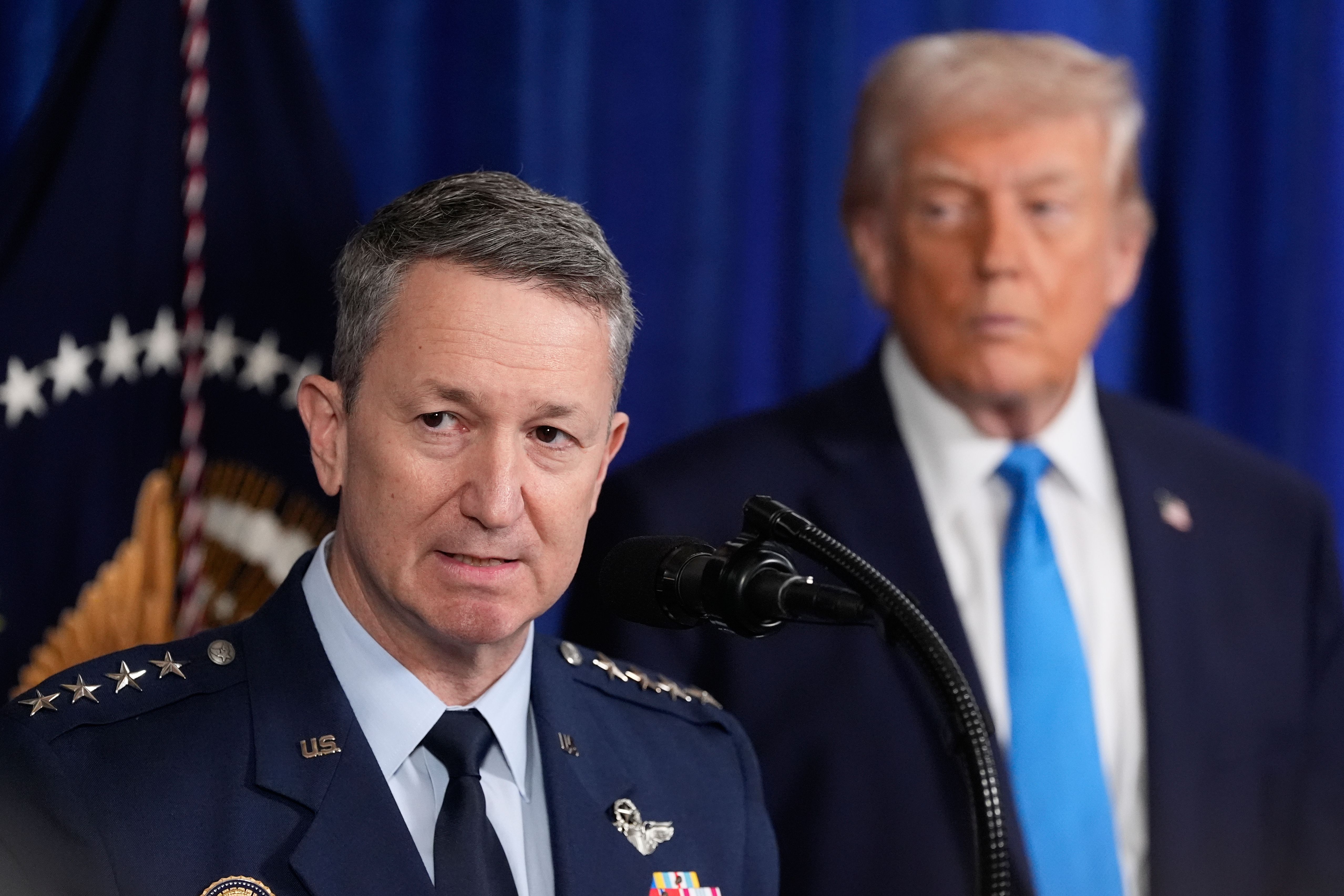
President Donald Trump has firmly rejected media reports alleging that a top U.S. military official warned against launching a potential attack on Iran, dismissing the claims as inaccurate and politically motivated.
The controversy emerged after reports suggested that the Chairman of the Joint Chiefs of Staff had expressed concerns about the risks of escalating military conflict with Iran. According to those accounts, the senior general reportedly outlined possible consequences of a strike, including regional instability, retaliation against U.S. forces, and the potential for a prolonged confrontation.
Trump responded publicly, stating that the reports mischaracterized internal discussions. He emphasized that military leaders routinely provide assessments of risks and strategic outcomes as part of their advisory role, but denied that there was any formal opposition from the Pentagon’s top officer. Trump also reiterated that decisions regarding military action ultimately rest with civilian leadership.
The debate comes at a time of heightened geopolitical tension between Washington and Tehran. Disputes over nuclear development, regional influence, and security incidents in the Middle East have kept relations strained. U.S. officials have maintained that all options remain on the table while diplomatic efforts continue.
Defense experts note that it is standard practice for military advisers to present a range of possible outcomes — including worst-case scenarios — when evaluating strike options. Such assessments are intended to inform policymakers, not necessarily to signal disagreement. Analysts caution that internal deliberations can appear contentious when selectively reported.
Financial markets and international observers are closely monitoring developments. Historically, even the prospect of U.S.-Iran military escalation has affected global oil prices and investor sentiment. However, officials have stressed that diplomatic channels remain open, and no immediate military action has been announced.
The situation underscores the broader tension between military preparedness and diplomatic strategy. Trump has repeatedly stated that while he prefers negotiated solutions, the United States must maintain a credible deterrent posture. Iranian officials, for their part, have warned that any attack would provoke a strong response.
Political analysts suggest that disputes over national security decision-making often intensify during election cycles, when foreign policy becomes a focal point of debate. Public disagreements — or perceived disagreements — between civilian leaders and military advisers can quickly become headline issues.
For now, the president maintains that the narrative of a top general opposing potential action against Iran is misleading. As discussions over U.S. policy toward Iran continue, attention will remain fixed on whether diplomatic engagement or military signaling shapes the next phase of relations.
The episode highlights the complexity of national security decision-making, where strategic assessments, political considerations, and international consequences intersect — often under intense public scrutiny.
Watch video below :