
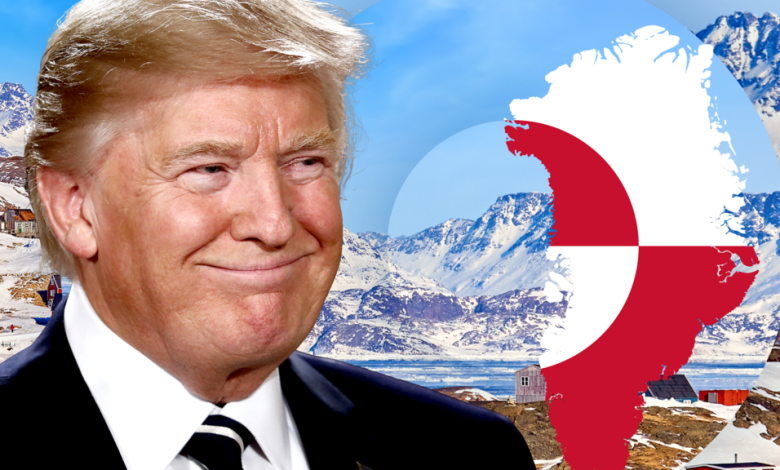
Greenland has suddenly become one of the most strategically sensitive territories in the world, as high-stakes diplomatic talks unfold over its future. What was once viewed primarily as a remote Arctic island is now at the heart of an escalating geopolitical contest involving the United States, Denmark, and Europe — with global implications.
At the center of the controversy is Greenland’s growing strategic value. Located between North America and Europe, the island occupies a crucial position in the Arctic, a region increasingly shaped by climate change, emerging shipping routes, and competition for natural resources. As Arctic ice melts, access to rare earth minerals, energy reserves, and military corridors has intensified interest from major powers.
The United States has made no secret of its concerns. American officials argue that Greenland is vital to national and NATO security, particularly as Russia and China expand their presence in the Arctic. Washington already maintains military infrastructure on the island, but recent rhetoric suggests the U.S. wants a stronger, more formal role in Greenland’s future — a stance that has alarmed European allies.
Denmark, which governs Greenland as an autonomous territory within the Kingdom of Denmark, has firmly rejected any suggestion of transferring control. Danish leaders have repeatedly emphasized that Greenland is “not for sale” and that its future must be decided by the Greenlandic people themselves. Greenland’s own government has echoed this position, stressing self-determination and partnership — not domination.
Recent high-level meetings in Washington have highlighted the depth of the disagreement. While all sides acknowledge shared security concerns in the Arctic, talks exposed a fundamental divide over sovereignty. European officials worry that any attempt to pressure Denmark or Greenland could undermine international law, destabilize NATO unity, and set a dangerous precedent for territorial influence in strategic regions.
France and other European Union members have voiced strong support for Denmark, warning that challenges to an ally’s sovereignty could trigger far-reaching consequences. The situation has also prompted discussions within NATO about balancing collective security with respect for national borders and political autonomy.
Beyond diplomacy, the Greenland issue reflects a broader shift in global power dynamics. The Arctic is no longer a peripheral region; it is becoming a frontline of 21st-century geopolitics. Control over Arctic infrastructure, surveillance, and resources could shape future economic and military power — making Greenland a symbol of much larger global rivalries.
For now, all parties have agreed to continue dialogue and explore cooperative security solutions. Yet the tension remains unresolved. As climate change accelerates Arctic access and competition intensifies, Greenland’s role on the world stage is likely to grow — whether it wants that attention or not.
What happens next will not only determine Greenland’s future, but also test the strength of Western alliances and the rules governing strategic territory in a rapidly changing world.
Watch video below :