

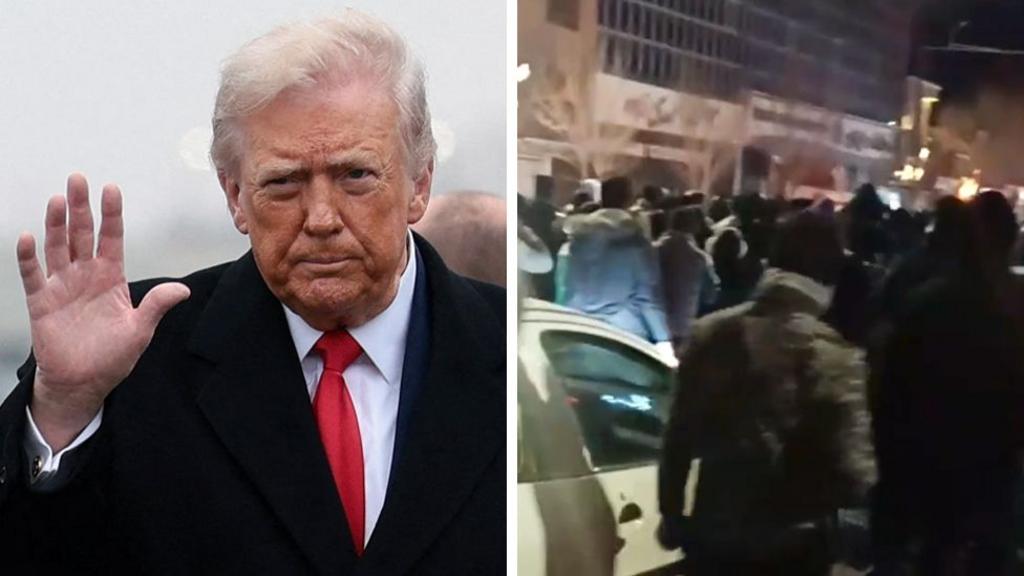
U.S. President Donald Trump has signaled a possible shift in Washington’s approach toward Iran, suggesting that military action may not be necessary — at least for now. The remarks come amid heightened tensions in the Middle East, widespread unrest inside Iran, and growing concerns among U.S. allies about the risks of escalation.
Speaking to reporters, Trump said recent intelligence indicated that violence inside Iran may be subsiding, hinting that diplomatic pressure and internal developments could reduce the need for direct military intervention. While stopping short of ruling out force entirely, his comments marked a noticeably softer tone compared to earlier warnings that had raised fears of imminent conflict.
The situation in Iran has remained volatile following large-scale protests and a harsh government crackdown. International observers have closely monitored reports of arrests, executions, and civilian casualties, prompting renewed debate in Washington over how far the United States should go in responding. Trump’s suggestion that military action might be avoidable reflects concerns that intervention could worsen instability rather than resolve it.
U.S. officials and analysts have long warned that a military strike on Iran would carry serious consequences. Iran possesses significant missile capabilities and a network of regional allies, raising the possibility of retaliation against U.S. forces and partners across the Middle East. Any escalation could disrupt global energy markets, threaten shipping lanes, and draw neighboring countries into a broader conflict.
Trump’s remarks also appear to acknowledge political realities at home. Public opinion in the United States has grown increasingly skeptical of foreign military interventions after decades of conflict in the region. Many voters favor diplomatic solutions, sanctions, and international pressure over another prolonged military engagement. By emphasizing restraint, Trump aligns with a broader desire to avoid a costly and unpredictable war.
Despite the calmer rhetoric, uncertainty remains. The U.S. has reportedly taken precautionary measures in the region, including advising some personnel at key military bases to relocate temporarily. These steps underscore the fragile nature of the situation and the risk that miscalculation could still trigger confrontation.
International reactions have been cautious. Regional allies have urged de-escalation, while European leaders continue to stress diplomacy and respect for international law. Iran, for its part, has sent mixed signals — condemning U.S. pressure while leaving the door open to negotiations under certain conditions.
The broader significance of Trump’s comments extends beyond Iran. They highlight a shifting balance between military power and diplomatic influence in U.S. foreign policy. As global conflicts become more complex and interconnected, leaders face mounting pressure to avoid actions that could spiral out of control.
For now, Trump’s message suggests a wait-and-see approach. Whether this signals a genuine opening for diplomacy or simply a pause before tougher measures remains unclear. What is certain is that the decision on Iran will have far-reaching implications for Middle East stability, U.S. credibility, and global security in the months ahead.
Watch video below :


