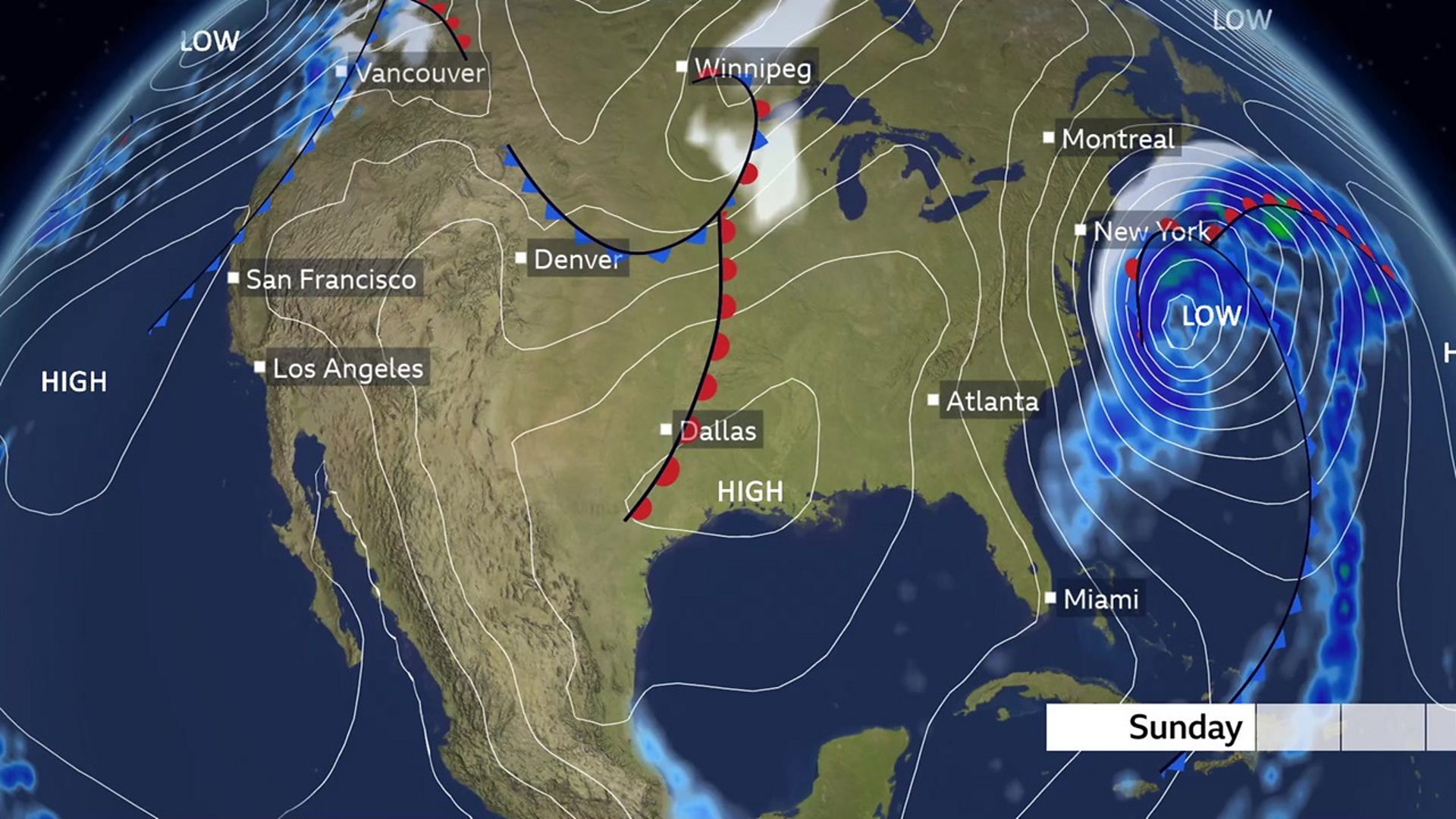
Meteorologists are closely monitoring a rapidly developing storm system that could intensify into a bomb cyclone and impact large portions of the U.S. East Coast, bringing severe winter weather and dangerous conditions in the coming days.
A bomb cyclone occurs when a storm strengthens at an exceptionally fast rate, marked by a sharp drop in atmospheric pressure within a 24-hour period. When this type of system forms over the Atlantic Ocean near the East Coast, it can evolve into a powerful nor’easter capable of producing heavy snow, damaging winds, and coastal flooding.
Forecast models indicate that the storm may rapidly intensify as it moves offshore before tracking northeastward. If the system strengthens as expected, communities from the Carolinas to New England could experience significant impacts. Coastal and inland areas alike are being urged to prepare for rapidly changing weather conditions.
One of the primary concerns is snowfall. Heavy snow bands could develop across parts of the Mid-Atlantic and Northeast, with some areas receiving substantial accumulations in a short period of time. Strong winds may reduce visibility to near zero, creating blizzard-like conditions in the hardest-hit regions. Even locations that receive less snow could still face hazardous travel due to icy roads and reduced visibility.
In addition to snow, powerful wind gusts are expected. These winds could reach near hurricane strength along exposed coastal areas, increasing the risk of downed trees and power lines. Widespread power outages are possible, especially where heavy snow weighs down branches and infrastructure. Wind chills could also plunge well below freezing, raising the risk of frostbite and hypothermia for anyone spending extended time outdoors.
Coastal flooding and beach erosion are also major threats. Strong onshore winds combined with high waves and elevated tides could push seawater into low-lying coastal communities. Even areas that avoid the worst snowfall may experience flooding, rough surf, and dangerous marine conditions.
Travel disruptions are likely as the storm develops. Airlines may cancel or delay flights, highways could become impassable, and rail services may be affected. Officials are advising residents to avoid unnecessary travel during the peak of the storm and to closely follow updates from local authorities.
While confidence is growing that a significant storm will impact the East Coast, forecasters caution that small shifts in the storm’s track could dramatically change where the most severe conditions occur. Residents are encouraged to stay informed through official weather alerts and emergency management channels.
As preparations continue, the potential bomb cyclone serves as a reminder of how quickly winter storms can escalate. Taking early precautions could make a critical difference in safety as the East Coast braces for what may become one of the season’s most powerful storms.
Watch video below :