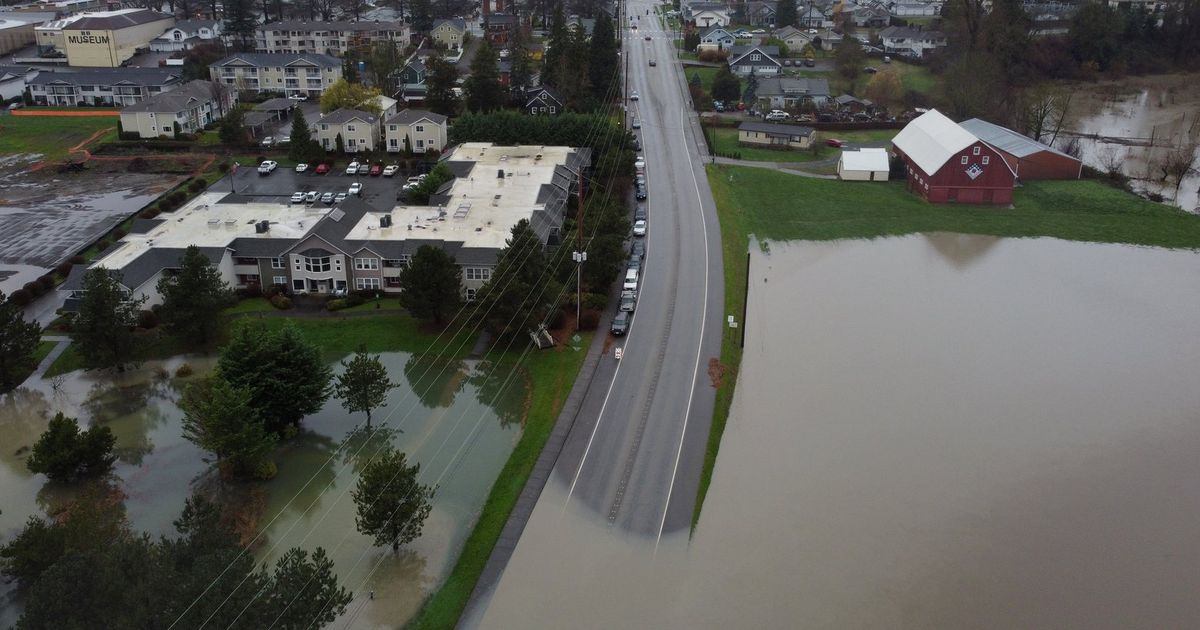
A normally calm river in Washington state erupted into a violent surge of water overnight, triggering massive flooding that left communities scrambling for safety. The sudden rise in water levels followed hours of intense rainfall, overwhelming drainage systems and pushing the river far beyond its banks. What began as a steady downpour quickly escalated into one of the most disruptive flooding events the region has faced in recent years.
By early morning, emergency crews were already responding to widespread reports of property damage, flooded roads, and stranded vehicles. Local authorities issued urgent warnings advising residents to avoid travel, stay indoors, and move to higher ground if necessary. In some neighborhoods, water levels rose so rapidly that homeowners had only minutes to secure belongings before floodwaters breached doorways and poured into living spaces.
Officials from Washington’s Department of Natural Resources said the river’s rapid overflow was caused by a rare combination of saturated soil, continuous heavy rain, and faster-than-normal runoff from nearby hillsides. With nowhere else to go, the water surged downstream with tremendous force, uprooting trees, sweeping away debris, and creating dangerous currents that made rescue operations extremely challenging.
Road closures were reported across multiple counties as rushing water carved into asphalt, washed out bridges, and turned rural backroads into impassable channels. Commuters faced significant delays, and public transportation services were forced to reroute or temporarily shut down entirely. Emergency teams stressed that even shallow-looking floodwaters can be deadly, urging residents not to underestimate the strength of the current.
Local residents described the scene as both shocking and overwhelming. Many said they had never witnessed the river rise so quickly or so aggressively. Videos shared online show powerful waves crashing against riverbanks, parking lots submerged under muddy water, and backyards transformed into swirling pools. The images quickly went viral, drawing attention to the severity of the situation.
Environmental experts warn that intense rainstorms like this may become more frequent as climate patterns shift. The Pacific Northwest, known for its wet weather, has seen an increase in extreme rainfall events over the past decade. These storms often result in flash floods, erosion, and infrastructure strain—issues that local governments are now being forced to address with greater urgency.
For now, cleanup efforts remain difficult as rainfall continues to fall intermittently. Crews are working to clear debris, reinforce weakened areas, and monitor shifting water levels through the day. Authorities stated that full damage assessments will take several days once floodwaters recede.
Residents are encouraged to follow official updates, prepare emergency supplies, and remain cautious as conditions evolve. With more rain forecast in the coming week, Washington communities are bracing for additional challenges—hoping the worst is already behind them but preparing for the possibility that the flooding could worsen before it improves.
Watch video below :