

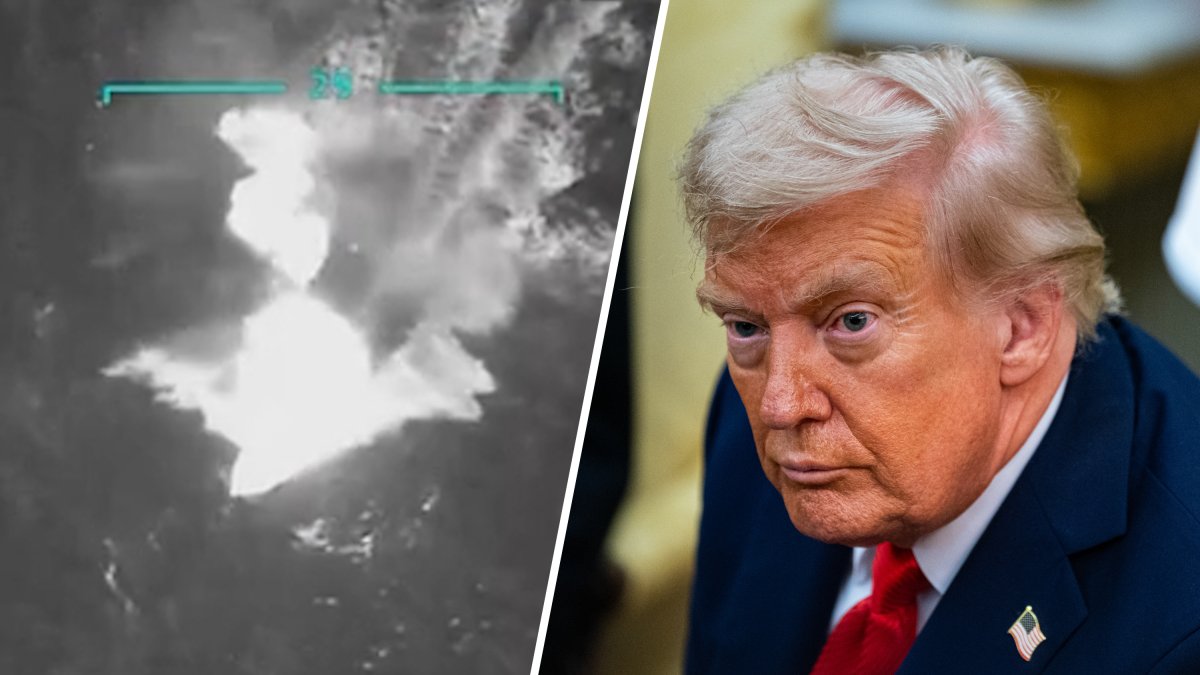
The Trump administration has launched another series of military strikes targeting alleged drug smuggling vessels in the Eastern Pacific, marking a sharp escalation in its controversial anti-narcotics campaign. According to officials, four boats were hit in coordinated operations, leaving 14 people dead and one survivor rescued from the wreckage.
The Department of Defense confirmed that the strikes were part of an ongoing effort to dismantle what the administration describes as “narco-terrorist” networks operating off the coasts of Mexico and Central America. Pentagon officials said the boats were believed to be carrying large quantities of illegal drugs bound for the United States.
“The United States will continue to hunt down and destroy drug traffickers wherever they hide,” said Defense Secretary Pete Hegseth, emphasizing that the operations were conducted in accordance with international law.
Footage released by U.S. Central Command showed aerial drones and naval forces tracking and striking fast-moving vessels before they caught fire and sank. The video, which quickly spread online, has fueled debate over whether the administration’s actions constitute a legitimate counter-narcotics operation or an unauthorized use of military force.
Critics — including several members of Congress and international law experts — have accused the Trump administration of bypassing legal oversight and engaging in extrajudicial killings. Human rights groups have also warned that some of the targeted boats may have carried civilians or fishermen misidentified as traffickers.
“This operation raises serious questions about the use of lethal force in international waters,” said Senator Chris Murphy (D-CT). “Congress has not authorized open-ended military action against suspected drug smugglers.”
Governments across Latin America have expressed concern about the expanding U.S. strikes in their regional waters. Officials from Ecuador, Panama, and Colombia have called for greater transparency and consultation, arguing that unilateral U.S. operations risk violating sovereignty and increasing tensions.
Despite the backlash, the White House has defended the campaign as a necessary measure to protect American lives and disrupt transnational cartels. President Donald Trump recently reiterated his hardline stance, vowing to “eradicate drug traffickers from the seas” and labeling them as “enemies of the United States.”
So far, U.S. forces have reportedly carried out over a dozen strikes since September, resulting in more than 40 confirmed deaths. Legal experts predict that the issue could soon reach U.S. courts as questions grow over executive authority and compliance with international law.
While administration officials insist the strikes are saving lives by cutting off drug supply chains, critics counter that the campaign could set a dangerous precedent — one where the line between law enforcement and warfare becomes increasingly blurred.
As the operations continue, the world is watching how far the Trump administration will go in its pursuit of cartels — and whether the cost of its aggressive strategy will outweigh its potential gains.
Watch video below :


