

In a dramatic escalation of tensions in the Middle East, Donald Trump declared that the United States will “easily prevail” despite mounting retaliation from Iran. His remarks come amid an intensifying military confrontation that has triggered global concern over regional stability and the risk of a broader war.
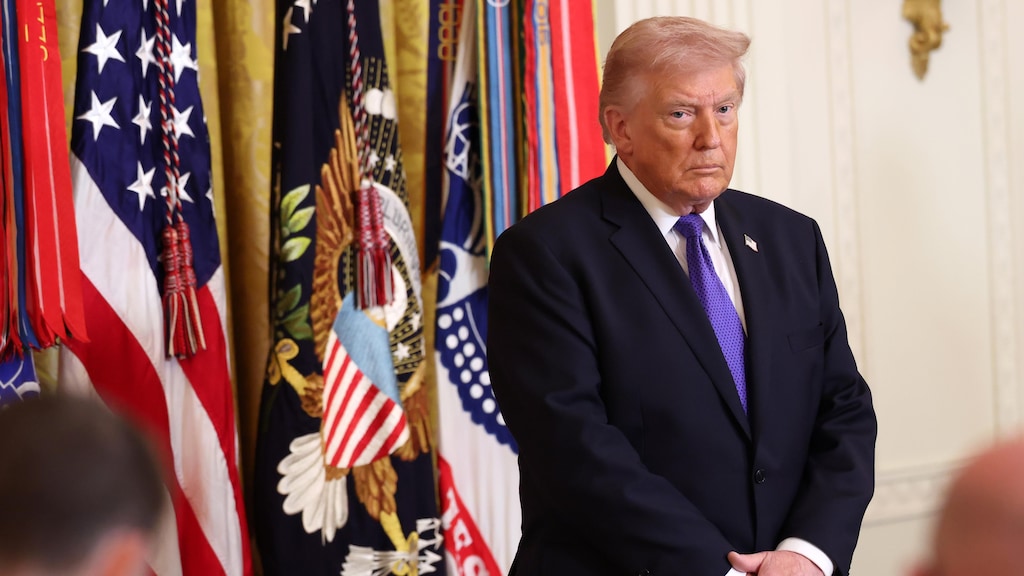
Speaking at a public address honoring fallen American service members, Trump emphasized that U.S. military operations are progressing “ahead of schedule.” He reiterated that the mission’s objective is to dismantle Iran’s nuclear ambitions, weaken its missile infrastructure, and reduce its capacity to support armed proxy groups across the region. According to administration officials, multiple strategic targets have already been struck, including key military installations and command centers.
The conflict escalated rapidly after large-scale U.S. airstrikes targeted critical Iranian defense sites. In response, Tehran launched waves of missile and drone attacks against U.S. positions and allied assets in the Middle East. Iranian officials insist their actions are defensive, framing the confrontation as a matter of national sovereignty.
Reports have also circulated regarding significant leadership disruptions within Iran. Among the most consequential developments is the reported death of Ali Khamenei, a claim that, if confirmed, would represent a historic turning point in Iranian politics and regional geopolitics. However, independent verification remains limited, and uncertainty continues to cloud the broader strategic picture.
Trump’s assertion that the United States will “easily prevail” reflects confidence in American military superiority. The U.S. maintains advanced airpower, naval assets, and precision-strike capabilities unmatched in the region. Defense analysts note that technological dominance and logistical strength provide Washington with a clear tactical advantage. However, experts also warn that asymmetric warfare tactics — including cyberattacks, proxy engagements, and prolonged regional instability — could complicate the campaign.
Pentagon officials have stressed that the current operation is not intended to involve “nation-building” or long-term occupation. Instead, the strategy appears focused on targeted strikes designed to neutralize immediate threats while avoiding deeper entanglement. Even so, military planners acknowledge that the timeline remains uncertain. Initial projections suggested a campaign lasting four to five weeks, but escalating retaliation could extend operations significantly.
Global markets have reacted sharply to the unfolding crisis, with oil prices experiencing volatility amid fears of supply disruptions. International leaders are urging restraint, concerned that sustained fighting could destabilize energy corridors and spark wider conflict involving neighboring states.
As missile exchanges continue, the central question remains whether the confrontation will remain contained or spiral into a prolonged regional war. While Trump projects unwavering confidence, history demonstrates that conflicts in the Middle East rarely unfold as predictably as leaders anticipate.
For now, the world watches closely as the U.S.-Iran conflict intensifies — a high-stakes standoff with profound implications for global security, energy markets, and geopolitical balance.
Watch video below :