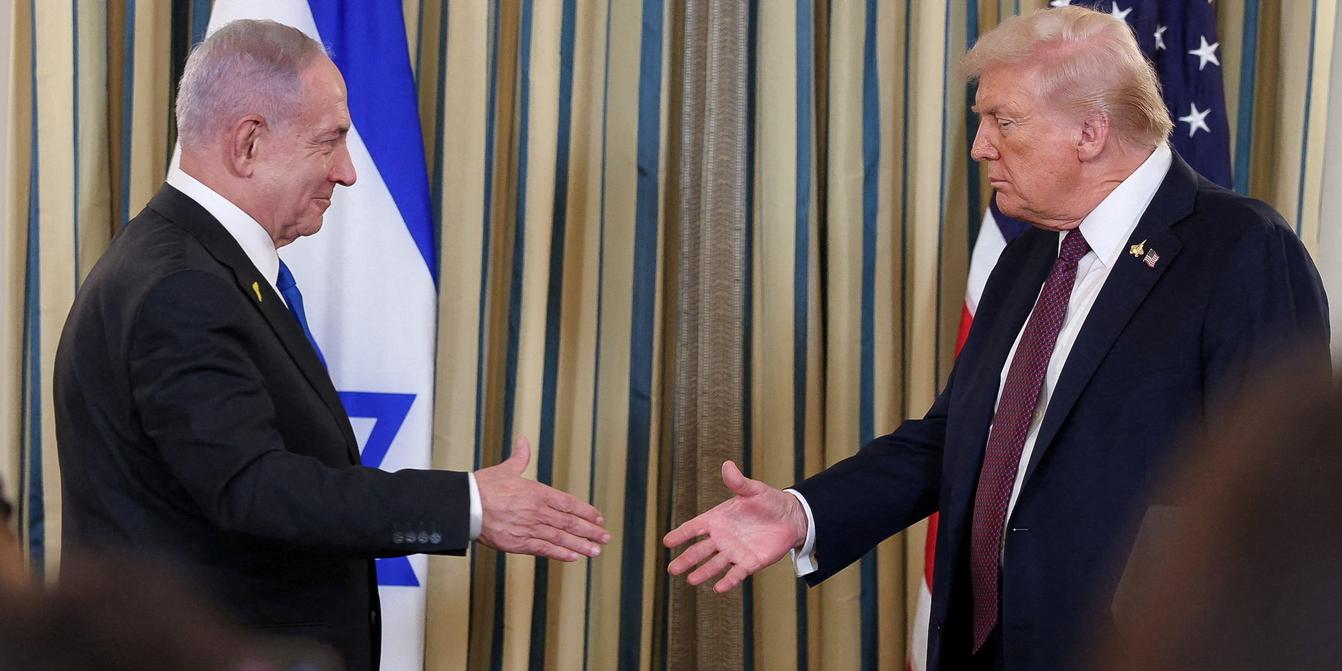
U.S. President Donald Trump has stepped back into the center of Middle East diplomacy with the announcement of a 20-point peace plan aimed at ending the war in Gaza. The proposal, which has already sparked international debate, promises a dramatic roadmap to halt hostilities, secure the release of hostages, and establish a new governance framework for Gaza. While Trump describes it as a “clear path to lasting peace,” critics argue the plan is highly ambitious and unlikely to gain consensus from all parties.
Immediate Ceasefire and Hostage Release
The peace initiative begins with an immediate ceasefire if both Israel and Hamas agree to the terms. Within 72 hours of Israel’s public acceptance, all hostages—both alive and deceased—must be returned. In exchange, Israel would release nearly 2,000 Palestinian prisoners, along with the remains of 15 Palestinians for every Israeli victim repatriated. This prisoner-hostage swap is positioned as a trust-building step to reset the dialogue.
Hamas Disarmament and Exclusion from Governance
Perhaps the most controversial element of Trump’s plan is the requirement that Hamas must fully disarm and play no role in Gaza’s future governance. Members who renounce violence could receive amnesty, but Hamas as an organization would effectively be dissolved. This condition is seen as a nonstarter by many analysts, as it strips Hamas of political and military influence while reshaping Gaza’s leadership structure.
New Governance Under International Oversight
To replace Hamas, the plan envisions a technocratic, nonpartisan Palestinian administration to manage Gaza’s day-to-day affairs. Oversight would be provided by an international “Board of Peace” chaired by Trump himself, joined by global figures including former British Prime Minister Tony Blair. This body would supervise reforms, rebuild institutions, and oversee billions in reconstruction aid.
Reconstruction and Economic Vision
Trump’s plan frames Gaza’s future as a “deradicalized, terror-free zone” supported by international investment and economic zones. The vision includes new infrastructure, schools, hospitals, and trade opportunities designed to transform Gaza into a stable and prosperous region. Supporters argue this could offer long-term hope for Palestinians, while skeptics warn that without political sovereignty, economic initiatives may fail to gain local legitimacy.
Conditional Path to Palestinian Statehood
The proposal leaves the question of Palestinian statehood unresolved. Instead of an immediate promise, Trump conditions future statehood talks on successful reforms within Gaza and political restructuring of the Palestinian Authority. This cautious approach is intended to avoid repeating past peace failures, but it may disappoint Palestinians seeking clear guarantees of independence.
Global Reactions and Challenges Ahead
Reactions to the plan have been mixed. Israeli leaders welcomed Trump’s framework as a potential breakthrough, while Palestinian officials expressed skepticism. Regional mediators such as Egypt and Qatar are reviewing the proposal, but the requirement for Hamas’s total disarmament makes acceptance unlikely. Analysts suggest the plan tilts heavily toward Israeli security priorities, raising doubts about its viability.
Despite these challenges, Trump insists his 20-point peace plan is the most comprehensive framework yet to end the Gaza war. Whether it becomes a turning point or another failed blueprint will depend on the willingness of both sides to compromise—and the world’s readiness to enforce the deal.
Watch video below :


:max_bytes(150000):strip_icc():focal(749x0:751x2)/Karoline-Leavitt-Expecting-Baby-No-2-122625-3ee9c9c5c0004741808a746cca98b9b2.jpg?w=350&resize=350,220&ssl=1 "White House Press Secretary Karoline Leavitt Announces Pregnancy, Expecting Baby Girl")




:max_bytes(150000):strip_icc():focal(749x0:751x2)/Karoline-Leavitt-Expecting-Baby-No-2-122625-3ee9c9c5c0004741808a746cca98b9b2.jpg?w=180&resize=180,130&ssl=1 "White House Press Secretary Karoline Leavitt Announces Pregnancy, Expecting Baby Girl")