

U.S. President Donald Trump has reignited global controversy after announcing plans to impose new import tariffs on several European countries, linking the move directly to their opposition to U.S. ambitions surrounding Greenland. The announcement marks a sharp escalation in transatlantic tensions and has triggered strong political, economic, and diplomatic reactions across Europe.
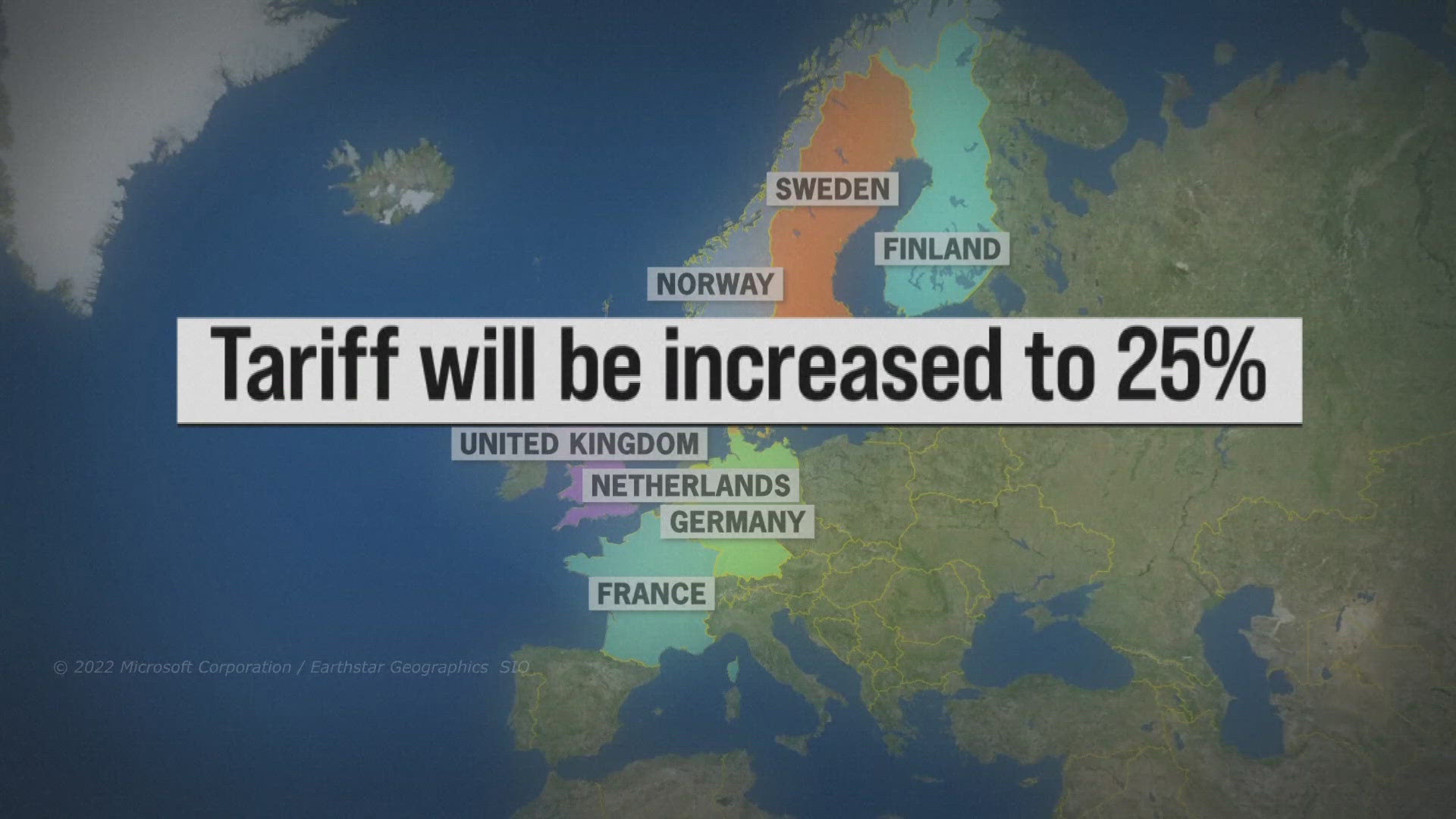
Speaking to reporters, Trump said the United States would introduce 10% tariffs on imports from a group of European allies, including Denmark, Germany, France, the United Kingdom, Sweden, Norway, Finland, and the Netherlands. He warned that these tariffs could rise to 25% within months if those nations continue to block what he described as U.S. strategic interests in Greenland.
Greenland at the Center of the Dispute
Greenland, an autonomous territory of Denmark, has long held strategic importance due to its Arctic location, natural resources, and proximity to key global shipping routes. Trump has repeatedly argued that U.S. control or influence over Greenland is essential for national security, citing growing Russian and Chinese activity in the Arctic region.
However, Denmark and Greenland’s leadership have firmly rejected any idea of a sale, insisting that the territory is not for sale and that its future lies in the hands of the Greenlandic people. European leaders have accused Trump of using economic pressure as a political weapon, calling the tariff threats “unacceptable” and “coercive.”
Europe Pushes Back
In response, senior officials from Germany and France said Europe “will not be blackmailed.” The European Union has begun discussing possible retaliatory tariffs on U.S. goods, with trade measures reportedly worth tens of billions of euros under consideration. EU policymakers are also exploring the use of the bloc’s anti-coercion instrument, a legal tool designed to counter economic pressure from foreign governments.
Diplomats have warned that Trump’s stance risks triggering a trade war at a time when global economic stability remains fragile. Several European leaders expressed concern that the dispute could damage long-standing alliances and weaken cooperation within NATO.
Market and Global Impact
Financial markets reacted quickly to the news. Global stocks fell, while investors shifted toward traditional safe-haven assets such as gold. Analysts warn that escalating tariff threats could disrupt supply chains, increase costs for consumers, and slow economic growth on both sides of the Atlantic.
Criticism has also emerged within the United States. Some lawmakers, including members of Trump’s own party, have questioned whether tariffs are an appropriate tool for resolving geopolitical disagreements, warning that such measures may ultimately hurt American businesses and consumers.
A Growing Diplomatic Flashpoint
The Greenland tariff dispute highlights a broader trend in Trump’s foreign policy approach: using trade pressure to pursue geopolitical goals. As Europe weighs its response, experts warn that continued escalation could lead to a prolonged standoff with far-reaching consequences for global trade and international relations.
With no signs of compromise so far, the Greenland issue is rapidly becoming one of the most volatile flashpoints in U.S.–Europe relations, raising the question of whether diplomacy—or economic retaliation—will shape the next chapter.
Watch video below :


