

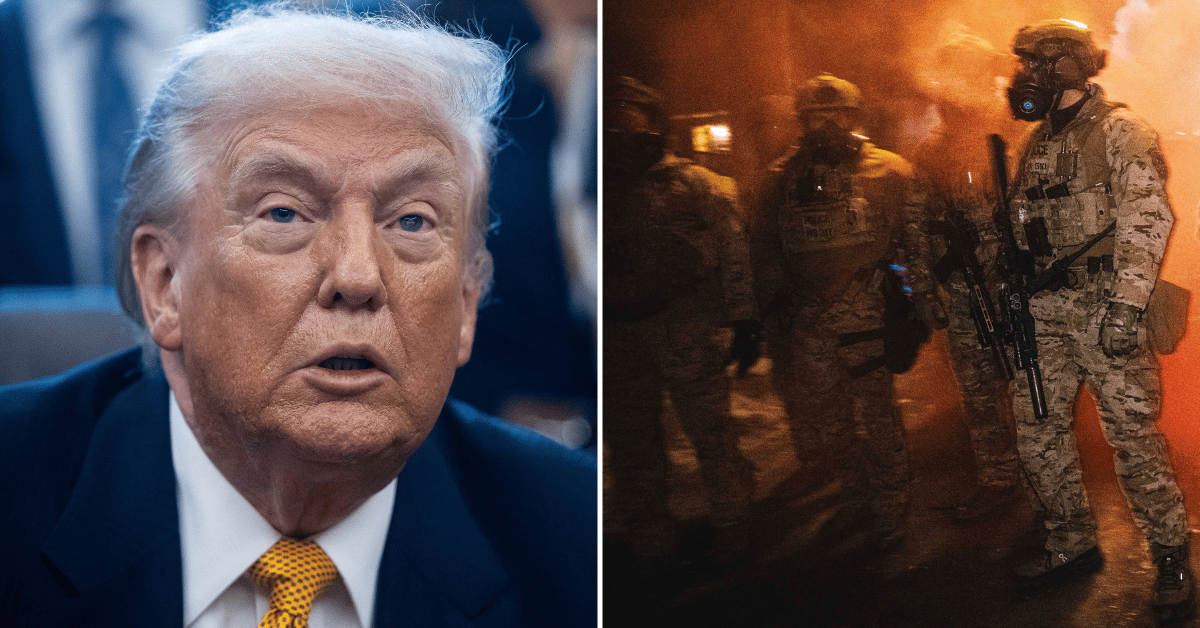
U.S. President Donald Trump is facing renewed political pressure amid growing backlash against Immigration and Customs Enforcement (ICE) operations, with critics raising alarms over rhetoric they say could threaten democratic norms. The controversy has reignited debate over the possible use of the Insurrection Act and the boundaries of executive power during periods of civil unrest.
In recent weeks, protests against ICE have intensified in several U.S. cities, driven by opposition to immigration enforcement tactics and detention policies. Demonstrators argue that ICE actions disproportionately affect immigrant communities and undermine civil liberties. The protests have drawn national attention, placing immigration enforcement once again at the center of America’s political divide.
Against this backdrop, Trump has issued increasingly forceful statements emphasizing law and order, warning that unrest could spiral out of control if authorities are not given broader powers. His remarks have prompted critics to speculate about the potential invocation of the Insurrection Act, a rarely used federal law that allows the president to deploy the military domestically under specific circumstances.
While Trump has not formally announced any intention to invoke the act, political opponents and legal experts caution that even discussing it can heighten tensions. They argue that aggressive executive responses to protests risk escalating conflicts rather than restoring calm. Supporters, however, contend that the Insurrection Act is a lawful tool designed to protect public safety when state and local governments are overwhelmed.
Some critics have gone further, expressing concern about Trump’s broader rhetoric on democratic institutions, including elections. They point to past statements questioning electoral processes as evidence of a troubling pattern. However, no concrete policy proposal or legal mechanism has been presented that would suspend or cancel elections, and constitutional scholars emphasize that U.S. elections are governed by law and cannot be unilaterally abandoned by a president.
Trump’s allies dismiss claims about threats to democracy as exaggerated and politically motivated. They argue that calls for strong federal authority reflect voter frustration with disorder and insecurity, not a rejection of democratic principles. According to supporters, firm enforcement of immigration law and public order is essential to national stability.
The debate underscores a deeper national divide over immigration policy, executive power, and civil liberties. As protests continue and political rhetoric intensifies, lawmakers from both parties are urging restraint and clarity, warning that misinformation and speculation could inflame public anxiety.
Ultimately, the situation highlights the fragile balance between maintaining public order and safeguarding democratic norms. Whether the controversy fades or escalates will depend on future actions, legal boundaries, and how leaders choose to address public dissent. For now, the anti-ICE backlash and the debate over executive authority remain flashpoints in an already polarized political landscape.
Watch video below :


