
President Donald Trump has publicly endorsed a bipartisan agreement aimed at preventing an imminent U.S. government shutdown, injecting fresh momentum into tense negotiations on Capitol Hill as a critical funding deadline approaches.
The deal, reached by Senate leaders from both parties in coordination with the White House, would provide short-term government funding, primarily targeting the Department of Homeland Security (DHS). This temporary measure is designed to keep essential federal operations running while lawmakers continue negotiating broader budget and immigration reforms.
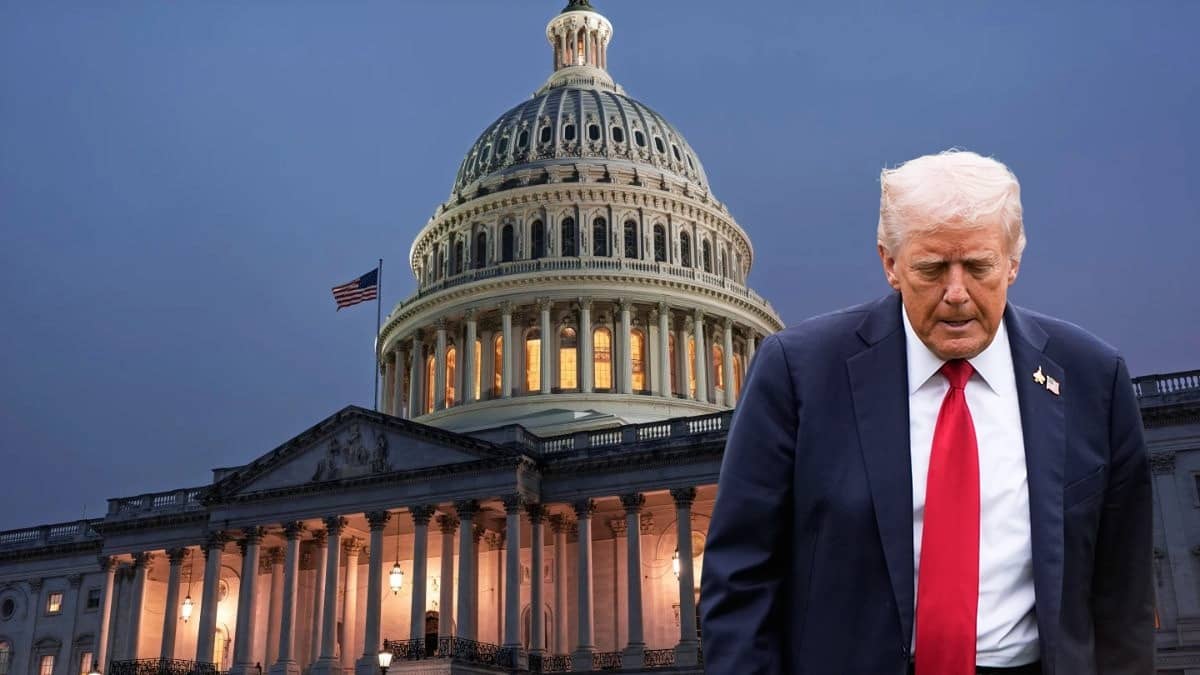
Trump’s endorsement is significant. As the dominant figure within the Republican Party, his support could help unify GOP lawmakers who have been divided over spending levels, border security provisions, and immigration enforcement. In a public statement, Trump urged Republicans to back the agreement, framing it as a necessary step to avoid economic disruption and political fallout caused by a government shutdown.
A shutdown would have resulted in the partial closure of federal agencies, furloughs for hundreds of thousands of government workers, delayed public services, and potential market volatility. Past shutdowns have negatively impacted consumer confidence, disrupted air travel, delayed benefits processing, and strained already fragile political relationships in Washington.
Under the current proposal, DHS—including agencies responsible for border security, immigration enforcement, and the U.S. Coast Guard—would receive funding for a limited extension, reportedly lasting several weeks. Lawmakers hope this window will allow time to finalize a longer-term budget deal that addresses unresolved disputes over immigration policy and federal spending priorities.
Democratic leaders have emphasized the importance of maintaining government stability while continuing negotiations in good faith. They argue that short-term funding prevents immediate harm to workers and the economy while preserving leverage for future talks. Republicans, meanwhile, remain split between pragmatic lawmakers favoring continuity and hardliners demanding tougher conditions tied to immigration enforcement.
Trump’s backing may shift that balance. His influence over the Republican base and conservative lawmakers could reduce resistance and increase the likelihood of passage in both chambers of Congress. However, the deal is not guaranteed to pass smoothly. Procedural hurdles and political brinkmanship could still delay final approval, raising the risk of a brief funding lapse.
Financial markets are closely watching developments. Investors generally view shutdown avoidance as a positive signal, reducing uncertainty that could impact equities, government contracts, and consumer sentiment. Even so, analysts caution that short-term fixes do not resolve the underlying structural disagreements driving repeated budget crises.
Ultimately, the agreement underscores a familiar pattern in U.S. politics: last-minute negotiations, temporary funding solutions, and high-stakes brinkmanship. Trump’s endorsement may help avert immediate disruption, but the deeper challenges surrounding federal spending and immigration policy remain unresolved.
As the deadline nears, all eyes are on Congress to see whether this deal can pass in time—or whether Washington will once again edge toward shutdown territory.
Watch video below :