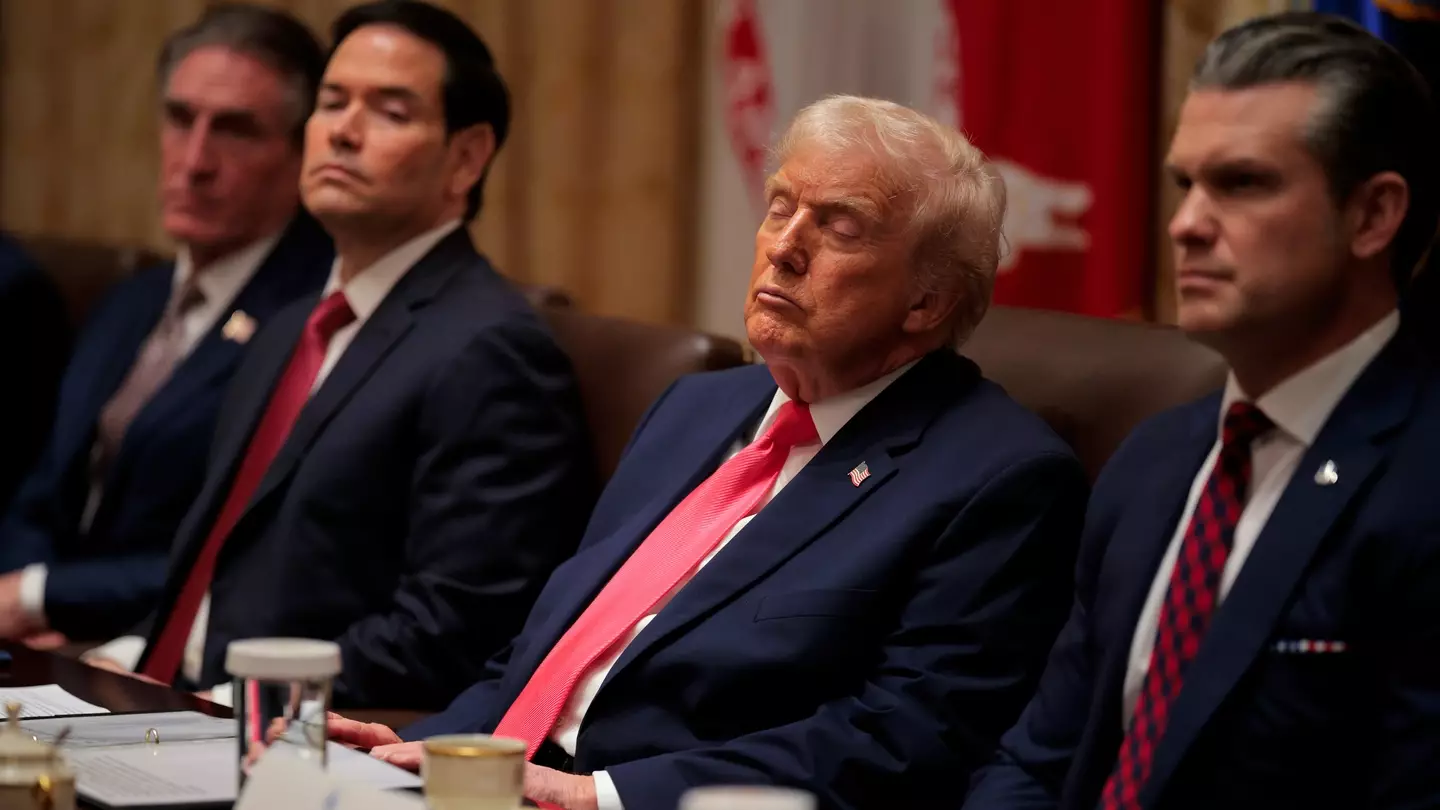
Reports circulating this week allege that President Donald Trump was briefly caught falling asleep during a recent cabinet meeting, setting off a wave of scrutiny and online debate. The claims—sparked by several attendees and amplified by media outlets and social platforms—suggest Trump appeared to close his eyes for an extended moment while officials discussed key policy matters. However, the White House has strongly rejected the allegations, dismissing them as inaccurate, exaggerated, and politically motivated.
According to individuals who were present, the moment occurred during a lengthy briefing on federal budgeting and departmental updates. Witnesses reported that Trump appeared unusually still, with his eyes closed and his posture relaxed, leading some to conclude that he had momentarily drifted off. The incident quickly drew attention after internal accounts leaked, prompting speculation about the President’s energy levels and overall engagement.
Within hours, critics seized on the reports, arguing that such behavior underscored concerns about leadership focus and discipline during high-stakes discussions. Political commentators and online analysts dissected footage from the meeting, looking for visual cues to support or disprove the claims. While no definitive video evidence emerged, the discussion gained momentum amid ongoing debates about Trump’s governing style and approach to internal deliberations.
The White House swiftly pushed back, issuing a formal statement rejecting the claims as “false, unserious, and deliberately misleading.” Press officials argued that the President was simply listening intently with his eyes momentarily lowered, emphasizing that long, information-heavy briefings often require intense concentration. They accused critics of fabricating a narrative aimed at distracting from substantive policy issues.
A senior administration aide reinforced this position, stating that Trump remained “fully alert and engaged” throughout the meeting, asking pointed questions and directing follow-up tasks to cabinet secretaries. The aide added that brief pauses or silent moments were being misinterpreted and framed out of context to fuel political criticism.
Supporters of the President echoed the administration’s defense, saying that the focus on a brief moment during a lengthy meeting reflects more about partisan media dynamics than presidential conduct. They argue that the scrutiny is disproportionate, especially given the absence of clear visuals confirming the allegation.
Meanwhile, critics maintain that the incident—whether exaggerated or not—illustrates broader concerns about transparency and accountability in the administration. They contend that the public deserves a clearer understanding of the President’s engagement in internal decision-making, particularly during complex or technical briefings.
The controversy also highlights how even minor moments in the White House can ignite national debate, especially in an era where political narratives spread rapidly across digital platforms. Analysts note that similar claims about leaders’ attentiveness have surfaced across previous administrations, often becoming symbolic flashpoints rather than substantive evaluations of governance.
As discussions continue, what remains clear is that the incident has added another layer to the ongoing tension between the administration and its critics. Whether the moment was a simple pause, a brief lapse, or a misinterpretation, it underscores how closely presidential behavior is scrutinized—and how quickly such scrutiny can shape public perception.
Watch video below :
:max_bytes(150000):strip_icc():focal(749x0:751x2)/Karoline-Leavitt-Expecting-Baby-No-2-122625-3ee9c9c5c0004741808a746cca98b9b2.jpg?w=350&resize=350,220&ssl=1 "White House Press Secretary Karoline Leavitt Announces Pregnancy, Expecting Baby Girl")



:max_bytes(150000):strip_icc():focal(749x0:751x2)/Karoline-Leavitt-Expecting-Baby-No-2-122625-3ee9c9c5c0004741808a746cca98b9b2.jpg?w=180&resize=180,130&ssl=1 "White House Press Secretary Karoline Leavitt Announces Pregnancy, Expecting Baby Girl")