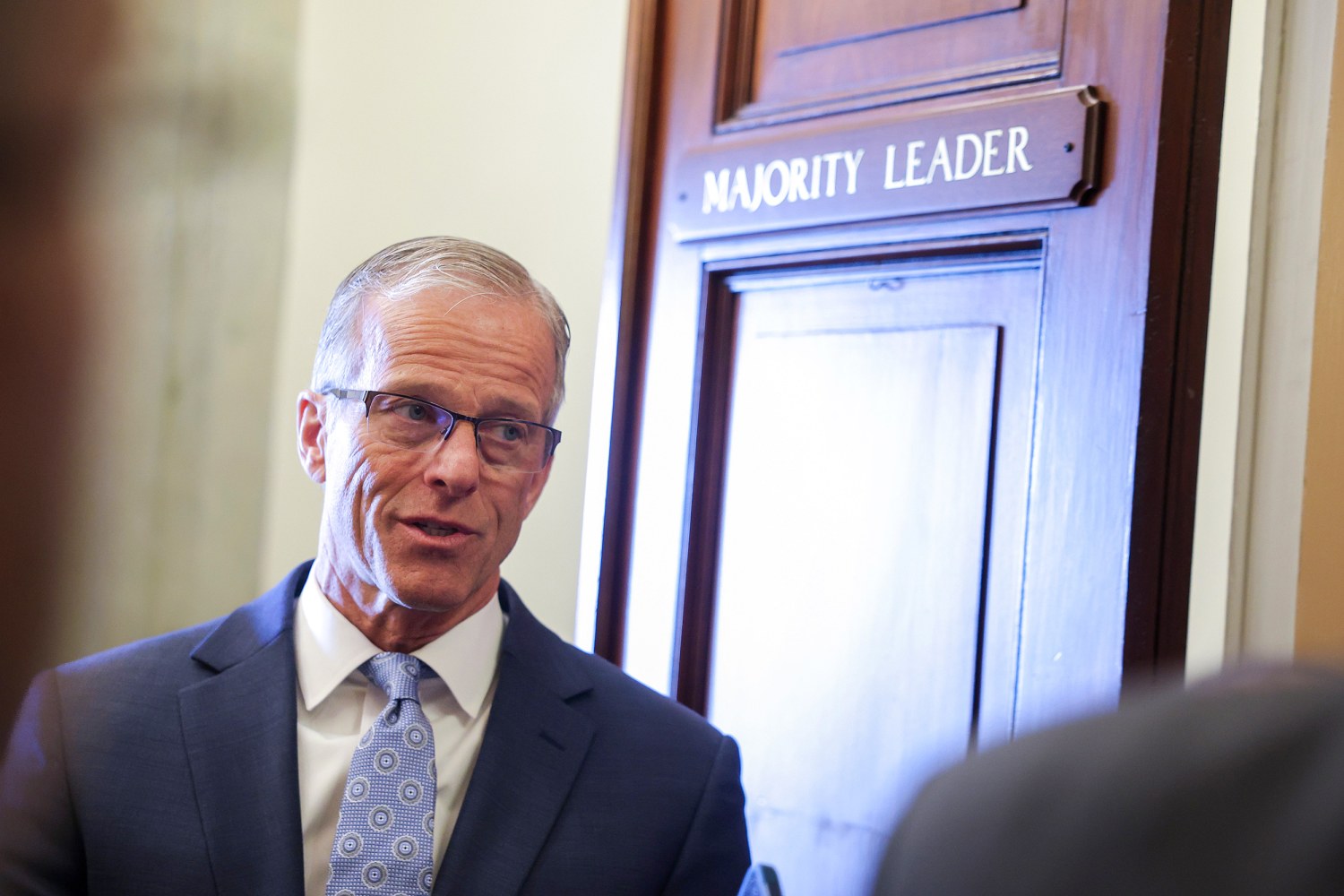
Senate Republican Leader John Thune is facing renewed scrutiny after being asked whether he agrees with President Donald Trump’s proposal to nationalize U.S. elections, a suggestion that has reignited a long-standing debate over federal authority, states’ rights, and the future of American democracy.
Trump’s proposal, which would place federal oversight over election administration currently managed by individual states, has drawn sharp reactions across the political spectrum. Supporters argue that a national system could improve uniformity and security, while critics warn it would fundamentally alter the constitutional balance of power.
When asked directly whether he supports the idea, Thune stopped short of endorsing the proposal. Instead, he emphasized the importance of the state-based election system, noting that the Constitution gives states primary responsibility for administering elections.
“Our system has always relied on states to run their own elections,” Thune said, according to reporters present at the exchange. “Any changes to that structure would require serious constitutional consideration and broad consensus.”
Thune’s response reflects a cautious approach within Republican leadership, even as Trump continues to exert significant influence over the party. While some GOP lawmakers echo Trump’s concerns about election integrity, many have resisted calls for sweeping federal control, viewing them as inconsistent with conservative principles of limited government.
The proposal has also alarmed election officials and legal experts, who argue that nationalizing elections could introduce new risks rather than solve existing ones. They point out that decentralized election systems make large-scale interference more difficult and allow states to tailor procedures to local needs.
Democrats, meanwhile, have seized on the proposal as evidence of what they describe as Trump’s willingness to centralize power. Several Democratic lawmakers warned that federal control over elections could open the door to political manipulation, regardless of which party is in power.
Trump has framed his proposal as a response to what he claims are systemic weaknesses in the current system, though multiple courts and election officials have repeatedly affirmed the integrity of recent U.S. elections. He has not provided detailed plans outlining how nationalized elections would function or what agency would oversee them.
Political analysts say Thune’s carefully worded response highlights the delicate balancing act facing Republican leaders. On one hand, they must avoid alienating Trump’s base. On the other, they are wary of embracing proposals that could face constitutional challenges or internal party resistance.
The issue also raises broader questions about election reform heading into future cycles. Debates over voter access, security, and federal standards have become increasingly polarized, with little agreement on how far Congress should go in setting nationwide rules.
For now, Thune and other Senate leaders appear focused on preserving the existing framework while leaving the door open to targeted reforms rather than a wholesale national takeover of elections.
As the discussion continues, Trump’s proposal is likely to remain more of a political flashpoint than a viable legislative path — but it has once again forced lawmakers to confront fundamental questions about how American elections should be governed.
Watch video below :