

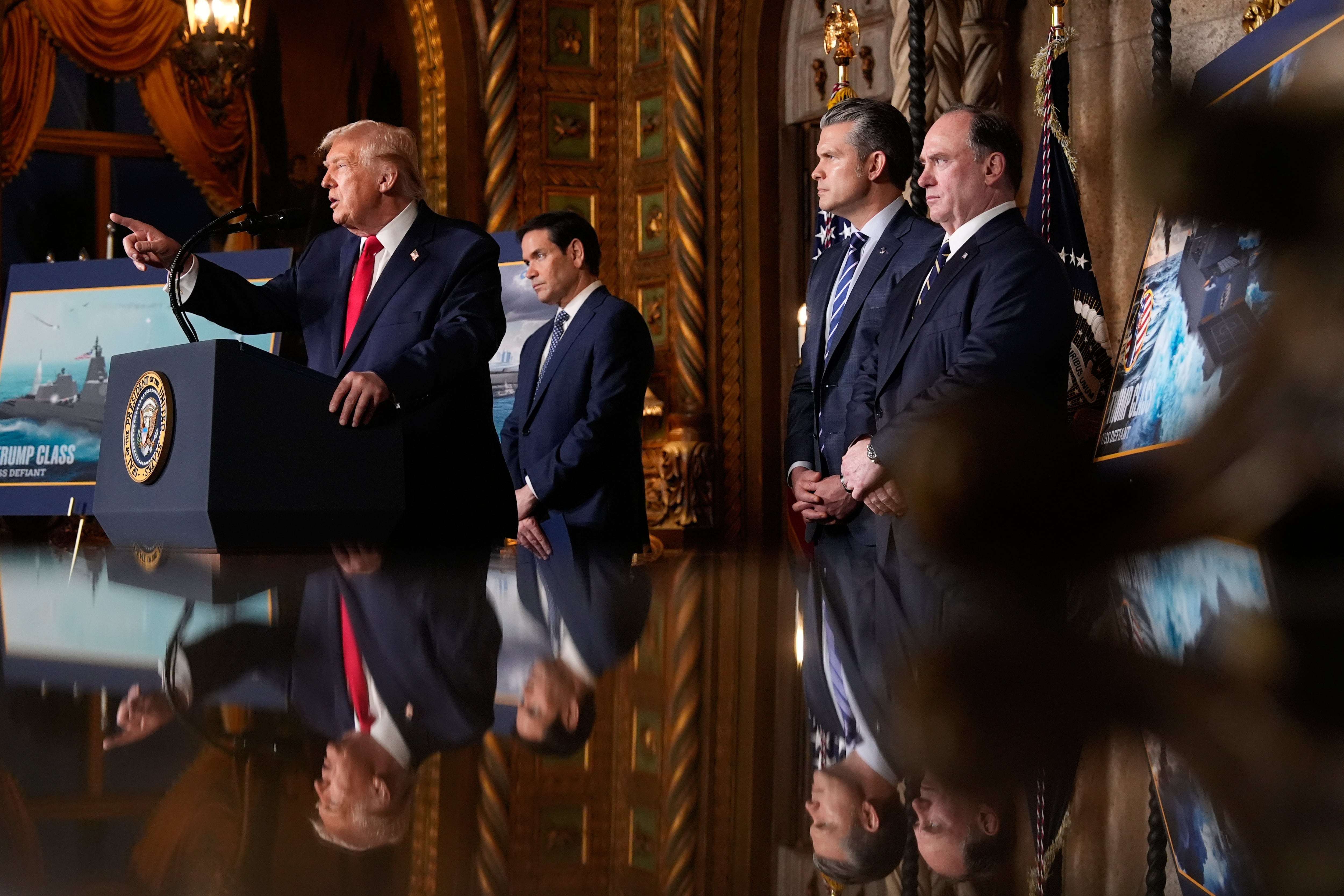
Secretary of State Marco Rubio has praised the announcement of the new “Trump-class” battleships, calling the naval program a “generational moment” for U.S. military strength and global deterrence. The announcement marks a major expansion of America’s naval capabilities and underscores the administration’s emphasis on rebuilding and modernizing the armed forces.
Speaking following the official unveiling of the program, Rubio described the Trump-class battleships as a long-term investment in national security rather than a short-term political initiative. He emphasized that the ships are designed to serve the United States for decades, shaping naval strategy well into the future.
“This is generational,” Rubio said, highlighting the scale and ambition of the project. “What we’re building now will define American sea power for the next half-century.”
According to defense officials, the Trump-class battleships will feature advanced weapons systems, enhanced missile defense, next-generation radar technology, and improved cyber warfare capabilities. The vessels are expected to significantly strengthen the U.S. Navy’s ability to operate in contested regions, particularly in the Indo-Pacific and other strategically critical waterways.
The announcement comes amid growing concerns over rising global tensions and increased naval activity by rival powers. Supporters of the program argue that expanding the U.S. fleet is essential to maintaining freedom of navigation, protecting trade routes, and deterring potential adversaries.
Rubio also stressed the economic and industrial impact of the Trump-class program. Shipbuilding contracts are expected to create tens of thousands of jobs across multiple states, revitalizing domestic manufacturing and reinforcing America’s defense supply chain. “This is not just about ships,” Rubio noted. “It’s about American workers, American industry, and American leadership.”
Critics, however, have raised questions about the cost of the program and its long-term budget implications. Some lawmakers argue that resources should be directed toward emerging technologies such as drones, artificial intelligence, and space-based defense systems rather than traditional surface ships. Others have expressed concern about escalating military competition and the risk of an arms race.
In response, administration officials maintain that the Trump-class battleships are designed to integrate modern technologies rather than replace them. Defense planners say the ships will serve as multi-role platforms capable of supporting unmanned systems, joint operations, and advanced surveillance missions.
The announcement also carries political significance, reinforcing the Trump administration’s broader message of restoring American military strength. For supporters, the program represents a decisive break from years of underinvestment. For opponents, it raises questions about priorities and oversight.
Despite the debate, Rubio made clear that he views the Trump-class battleships as a defining legacy project. “Future generations will look back at this moment and understand its importance,” he said. “This is about ensuring that the United States remains strong, secure, and respected on the world’s oceans.”
As planning moves forward, the Trump-class battleships are set to become a central pillar of U.S. naval strategy—one that could shape global power dynamics for decades to come.
Watch video below :


