Hayes: Indiana Voters “Rejected Trump and Vance”
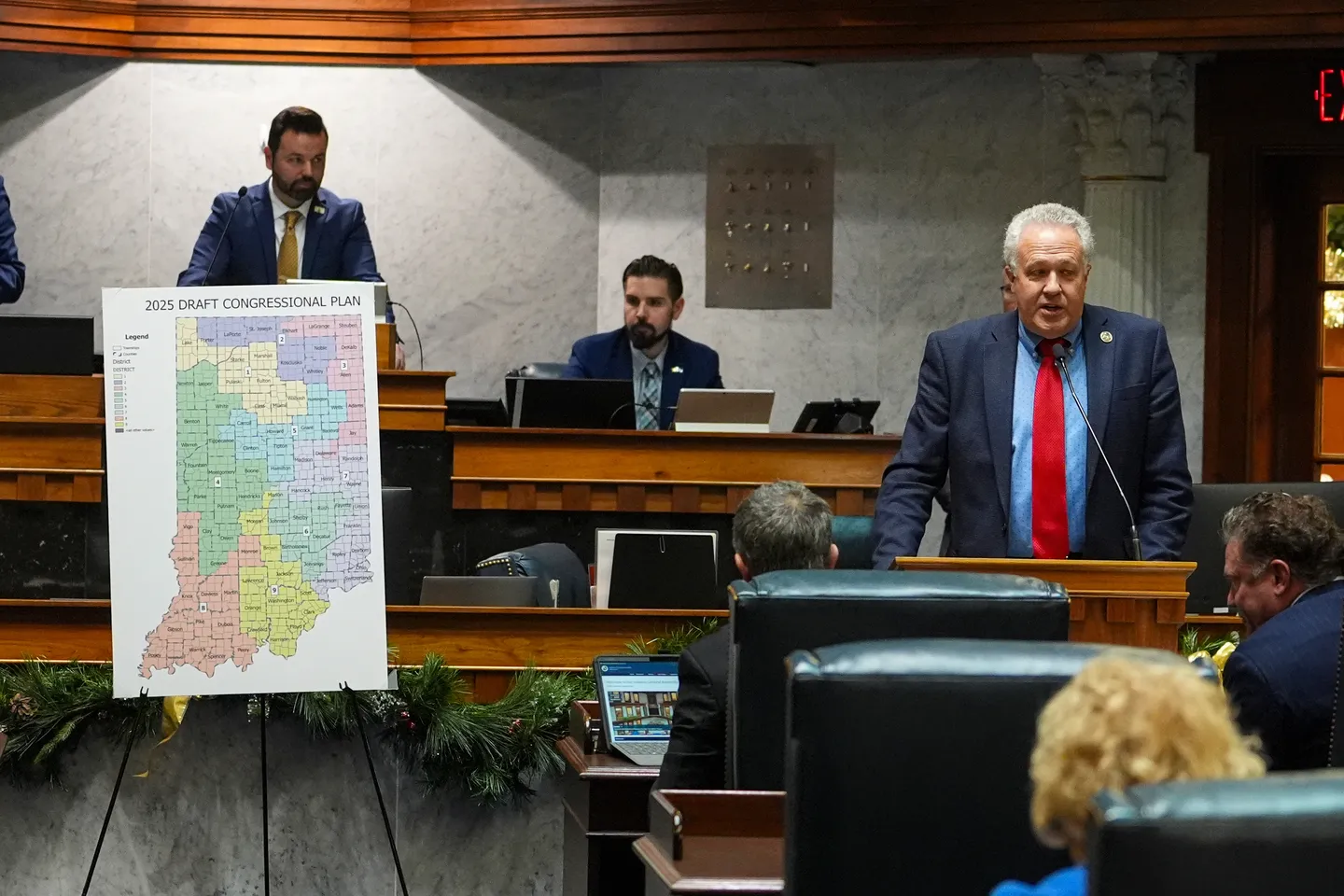
Political commentator and MSNBC host Chris Hayes says recent political outcomes in Indiana show that voters “chose a side” — and it was not Donald Trump or JD Vance. His remarks have sparked debate about whether traditionally conservative states are showing early signs of political realignment.
Speaking during a recent broadcast, Hayes argued that Indiana’s results reflect growing voter resistance to Trump-aligned politics, even in states long considered Republican strongholds.
“They did choose a side,” Hayes said. “And they rejected Trump and Vance.”
A Message Beyond One Election
According to Hayes, the Indiana outcome should not be viewed as an isolated event, but rather as part of a broader national trend. He pointed to shifting voter priorities, fatigue with political extremism, and concerns over democracy as driving forces behind the results.
Indiana, a state that has reliably voted Republican in recent presidential elections, has often been cited as political bedrock for conservative candidates. That makes any deviation — even a narrow one — particularly notable.
Political analysts say the message may resonate beyond state lines, especially as the 2024 and 2028 election cycles continue to shape party strategies.
Trump and Vance Still Influential, But Vulnerable
Donald Trump and Senator JD Vance, one of his most vocal allies, remain powerful figures within the Republican Party. However, Hayes argued that their influence may not be as ironclad as it once appeared.
“The assumption that Trump’s endorsement guarantees victory is being tested,” Hayes said, adding that voters may be increasingly focused on governance, stability, and economic concerns rather than political loyalty.
Critics of Hayes counter that Indiana remains overwhelmingly conservative and warn against overinterpreting short-term political shifts. Still, even skeptics acknowledge that any visible erosion of Trump-backed support matters.
What This Means for US Politics
The comments highlight a growing conversation among Democrats and independents about how to capitalize on voter dissatisfaction in red-leaning states. If similar patterns emerge elsewhere, it could reshape campaign strategies and messaging nationwide.
Republican strategists, meanwhile, may face pressure to reassess the balance between energizing the party’s base and appealing to moderate or undecided voters.
“This is about more than one race,” Hayes said. “It’s about whether voters want to keep moving in the same direction.”
Reaction and Political Debate
Reactions to Hayes’ comments were sharply divided. Supporters praised his analysis as a clear-eyed assessment of voter sentiment, while critics accused him of overstating the significance of the results.
On social media, the phrase “They chose a side” quickly gained traction, with users debating whether Indiana’s vote signals a turning point or a temporary anomaly.
Conclusion
Chris Hayes’ assertion that Indiana rejected Trump and Vance adds fuel to an already intense national political debate. Whether the state’s vote represents a lasting shift or a momentary protest remains to be seen.
What is clear, however, is that assumptions about political loyalty — even in deeply conservative states — are no longer guaranteed.
Watch video below :