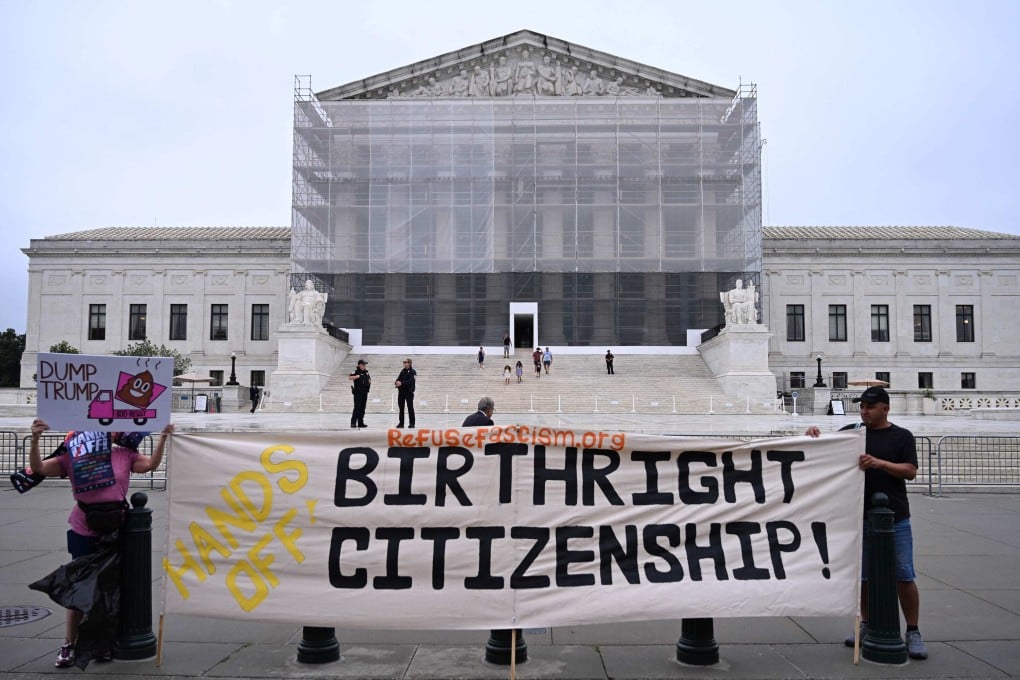
The U.S. Supreme Court is preparing to hear one of the most consequential immigration cases in decades: a challenge that could redefine birthright citizenship in America. The outcome has the potential to reshape long-standing interpretations of the 14th Amendment, shift federal immigration policy, and ignite new political battles at every level of government. As the nation follows closely, legal scholars and policymakers are bracing for a ruling that may carry profound social, constitutional, and demographic implications.
At the heart of the case is whether children born on U.S. soil to noncitizen parents—especially those who are undocumented—are guaranteed citizenship under the 14th Amendment. For more than a century, courts have upheld the principle that virtually anyone born in the United States is a citizen. This doctrine, known as birthright citizenship, has been a cornerstone of American identity and a defining feature of U.S. immigration law.
The petitioners argue that the original meaning of the amendment’s Citizenship Clause has been misinterpreted and that Congress, not the courts, should determine eligibility for citizenship. They claim that the phrase “subject to the jurisdiction thereof” excludes children born to parents who are in the country without legal authorization. Supporters of the challenge say the current interpretation encourages unauthorized immigration and creates policy incentives that Congress never intended.
Opponents of the challenge, including civil-rights organizations, immigration advocates, and several constitutional scholars, argue that the legal precedent is unequivocal: birthright citizenship applies to nearly everyone born on U.S. soil, regardless of parental status. They warn that altering this principle would create millions of stateless individuals, destabilize communities, and undermine fundamental constitutional protections. Many legal experts emphasize that the framers of the 14th Amendment sought to prevent a system in which citizenship could be denied based on political or racial considerations—an issue historically tied to post-Civil War America.
The Supreme Court’s decision to take the case signals a willingness to revisit deeply rooted assumptions in constitutional law. With the Court’s current conservative majority, analysts are closely watching how justices will interpret historical context, precedent, and the constitutional text. Some predict a narrow ruling limited to specific circumstances, while others see the possibility of a sweeping decision that redefines citizenship entirely.
The political ramifications are already unfolding. Lawmakers, advocacy groups, and presidential candidates have seized on the issue, using the case to energize supporters and frame broader discussions about immigration reform, national identity, and executive power. Public opinion remains sharply divided, with polling showing deep partisan differences on how birthright citizenship should be applied.
Beyond politics, the case raises urgent practical questions. A ruling that restricts birthright citizenship could create complex bureaucratic and legal challenges, particularly for state and federal agencies responsible for issuing identification, processing immigration claims, and enforcing civil rights laws. Hospitals, schools, and local governments could also face new administrative burdens tied to verifying citizenship status at birth.
As the Supreme Court prepares to hear arguments, the nation is entering a pivotal moment in its constitutional history. The forthcoming decision will not only determine the fate of birthright citizenship but also define how America understands membership, belonging, and the meaning of citizenship in the 21st century.
Watch video below :
:max_bytes(150000):strip_icc():focal(749x0:751x2)/Karoline-Leavitt-Expecting-Baby-No-2-122625-3ee9c9c5c0004741808a746cca98b9b2.jpg?w=350&resize=350,220&ssl=1 "White House Press Secretary Karoline Leavitt Announces Pregnancy, Expecting Baby Girl")




:max_bytes(150000):strip_icc():focal(749x0:751x2)/Karoline-Leavitt-Expecting-Baby-No-2-122625-3ee9c9c5c0004741808a746cca98b9b2.jpg?w=180&resize=180,130&ssl=1 "White House Press Secretary Karoline Leavitt Announces Pregnancy, Expecting Baby Girl")