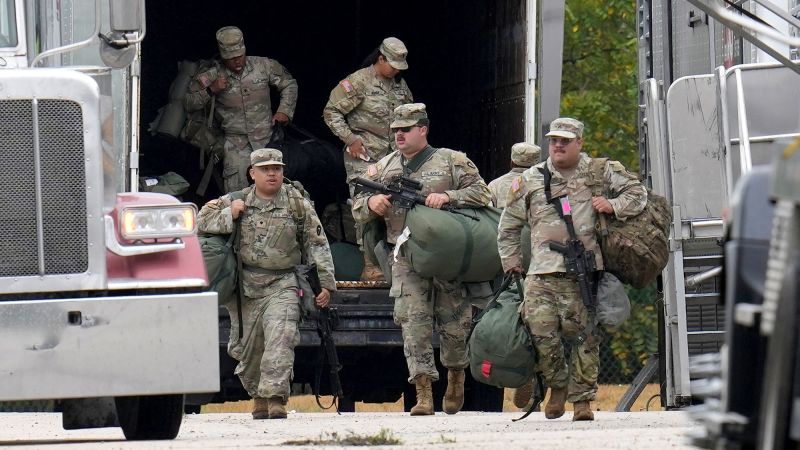
The U.S. Supreme Court has temporarily halted the deployment of National Guard troops in Illinois, extending an already tense legal standoff between the federal government and state officials. The move comes as the Court requested additional information before deciding whether the White House has the legal authority to federalize the Guard under 10 U.S.C. §12406.
At the center of the case is a question with broad constitutional implications: what exactly qualifies as “regular forces” under federal law — and does that definition allow the president to mobilize state Guard units without state consent?
The issue stems from an earlier attempt by federal authorities to send Guard troops to Chicago amid escalating tensions surrounding immigration enforcement and protests. The administration argued that rising violence and threats against federal agents warranted immediate federal intervention.
However, Illinois Governor J.B. Pritzker and the City of Chicago pushed back, claiming the deployment was unconstitutional and represented a direct violation of states’ rights. They maintained that the situation did not meet the legal threshold of “rebellion” or “obstruction,” conditions required for such a federal move.
Earlier this month, U.S. District Judge April Perry issued a temporary restraining order blocking the deployment, ruling that there was insufficient evidence to justify federal control of the Illinois National Guard. The Seventh Circuit Court of Appeals later upheld that decision, allowing the troops to remain under federal authority but prohibiting any active deployment within the state.
Now, the Supreme Court has intervened, asking both sides to submit supplemental briefs. The Department of Justice (DOJ) and Illinois officials must file their responses by November 10, with reply briefs due November 17. This timeline ensures that no ruling will be issued before mid-November, effectively keeping the deployment on hold for at least several more weeks.
Legal experts say the outcome could have long-lasting implications for the balance of power between Washington and the states. If the Court rules in favor of broad federal authority, it could strengthen the executive branch’s ability to use the National Guard in domestic situations — even without a governor’s approval. Conversely, siding with Illinois would reaffirm states’ control over their own Guard units and limit future federal intervention.
For now, Guard troops in Illinois remain on standby, with no permission to engage in patrols, enforcement, or support operations. The case underscores the ongoing constitutional tension between federal oversight and state sovereignty, a debate that has resurfaced repeatedly in American history — and one that could define how future administrations respond to domestic unrest.
Watch video below :