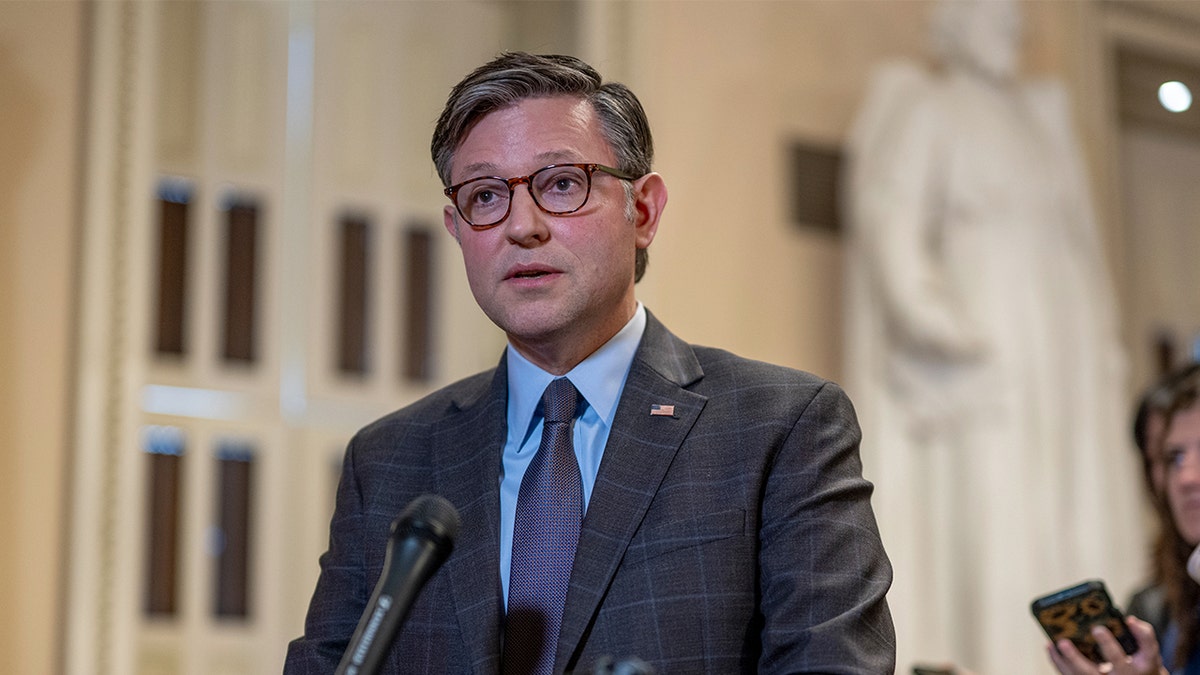
As the clock ticks toward a possible U.S. government shutdown, House Speaker Mike Johnson is intensifying his attacks on Democrats, blaming them for obstructing a straightforward funding solution and risking widespread disruption to federal programs.
Johnson’s Criticism
Speaking in interviews and press statements, Johnson accused Democrats of engaging in political brinkmanship. He argued that Republicans have already advanced a “clean continuing resolution” (CR) — a stopgap measure designed to maintain current spending levels and extend government operations until late November.
Johnson insisted that his proposal avoids new policy changes, protects critical programs, and gives lawmakers more time to negotiate a long-term budget. According to him, the only obstacle to passage is Democratic leadership.
“They are willing to hold the American people hostage just to make a political point,” Johnson said, warning that essential services such as FEMA disaster relief, telehealth coverage, and nutrition assistance for women and children (WIC) could be delayed if Democrats refuse to act.
The Policy Divide
At the center of the standoff are Democratic demands to attach additional provisions to the CR — particularly expanded healthcare subsidies and Medicaid protections. Democrats argue these are urgent issues that cannot wait for later negotiations.
Republicans counter that such measures should be debated separately in full-year appropriations bills, not tied to a temporary spending extension. Johnson labeled the demands “partisan riders” designed to weaponize the funding process.
Rising Political Tensions
Johnson’s remarks reflect a broader Republican strategy: to cast Democrats as responsible for any shutdown fallout. GOP leaders, including Senate Minority Leader John Thune, have described Democratic tactics as “hostage-taking,” framing their own proposal as the only reasonable path forward.
Still, the math is challenging. Even if the House passes Johnson’s CR, Senate approval requires bipartisan support. Without at least some Democratic votes, the measure cannot clear a filibuster.
Stakes for Americans
If Congress fails to reach a deal, a shutdown would furlough hundreds of thousands of federal workers, delay paychecks, and disrupt everyday services. National parks could close, processing times for passports and permits could stall, and markets might react with volatility.
Essential operations — such as military functions, Social Security, and Medicare payments — would continue, but the political and economic impact of a shutdown would be significant.
Looking Ahead
Johnson has doubled down, vowing to push his “clean CR” to the Senate floor and daring Democrats to vote against it. Meanwhile, Democratic leaders argue that ignoring healthcare provisions during a funding crisis is irresponsible and short-sighted.
As the deadline approaches, the outcome may hinge less on legislative maneuvering and more on public perception. If Johnson succeeds in convincing voters that Republicans are offering a fair solution while Democrats are obstructing it, the political fallout of a shutdown could shift dramatically.
For now, both parties appear locked in a test of wills — and Americans are left bracing for yet another high-stakes standoff in Washington.
Watch video below :


:max_bytes(150000):strip_icc():focal(749x0:751x2)/Karoline-Leavitt-Expecting-Baby-No-2-122625-3ee9c9c5c0004741808a746cca98b9b2.jpg?w=350&resize=350,220&ssl=1 "White House Press Secretary Karoline Leavitt Announces Pregnancy, Expecting Baby Girl")




:max_bytes(150000):strip_icc():focal(749x0:751x2)/Karoline-Leavitt-Expecting-Baby-No-2-122625-3ee9c9c5c0004741808a746cca98b9b2.jpg?w=180&resize=180,130&ssl=1 "White House Press Secretary Karoline Leavitt Announces Pregnancy, Expecting Baby Girl")