

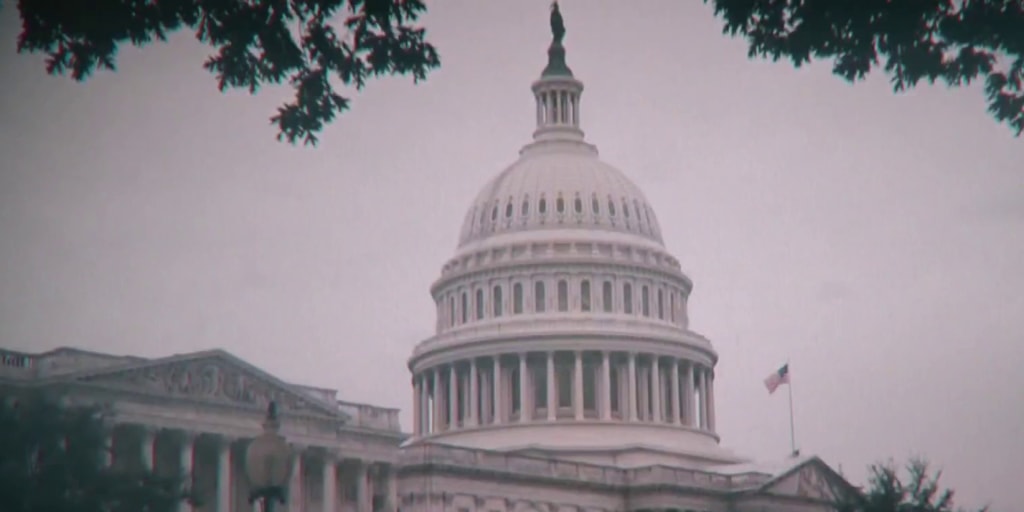
The United States is once again standing at the edge of a government shutdown after the Senate failed to pass a critical funding bill late Tuesday night. With just hours before the midnight deadline, Congress remains paralyzed by political gridlock, leaving millions of Americans uncertain about the stability of federal services and programs.
The vote, which ended 55-45, fell short of the 60-vote threshold required to move forward. The proposal was a short-term funding measure, known as a continuing resolution, intended to keep the government running through November 21. While the House had already approved the measure, Senate Democrats rejected it, arguing that it ignored urgent healthcare provisions, including protections for the Affordable Care Act (ACA) and the reversal of recent Medicaid cuts.
As a result of the failed vote, the White House has directed federal agencies to begin implementing shutdown contingency plans. This could lead to as many as 750,000 federal employees being furloughed, while many more may be forced to work without pay. Essential services such as airport security, law enforcement, and medical research would continue, but at reduced capacity. Non-essential programs — from national parks to housing assistance — are expected to be disrupted almost immediately.
The political blame game is already in full swing. Senate Minority Leader Chuck Schumer blasted Republicans for “pushing America to the brink,” accusing them of holding healthcare funding hostage. Meanwhile, Senate Majority Leader John Thune insisted the bill was a “clean” resolution free from political riders, accusing Democrats of deliberately manufacturing a crisis.
Notably, a handful of Democrats — including Senator John Fetterman, Senator Catherine Cortez Masto, and independent Senator Angus King — broke ranks with their party to support the GOP-backed measure. Their votes gave Republicans a symbolic boost, but not enough to overcome the filibuster hurdle.
The consequences of a government shutdown are far-reaching. Federal workers face financial uncertainty, military families could experience delays in pay, and businesses reliant on federal contracts may suffer. Analysts also warn that prolonged shutdowns erode public trust in government and weaken the economy by slowing consumer confidence.
This crisis also underscores a larger, recurring problem: Congress’s inability to pass long-term budgets without partisan standoffs. The fight over healthcare spending remains a central flashpoint, with Democrats determined to protect the Affordable Care Act and Republicans vowing to cut costs and reshape Medicaid funding.
As the clock ticks closer to the deadline, negotiations are expected to continue behind closed doors. But without a last-minute breakthrough, the U.S. government will begin to shut down at midnight — a move that could mark the start of yet another costly chapter in Washington’s ongoing budget wars.
For everyday Americans, the looming shutdown is more than a political battle. It represents disruption, uncertainty, and the risk of losing critical services at a time when trust in government is already fragile.
Watch video below :


