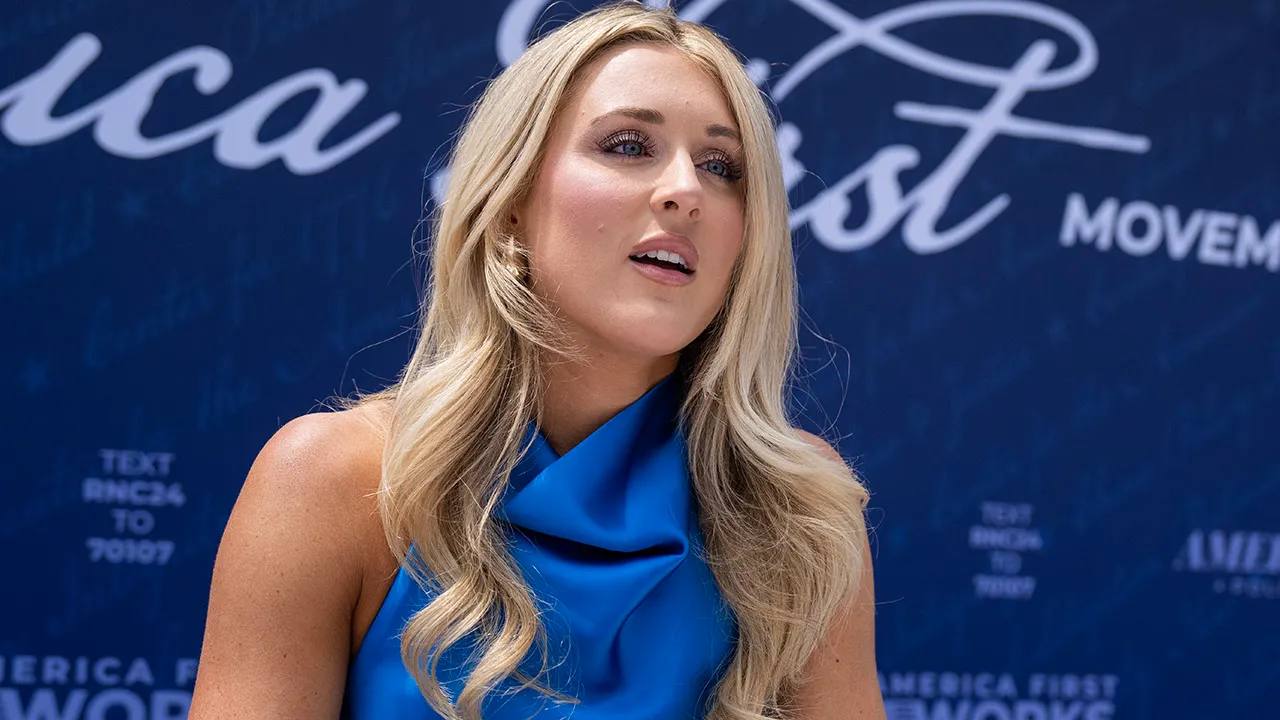
Former NCAA swimmer Riley Gaines has emerged as a prominent voice in the national debate over transgender athletes in women’s sports, speaking out publicly ahead of a closely watched U.S. Supreme Court case that could reshape athletic eligibility rules across the country.
Gaines, who tied with transgender swimmer Lia Thomas in a high-profile collegiate race in 2022, says her advocacy is not rooted in politics but in fairness and protection for female athletes. As the Supreme Court prepares to hear arguments related to state laws restricting transgender participation in women’s sports, her message has gained renewed attention nationwide.
“This is about women’s rights, not exclusion,” Gaines said in recent public remarks. She argues that biological differences between males and females can create competitive imbalances in sports, particularly at elite levels where marginal advantages can determine outcomes, scholarships, and professional opportunities.
The Supreme Court case centers on whether states can limit participation in women’s and girls’ sports based on biological sex rather than gender identity. Supporters of such laws say they are necessary to preserve fairness and safety in female athletics, while opponents argue they discriminate against transgender individuals and violate constitutional protections.
Gaines has positioned herself as a representative of female athletes who feel their voices have been marginalized in the broader cultural debate. She has testified before lawmakers, spoken at universities, and appeared in media interviews to argue that women’s sports were created specifically to provide equal opportunities in a system historically dominated by men.
“Women fought for decades to earn these spaces,” Gaines said. “We should not be afraid to protect them.”
Her advocacy has drawn both praise and criticism. Supporters see Gaines as courageously standing up for women’s sports amid intense social pressure. Critics accuse her of promoting exclusionary policies and contributing to stigma against transgender athletes. Gaines has responded by emphasizing that she supports dignity and respect for all individuals while maintaining that sports classifications exist for a reason.
Legal analysts say the Supreme Court’s eventual ruling could have sweeping consequences. A decision in favor of state restrictions could solidify sex-based eligibility rules nationwide, while a ruling against them could invalidate similar laws in multiple states. Either outcome is expected to influence school athletic programs, collegiate sports, and youth competitions for years to come.
The case arrives amid a broader national conversation about gender identity, civil rights, and the limits of government authority. More than half of U.S. states have passed or considered legislation addressing transgender participation in sports, reflecting deep divisions among lawmakers and the public.
For Gaines, the stakes are deeply personal. She says her experience as a competitive swimmer opened her eyes to issues many female athletes feel pressured not to discuss. “Silence doesn’t protect women,” she said. “Speaking up does.”
As the Supreme Court prepares to hear arguments, Gaines continues to advocate for what she calls a balanced approach—one that respects individual identity while preserving the integrity of women’s sports. The court’s decision could mark a defining moment in the ongoing debate, shaping not only athletics but the broader legal framework surrounding gender and equality in America.
Watch video below :