

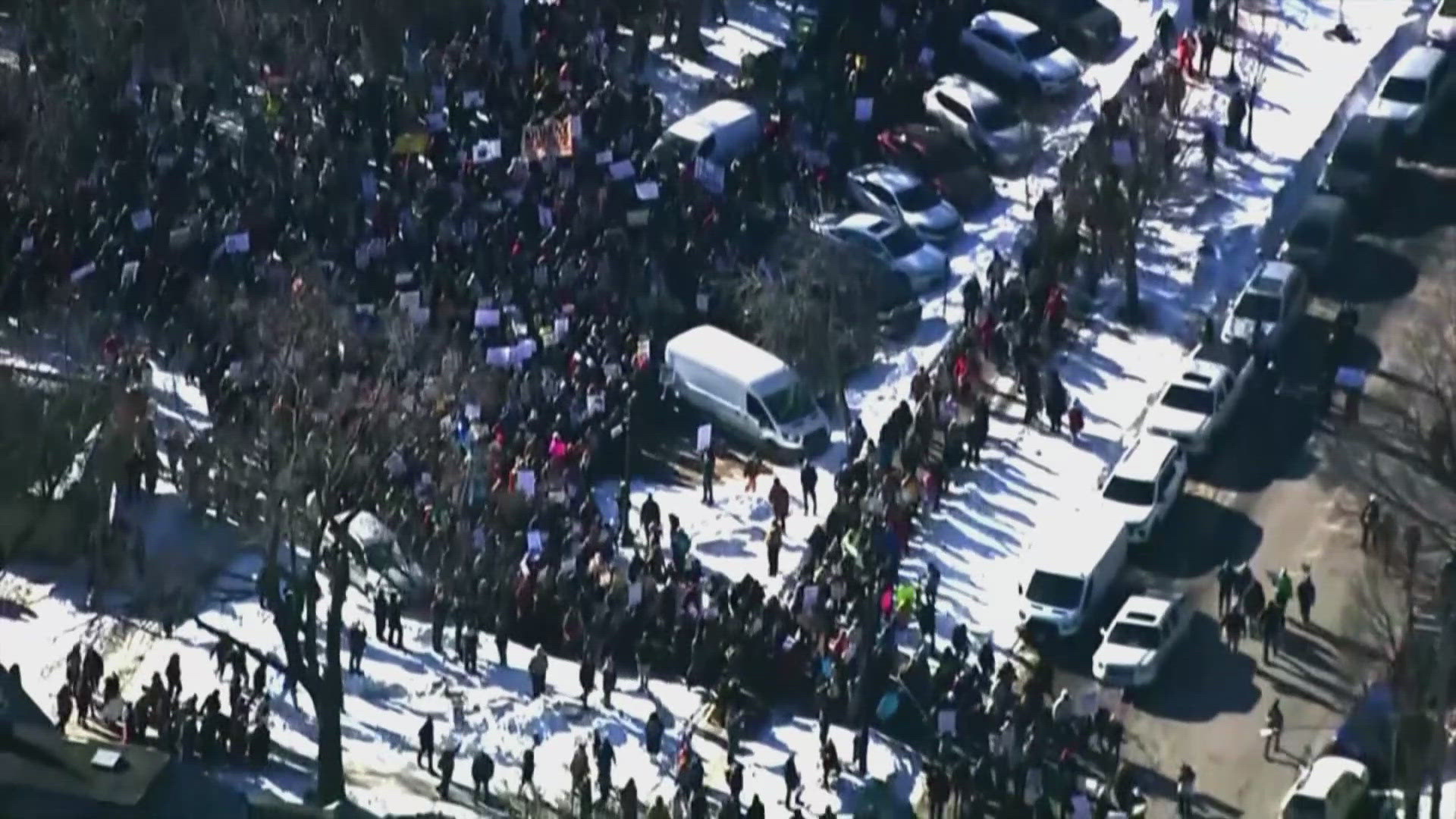
Protests opposing Immigration and Customs Enforcement (ICE) operations continue to unfold in Minneapolis, drawing hundreds of demonstrators and sustained national attention as the Department of Homeland Security (DHS) responds to mounting unrest. The demonstrations — driven by community outrage over recent law enforcement actions — reflect deep frustration with federal immigration policy and enforcement tactics, particularly in the wake of fatal shootings linked to ICE agents.
The city has become a focal point for resistance since the federal government deployed thousands of immigration agents under Operation Metro Surge, an expanded enforcement initiative in Minnesota. The operation has resulted in widespread protests in Minneapolis and ripple movements across the United States, with supporters in cities from Austin to New York participating in marches, rallies, and symbolic “days of action.”
Anger intensified after the deaths of two U.S. citizens during clashes involving federal agents, events that sparked both local and nationwide condemnation. Thousands of Minnesotans have marched and demonstrated in sub-zero temperatures, demanding that ICE and other federal law enforcement withdraw from their communities and calling for greater accountability and transparency in immigration enforcement.
Homeland Security officials have publicly defended the operation, saying they are committed to enforcing immigration laws while attempting to minimize unnecessary confrontations. Internal guidance has been issued instructing ICE officers in Minneapolis to avoid engaging with “agitators” and focus on individuals with criminal histories, aiming to reduce direct clashes with protest groups.
At the same time, DHS has faced criticism for its handling of the protests. Local leaders argue that federal actions have disrupted daily life, strained local law enforcement resources, and created an atmosphere of fear and distrust. Minneapolis officials, as well as Minnesota’s attorney general, have pursued legal challenges seeking to halt the federal enforcement surge, though judges have so far declined to issue injunctions stopping the operation.
The Department of Homeland Security has also been directed by national leadership to recalibrate its approach to public demonstrations. In a recent announcement, the President instructed DHS to avoid intervening in protests in Democratic-led cities unless formally requested or when federal property is threatened — a move widely interpreted as a response to the intensity and scale of public backlash against ICE.
Despite these adjustments, advocacy groups and protest movements in Minneapolis and beyond show no sign of dissipating. Many organizers have pledged continued action, framing their efforts as part of a broader campaign for immigration reform and civil rights protections. National networks have rallied to support local protest efforts, organizing marches, vigils, and coordinated events aimed at sustaining pressure on federal officials.
Legal observers note that the ongoing protests and responses from Homeland Security underscore broader tensions in U.S. society over immigration policy, federal authority, and community safety. While federal officials maintain that enforcement is necessary to uphold the law, critics argue that aggressive tactics and the scale of federal presence undermine trust and violate civil liberties.
As demonstrations persist in Minneapolis, the situation continues to shape national discourse on immigration, policing practices, and the limits of federal enforcement authority — with both sides preparing for further legal, political, and public confrontations in the weeks ahead.
Watch video below :


