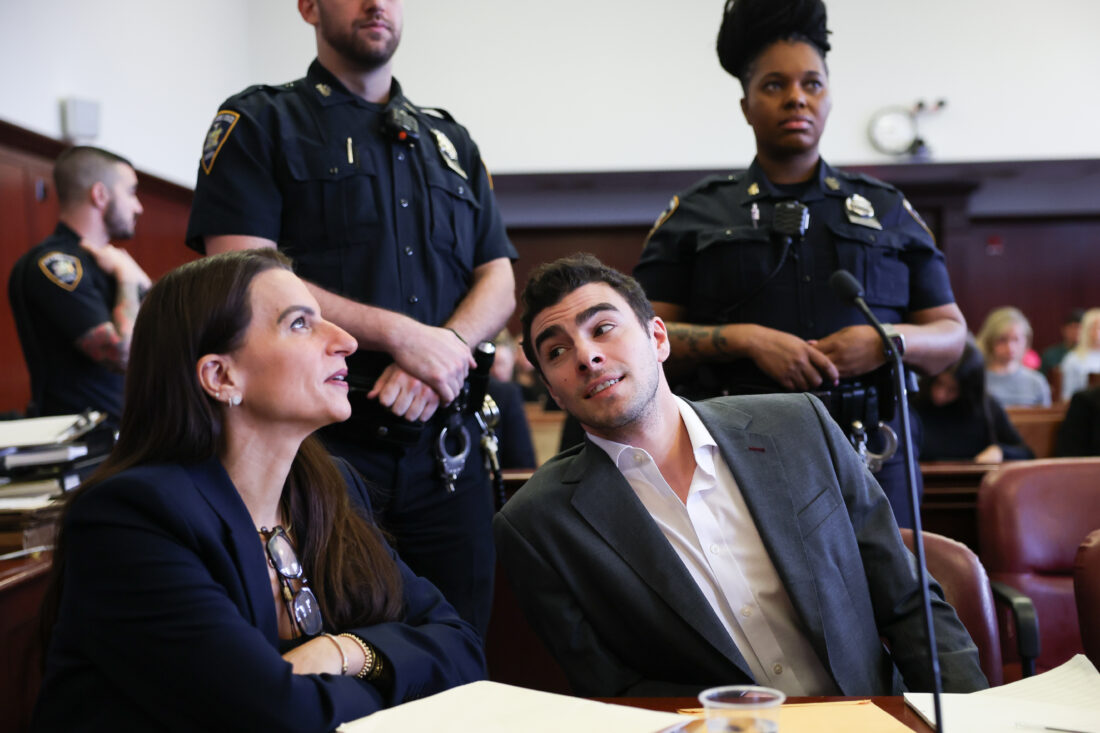
A newly released police video has intensified scrutiny of law-enforcement practices after it revealed that Luigi Mangione repeatedly stated he did not want to talk, only for officers to continue questioning him. The footage, which has circulated widely online and prompted strong public reaction, is now at the center of a developing debate over constitutional rights, interrogation standards, and the responsibility of officers to honor clear requests for silence.
The video begins with officers approaching Mangione as part of an ongoing investigation. Within moments, the recording captures him telling police that he does not wish to answer questions. Despite this statement, officers press forward, posing repeated inquiries about his activities and potential involvement in the case. Legal experts who have reviewed the footage say the interaction may raise serious concerns regarding the enforcement of Miranda rights, which guarantee individuals the right to remain silent and the right to legal counsel during questioning.
Under longstanding constitutional law, once a suspect clearly indicates that they do not want to speak, officers are required to stop questioning unless a lawyer is present or the suspect later initiates conversation. In Mangione’s case, attorneys argue that his refusal was unambiguous and should have immediately halted the interrogation. Instead, the video shows officers continuing their line of questioning, potentially jeopardizing the admissibility of any statements collected during the encounter.
Civil-rights advocates quickly mobilized after the video’s release, calling the footage an example of how individuals—particularly those unfamiliar with legal procedure—may feel pressured or intimidated into speaking. Activists note that even when suspects assert their rights clearly, the power imbalance between officers and civilians can make it difficult for individuals to maintain their position. Several organizations are demanding a full internal review and greater training for officers in de-escalation and constitutional compliance.
Police representatives, however, argue that context is essential. They maintain that officers believed they were conducting a lawful, time-sensitive inquiry and that they interpreted Mangione’s statements not as a formal invocation of his rights but as expressions of frustration. They also claim that the officers’ questions were part of a preliminary investigation rather than a custodial interrogation requiring Miranda protections. Still, legal analysts emphasize that courts have repeatedly ruled that a person’s request to remain silent does not need to follow specific wording; clarity alone is sufficient.
The incident has sparked political responses as well. Some lawmakers are calling for updated statewide guidelines on when and how Miranda rights must be administered, pointing to Mangione’s case as evidence of inconsistent standards across police departments. Others have defended the officers’ actions, arguing that stronger enforcement tools are necessary to maintain public safety.
Meanwhile, community reaction remains intense. Many residents say the video undermines trust in local policing and reinforces concerns about fairness in the justice system. For others, the footage is a reminder of the importance of knowing one’s rights and asserting them firmly.
As legal reviews continue and public pressure builds, the case of Luigi Mangione is emerging as a pivotal example in the ongoing national conversation about police conduct, civil liberties, and the balance between law enforcement and individual rights.
Watch video below :
:max_bytes(150000):strip_icc():focal(749x0:751x2)/Karoline-Leavitt-Expecting-Baby-No-2-122625-3ee9c9c5c0004741808a746cca98b9b2.jpg?w=350&resize=350,220&ssl=1 "White House Press Secretary Karoline Leavitt Announces Pregnancy, Expecting Baby Girl")



:max_bytes(150000):strip_icc():focal(749x0:751x2)/Karoline-Leavitt-Expecting-Baby-No-2-122625-3ee9c9c5c0004741808a746cca98b9b2.jpg?w=180&resize=180,130&ssl=1 "White House Press Secretary Karoline Leavitt Announces Pregnancy, Expecting Baby Girl")