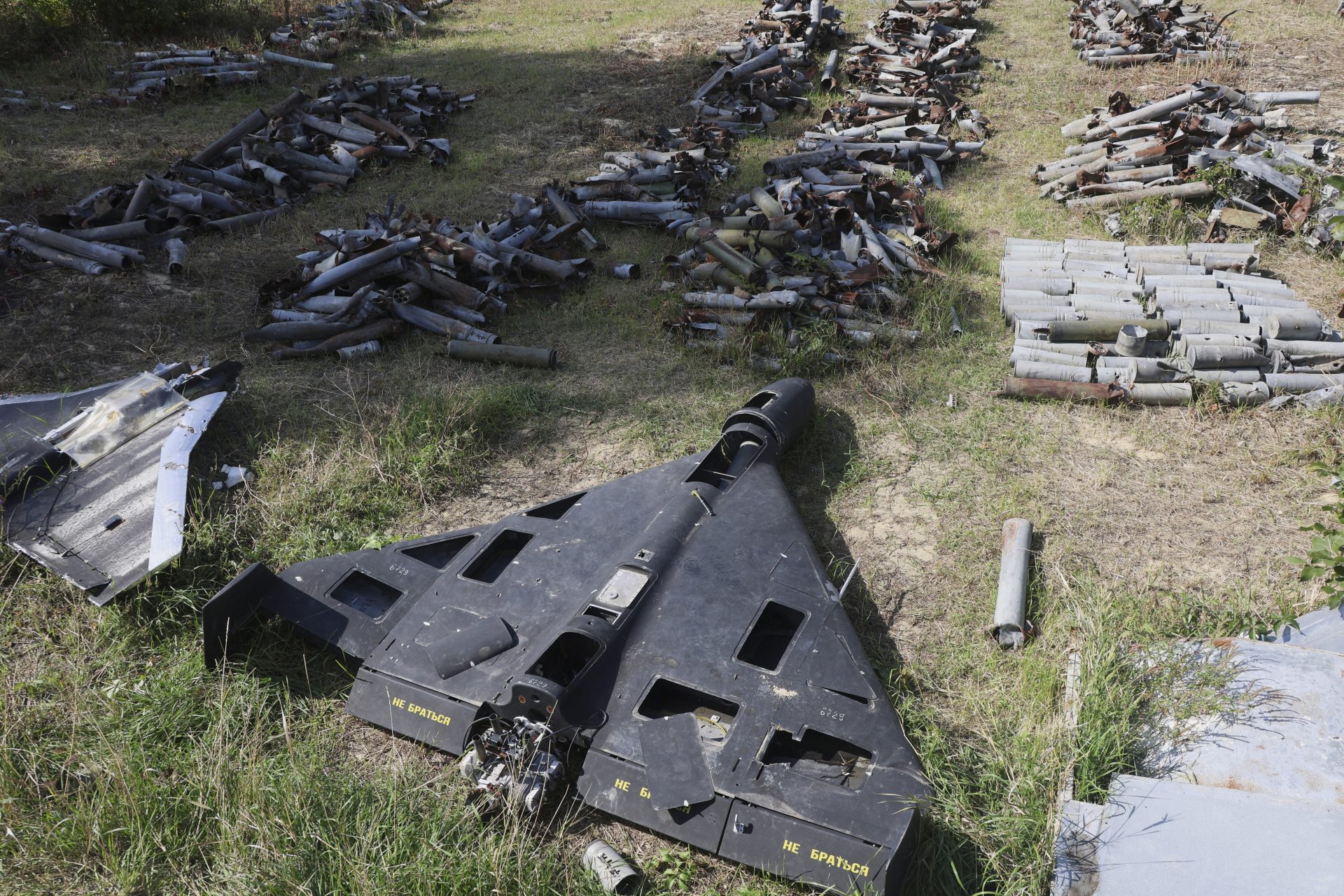
A specialized counter-drone team from the United States Department of Defense visited Kyiv shortly before the United States and Israel launched large-scale military strikes against Iran, highlighting Washington’s growing focus on combating drone warfare.
The visit was confirmed by Brig. Gen. Matt Ross, director of the Pentagon’s Joint Interagency Task Force 401, a unit established to coordinate the U.S. military’s efforts to counter unmanned aerial systems. Ross said he traveled to Ukraine to observe firsthand how Ukrainian forces defend against drone attacks, particularly those using Iranian-designed systems.
Ukraine has gained extensive experience defending against drone warfare during its ongoing conflict with Russia. Russian forces have frequently deployed Iranian-designed Shahed drones against Ukrainian infrastructure and military targets, forcing Kyiv to develop innovative and cost-effective methods to detect and intercept them.
According to Ross, the purpose of the trip was to study Ukraine’s tactics, techniques, and procedures for countering unmanned aerial threats. Ukrainian forces have built an integrated detection network that combines acoustic sensors, radar systems, and other technologies to track incoming drones from long distances and neutralize them before they reach critical targets.
Defense officials say the lessons learned from Ukraine’s battlefield experience could help improve the protection of U.S. military bases and personnel facing similar drone threats in other regions.
The timing of the visit is notable because it occurred just days before the United States and Israel launched a coordinated military campaign against Iran. The operation, known as Operation Epic Fury, targeted Iranian military infrastructure, missile sites, and other strategic facilities.
Since the strikes began, Iranian forces and allied groups have reportedly launched multiple drone attacks against U.S. positions in the Middle East. These attacks have increased concerns within the Pentagon about the growing role of unmanned aerial systems in modern warfare.
Military planners say Iran’s drone capabilities represent a major threat because they can be produced relatively cheaply and deployed in large numbers. One widely used system is the Shahed‑136 drone, a one-way attack drone capable of traveling long distances before striking its target.
Because Russia has used the same type of drones in Ukraine, U.S. officials believe Ukrainian forces have developed some of the most advanced practical experience in countering them. That experience has made Ukraine an important partner for the United States as it seeks new strategies to defend against drone attacks.
The Pentagon has increasingly emphasized the need to expand counter-drone capabilities across the U.S. military. Officials warn that unmanned systems are rapidly becoming one of the most widely used and dangerous weapons on modern battlefields.
Ross said observing Ukraine’s defense network confirmed the direction the U.S. military is already moving toward—developing layered detection systems and deploying specialized interceptors to neutralize drones before they reach critical infrastructure.
As conflicts in both Eastern Europe and the Middle East intensify, defense experts say the growing importance of drone warfare will likely shape military planning and technology development for years to come.
Watch video below :