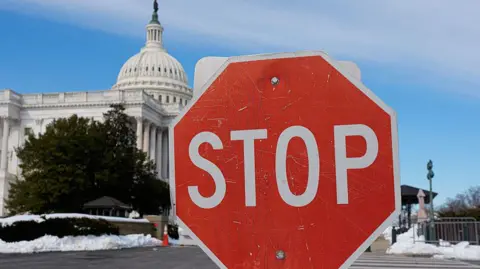
The partial government shutdown is continuing as lawmakers remain locked in a stalemate over federal budget negotiations, prolonging uncertainty for millions of Americans and intensifying pressure on political leaders to reach a deal. With no clear breakthrough in sight, the shutdown has entered another phase marked by growing economic strain, disrupted public services, and rising public frustration.
The shutdown began after Congress failed to pass a funding agreement before the deadline, leaving several federal agencies without appropriated funds. As a result, thousands of government employees have been furloughed, while many others are required to work without pay, including personnel deemed essential to national security, public safety, and critical infrastructure.
Key federal services have been affected. National parks and museums have limited operations, regulatory agencies have slowed enforcement activities, and processing delays have increased for permits, loans, and federal assistance programs. While essential services such as air traffic control and border security continue to operate, officials warn that prolonged funding gaps could strain systems and increase risks over time.
At the heart of the impasse are deep political disagreements over federal spending priorities. Lawmakers remain divided on issues such as defense funding, domestic programs, border security, and long-term fiscal policy. Negotiations have continued behind closed doors, but public statements from both sides suggest that compromises remain elusive.
Economic analysts caution that even a partial shutdown can have measurable economic consequences. Federal workers facing missed paychecks may cut back on spending, affecting local economies, particularly in regions with large government workforces. Contractors and small businesses that rely on federal payments are also feeling the impact, with some warning of layoffs if the shutdown persists.
Financial markets have so far shown limited reaction, but economists note that prolonged political dysfunction can undermine investor confidence. Repeated shutdowns, they argue, raise broader concerns about the government’s ability to manage its finances and avoid self-inflicted economic disruptions.
Public reaction has grown increasingly critical as the shutdown continues. Polls consistently show that voters tend to blame political leaders for funding failures, regardless of party affiliation. Advocacy groups, labor unions, and business organizations have urged Congress to act quickly, emphasizing that government workers and ordinary citizens bear the brunt of political gridlock.
The White House has called on lawmakers to pass a temporary funding measure to reopen the government while negotiations continue. However, some members of Congress have rejected short-term fixes, arguing that they only delay difficult decisions and perpetuate uncertainty.
Historically, partial government shutdowns have ended only when political costs outweigh strategic advantages for those involved. Past episodes suggest that public pressure, economic impact, and approaching deadlines often force compromise, though sometimes only after significant disruption.
As the shutdown drags on, attention is now focused on whether congressional leaders can bridge their differences before the consequences deepen further. Until an agreement is reached, federal agencies, workers, and the public remain caught in limbo — a reminder of how political deadlock can quickly translate into real-world disruption.
Watch video below :