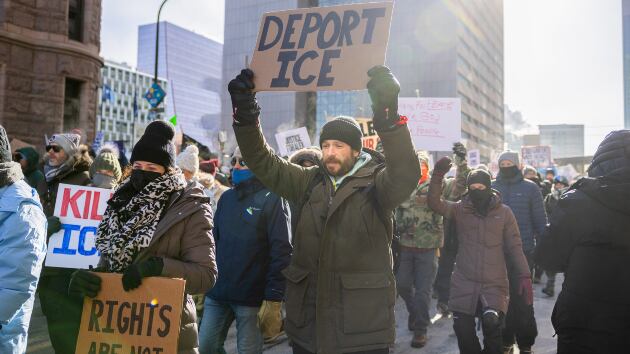
Attorneys representing the state of Minnesota have asked a federal judge to act swiftly to halt Immigration and Customs Enforcement (ICE) operations across the state, escalating a high-stakes legal battle over federal immigration enforcement and state authority. The request comes amid mounting public outrage, protests, and legal scrutiny following recent federal operations in the Twin Cities.
During a court hearing, Minnesota’s legal team urged the judge to issue immediate relief, arguing that ICE’s current enforcement actions go far beyond routine immigration duties. State attorneys contend that the scale, tactics, and deployment of federal agents amount to an unlawful operation that threatens public safety and undermines Minnesota’s sovereignty.
The state’s request centers on what officials describe as an unprecedented enforcement surge involving ICE and other Department of Homeland Security (DHS) agencies. According to Minnesota’s filings, federal agents have conducted aggressive operations that have disrupted neighborhoods, strained local emergency services, and created widespread fear among residents.
Attorneys for Minnesota argue that the federal government has failed to adequately explain the legal basis for the operation or its necessity. They claim the enforcement effort violates constitutional limits by commandeering local infrastructure and overriding state authority, raising serious concerns under the Tenth Amendment.
State officials also emphasized the urgency of judicial intervention. They warned that continued enforcement actions could lead to further confrontations, injuries, or loss of life, citing recent incidents involving federal agents that have intensified public concern. “This is not a hypothetical harm,” one state attorney argued in court. “The damage is happening now.”
The federal government pushed back strongly against Minnesota’s request. Lawyers representing ICE and DHS argued that immigration enforcement falls squarely within federal authority and that a court order halting operations would be an extraordinary and unprecedented step. They warned that granting the state’s request could severely limit the executive branch’s ability to enforce federal law.
The judge questioned both sides extensively but did not issue an immediate ruling. Instead, the court pressed attorneys to clarify the legal standards for granting emergency relief and whether the state had met the high threshold required to temporarily block federal enforcement actions.
The case highlights a growing national conflict between state governments and federal immigration authorities. While immigration enforcement is primarily a federal responsibility, states like Minnesota argue they have a duty to protect residents’ safety, civil liberties, and constitutional rights when federal actions spill into local communities.
Public reaction has been intense. Demonstrations have drawn thousands of people demanding transparency and accountability from federal agencies. Community leaders warn that trust between residents and law enforcement is eroding, making cooperation on public safety increasingly difficult.
Legal experts say the judge’s decision could have far-reaching implications. A ruling in favor of Minnesota may embolden other states to challenge federal immigration operations, while a rejection could reinforce broad federal authority in enforcement matters.
As the court considers the request, all eyes remain on whether the judge will move quickly to intervene. For Minnesota officials, the message is clear: without immediate action, they argue, the consequences of continued ICE operations could deepen legal, political, and social divisions — not only within the state, but nationwide.
Watch video below :