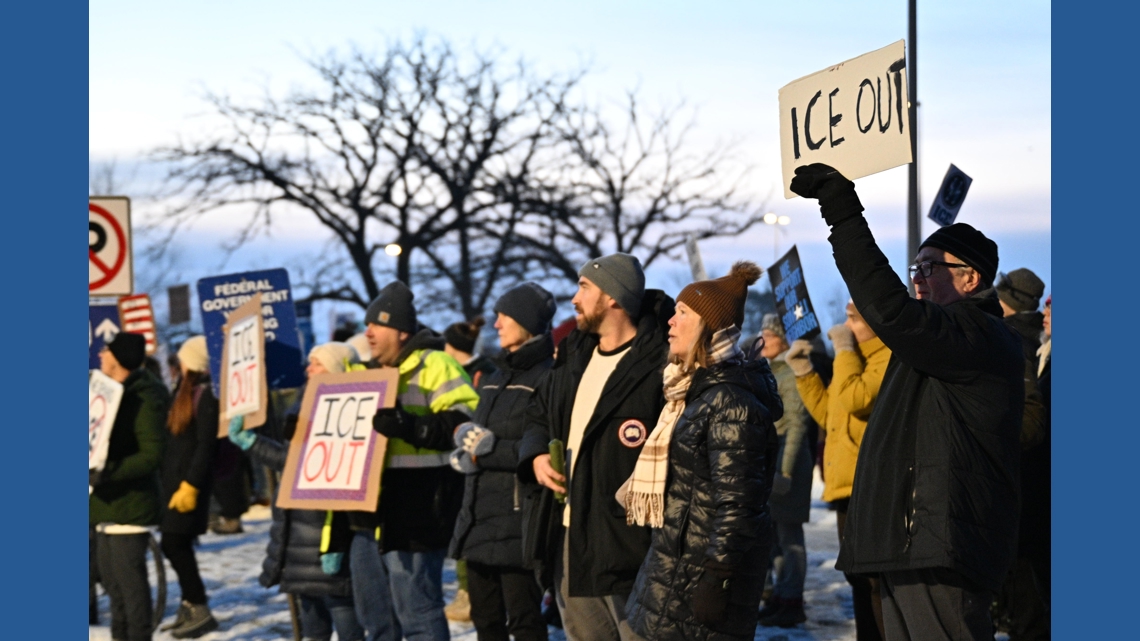
Tens of thousands of protesters have taken to the streets in Minneapolis and cities across the United States, igniting one of the largest movements in recent years against Immigration and Customs Enforcement (ICE) after multiple deadly shootings involving federal immigration agents.
The most recent outrage stems from the fatal shooting of Alex Pretti, a 37-year-old intensive care nurse and U.S. citizen, who was killed by federal agents on January 24 in Minneapolis. That incident followed the earlier death of Renée Nicole Good, another Minneapolis resident shot by an ICE officer during an enforcement operation on January 7, sparking immediate local accusations of excessive force. Protesters and local officials point to bystander video that appears to contradict initial federal claims about both shootings, fueling public distrust and anger.
In sub-zero winter temperatures, demonstrators filled downtown Minneapolis with chants of “No justice, no peace” and “ICE out now,” calling for the removal of ICE agents and broader reform of federal immigration enforcement. Organizers framed the demonstrations as part of a larger campaign to hold law enforcement accountable for what critics describe as violent tactics against migrants and community members alike.
The protests have not been isolated to Minnesota. Walkouts, marches, and rallies have spread to major U.S. cities, including New York City, Boston, Los Angeles, San Francisco, and Washington, D.C., as part of a coordinated response to federal immigration operations and the deaths of civilians in Minneapolis. High school students staged walkouts, unions supported general strikes, and civil rights organizations amplified calls for national accountability and legislative changes.
Local and state leaders have also been swept into the controversy. Minnesota Governor Tim Walz has condemned the shootings as avoidable and demanded that federal agents leave the state, while Minneapolis Mayor Jacob Frey appealed for calm and decried what he called a “chaotic” presence of federal law enforcement in the city.
The U.S. Department of Justice has launched a federal civil rights investigation into Pretti’s death as pressure mounts for transparency and accountability, while federal authorities maintain that agents acted in self-defense during enforcement actions.
Public reaction has been intense. Community activists, migrant rights advocates, and ordinary residents have voiced deep frustration with federal immigration policies and the expanded deployment of ICE and Border Patrol agents. Protesters underscored their demands not only to halt violent enforcement but also to reassess the role of immigration enforcement agencies in American cities.
The protests have drawn national media attention, prompting responses from civic leaders, civil rights groups, and policymakers. Some call for legislative reforms and increased oversight of federal agents, while others urge a careful and peaceful approach to protest. The events have also spurred broader debate about the use of force, federal authority in local jurisdictions, and the future of immigration enforcement policy in the United States.
Watch video below :