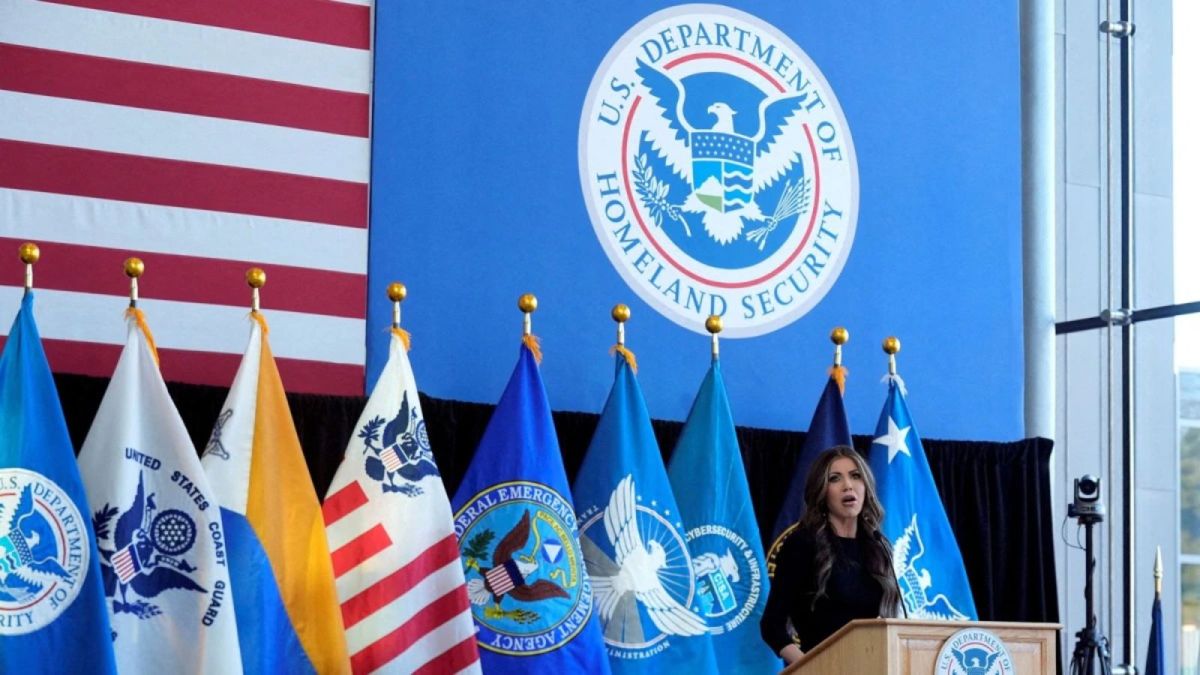
U.S. lawmakers failed to pass a budget bill to fund the Department of Homeland Security (DHS) before the holiday deadline, raising fresh concerns about government disruption, political gridlock, and potential impacts on critical national security operations.
The missed deadline has triggered renewed debate in Washington over spending priorities and the growing inability of Congress to reach bipartisan agreements on essential federal funding. With DHS responsible for key agencies such as Customs and Border Protection (CBP), Immigration and Customs Enforcement (ICE), the Transportation Security Administration (TSA), and the Federal Emergency Management Agency (FEMA), delays in funding decisions could have far-reaching consequences.
Although the department continues operating under temporary funding measures, the failure to pass a full budget bill has intensified pressure on lawmakers to act quickly once Congress returns. Experts warn that prolonged uncertainty could affect planning, staffing, and long-term preparedness for national security threats, immigration enforcement operations, and disaster response capabilities.
DHS is one of the most critical federal agencies in the U.S. government, overseeing border security, counterterrorism coordination, cybersecurity protection, and emergency management. Without a finalized funding bill, DHS programs may face limitations that could weaken operational efficiency at a time when the agency is already under pressure from rising migration concerns and ongoing security challenges.
Political tensions in Congress have fueled the stalemate. Lawmakers remain divided over immigration policy, border enforcement spending, and the allocation of resources for domestic security initiatives. Some members of Congress argue that DHS funding must be tied to tougher immigration reforms, while others warn against using national security funding as leverage in political negotiations.
The failure to reach an agreement before the holiday has also raised fears of another looming government shutdown, a scenario that has repeatedly threatened Washington in recent years. While certain DHS operations would continue due to their essential status, a shutdown could still disrupt employee pay schedules, reduce administrative support, delay contract work, and strain agency morale.
Federal workers and contractors tied to DHS are among those most directly affected by the uncertainty. Even temporary funding extensions can limit new hiring, restrict program expansion, and complicate long-term planning for agencies that depend on stable budgets to operate effectively.
The situation has also drawn criticism from analysts who argue that Congress is risking public confidence by repeatedly delaying major spending decisions. Many Americans see DHS funding as a core responsibility of government, given its role in protecting airports, securing borders, and responding to natural disasters and emergencies.
As lawmakers prepare to resume negotiations, both parties are expected to face increased public pressure to deliver a resolution. The White House has also urged Congress to act quickly, warning that funding delays could undermine security readiness and limit the government’s ability to respond effectively to evolving threats.
For now, DHS remains funded through short-term measures, but the political impasse signals continued instability in the federal budget process. The next round of negotiations will determine whether Congress can avoid deeper disruptions and deliver a long-term funding solution.
With national security, immigration enforcement, and emergency response at stake, many experts warn that lawmakers cannot afford further delays—and that a final DHS funding agreement must be prioritized immediately.
Watch video below :