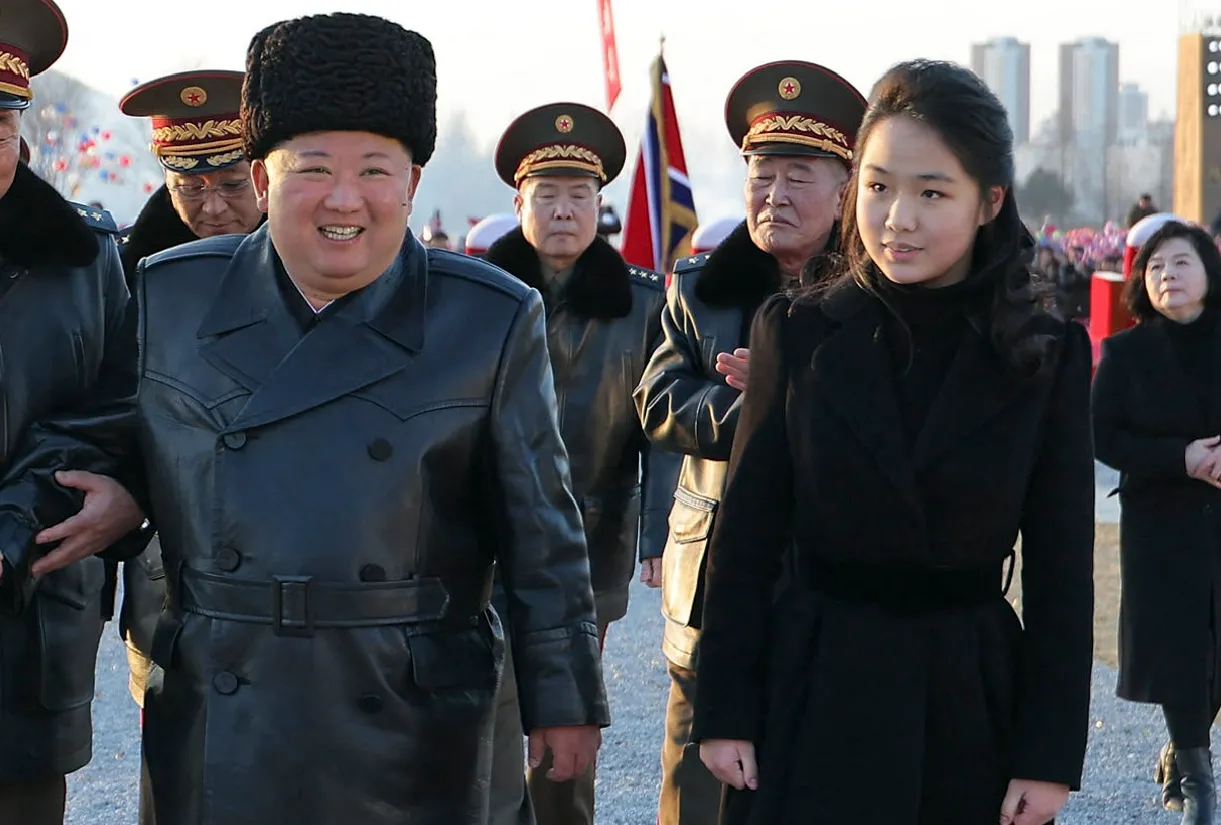
Kim Jong Un has been reelected as leader of North Korea, while state media reports indicate his teenage daughter has been appointed to a prominent defense-related role described by observers as a symbolic “missile chief” position.
The leadership confirmation came during a high-level party assembly in Pyongyang, where senior officials praised Kim’s continued direction of the country’s military and economic strategy. State-controlled media framed the reelection as a reaffirmation of stability and national strength amid heightened regional tensions.
Adding to international attention was the visible emergence of Kim’s daughter at recent military events. Though her exact title and authority remain unclear, she has appeared alongside her father during missile tests and strategic weapons inspections. Analysts say the visibility signals an effort to introduce her to the public as part of a long-term leadership narrative.
North Korea’s political system does not follow democratic electoral standards in the conventional sense. Leadership confirmations typically occur through party mechanisms dominated by the ruling elite. Still, public ceremonies and official announcements are carefully staged to project unity and continuity.
Defense analysts note that Kim has continued prioritizing missile development, overseeing multiple weapons tests in recent years. These demonstrations are often described by Pyongyang as necessary deterrence against perceived external threats. The international community, however, has expressed concern over ballistic missile advancements and potential nuclear capabilities.
The appearance of Kim’s daughter at such events has fueled speculation about succession planning. While North Korea has not formally declared her as heir apparent, the prominence she has received is unusual given the country’s traditionally secretive approach to family matters within the ruling circle.
Regional governments, including South Korea and Japan, continue to monitor developments closely. Diplomatic efforts aimed at de-escalation have stalled in recent years, leaving tensions largely unresolved.
Experts suggest that the public elevation of a family member could be designed to reinforce dynastic continuity, a hallmark of North Korea’s political structure since its founding. Leadership has remained within the Kim family for generations, shaping both domestic policy and international relations.
Despite economic challenges and international sanctions, state messaging emphasizes technological progress and military strength. Kim’s reelection reinforces his control over the ruling party, armed forces, and strategic direction of the country.
As North Korea advances its defense initiatives, the global community will likely continue analyzing the significance of Kim’s daughter’s growing public role. Whether symbolic or substantive, her emergence marks a notable moment in the evolving narrative of one of the world’s most closely watched governments.
Watch video below :