
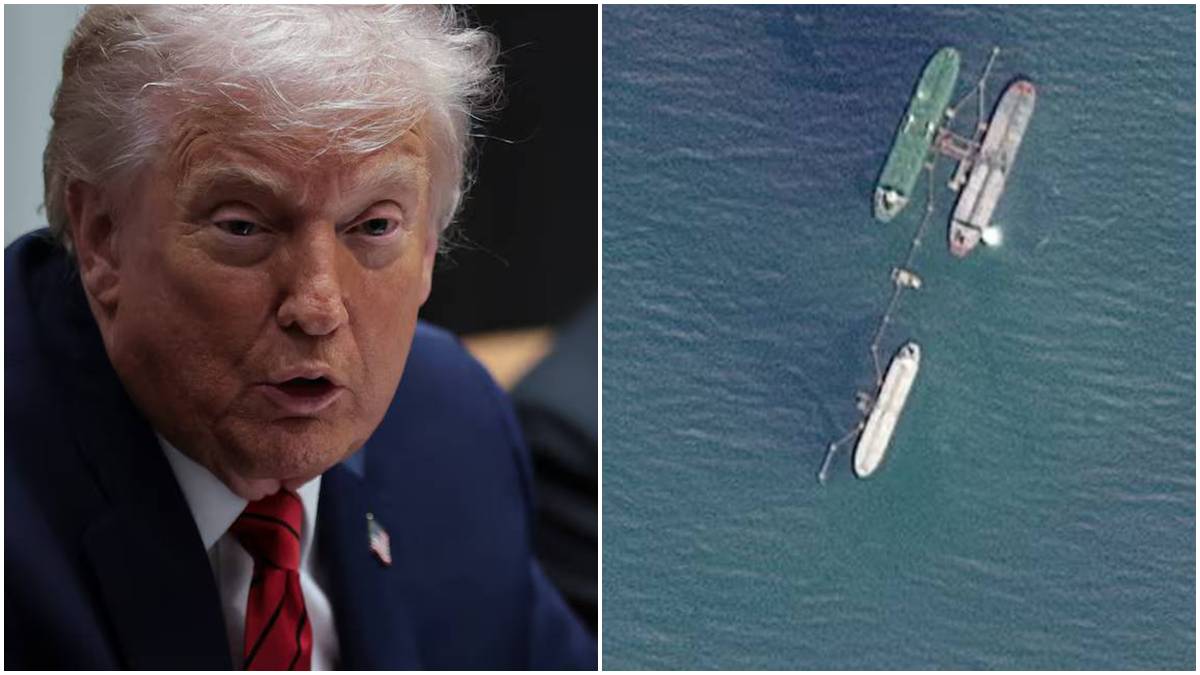
In a dramatic escalation of U.S. pressure on Venezuela, the Biden-Trump administration has seized multiple oil tankers near Venezuelan waters as part of a broad crackdown on the Maduro regime’s oil trade — a move that has drawn strong support from President Donald Trump and his political allies who insist the actions are necessary to uphold U.S. sanctions and regional security.
On December 10, U.S. authorities carried out a high-profile operation to seize the oil tanker Skipper in the Caribbean Sea off the coast of Venezuela. The tanker, which had been sanctioned by the U.S. Treasury Department for allegedly transporting oil linked to a “shadow fleet” evading sanctions, was boarded by U.S. forces without resistance. Shortly thereafter, a second vessel, the Centuries, carrying roughly 1.8 million barrels of crude oil, was intercepted and taken into custody by the U.S. Coast Guard.
President Trump has responded to these developments with a firm public stance, declaring that the United States intends to “keep the pressure on” Venezuela until Caracas complies with international norms and respects U.S. sanctions. Trump’s critics warn that such forceful actions risk escalating tensions, but his supporters argue that these measures are long overdue in confronting the Maduro government’s efforts to circumvent sanctions and use oil revenue to fund criminal networks.
The U.S. crackdown has been framed by supporters as part of a broader campaign to enforce sanctions law and combat illicit oil trafficking — an activity Washington claims indirectly finances narcoterrorism and emboldens authoritarian regimes. Homeland Security officials, speaking on condition of anonymity, have emphasized that these operations target vessels deliberately flouting U.S. embargoes.
In addition to the two seized vessels, the U.S. Coast Guard is actively pursuing a third sanctioned tanker — Bella 1 — in international waters, underscoring the administration’s unwavering commitment to tightening sanction enforcement.
Support for Trump’s approach has been vocal among Republican lawmakers and conservative commentators, who argue the United States must take decisive action to stop Maduro from leveraging oil exports as a lifeline for his embattled government. For many Trump backers, maintaining aggressive pressure sends a message that Washington will not tolerate attempts to dodge international sanctions or challenge U.S. economic and strategic interests in the Western Hemisphere.
However, critics of the policy warn that aggressive maritime interdictions and blockades could destabilize an already volatile region. Some experts point to legal ambiguities under international maritime law, arguing that seizures in international waters may have long-term diplomatic repercussions.
The Venezuelan government, for its part, has condemned the U.S. operations as “international piracy” and has vowed to appeal to international bodies such as the United Nations. Caracas maintains that Washington’s actions represent an unlawful overreach beyond legitimate sanctions enforcement.
As the U.S. pursues additional tanker interdictions and expands its naval presence near Venezuela, the geopolitical stakes continue to rise. With both domestic and international debate intensifying, the Trump administration’s hard-line stance on Venezuela’s oil sector remains a potent flashpoint in U.S. foreign policy and a key battleground for broader discussions on sanctions, sovereignty, and global energy markets.
Watch video below :