

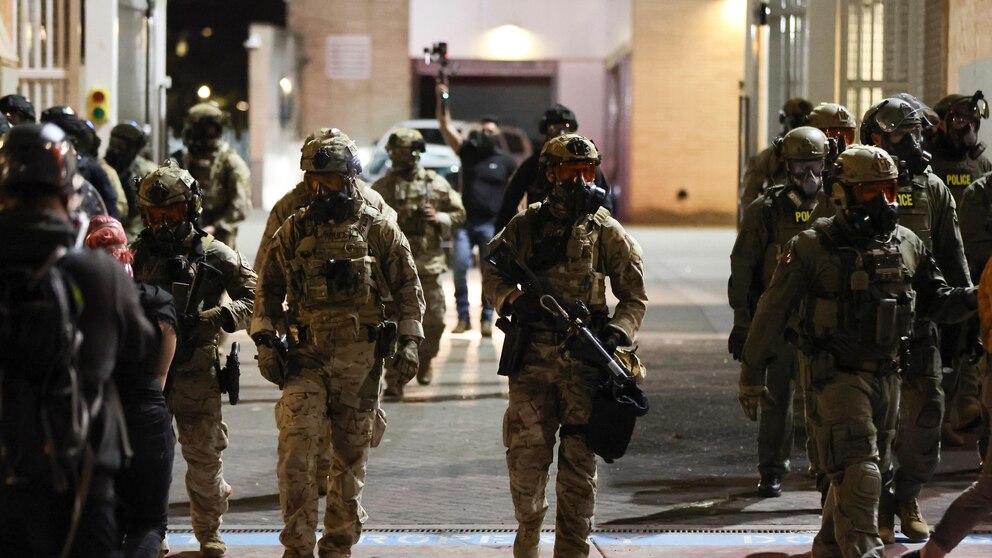
A federal judge has temporarily blocked the Trump administration’s attempt to deploy the National Guard to Portland, Oregon, calling the move an unconstitutional overreach of executive power. The decision, handed down by U.S. District Judge Karin Immergut, represents a major legal setback for the White House as tensions continue to rise between federal and state governments.
The ruling came after Oregon officials filed an emergency motion to prevent federalization of 200 National Guard troops, which the Trump administration claimed were needed to control unrest near an immigration enforcement facility in Portland’s Broadview district. Judge Immergut, however, found that the administration’s justification was “untethered to the facts” and failed to meet the constitutional standards required to override state authority.
“This nation’s founders placed deliberate limits on federal military intervention in civilian matters,” Judge Immergut wrote. “The President cannot invoke emergency powers based on speculative threats or political motives.”
Constitutional Battle Over State Control
The judge’s decision invoked the 10th Amendment, which reserves powers not delegated to the federal government to the states. Oregon’s attorneys argued that deploying federalized troops without state consent violated that principle and risked escalating tensions during otherwise peaceful demonstrations.
State leaders welcomed the decision, with Governor Tina Kotek praising the ruling as a “victory for state sovereignty and the rule of law.” She added, “Oregon will never accept military occupation under the guise of public order.”
Meanwhile, the Department of Justice announced it would appeal the injunction, maintaining that the deployment was a necessary step to protect federal assets and personnel. White House spokesperson Steven Cheung defended the administration’s actions, saying, “The President has a constitutional duty to safeguard federal facilities and ensure public safety when local authorities fail.”
Protests and Political Fallout
The ruling comes amid ongoing demonstrations in Portland, where activists have protested immigration enforcement and police tactics. Local officials insist that the protests have remained largely peaceful and that city law enforcement, along with state police, are fully capable of maintaining order.
Critics accused the Trump administration of using the deployment to score political points ahead of the 2025 election, framing the move as part of a broader effort to portray Democratic-led states as lawless.
Legal experts say the decision could set a powerful precedent. Dr. Mariah Bennett, a constitutional law professor at the University of Oregon, noted:
“This ruling reinforces the idea that even the President must respect state sovereignty. It limits the ability of the federal government to militarize domestic crises for political gain.”
What Comes Next
The court’s order will remain in effect until October 18, pending further hearings. If the injunction is upheld, it could permanently restrict the federal government’s ability to deploy National Guard troops without state approval — a major win for states’ rights advocates.
As Portland braces for the next legal round, the case underscores a growing divide in American politics: the clash between federal authority and state autonomy, and the enduring question of how far a president can go in the name of “law and order.”
Watch video below :


