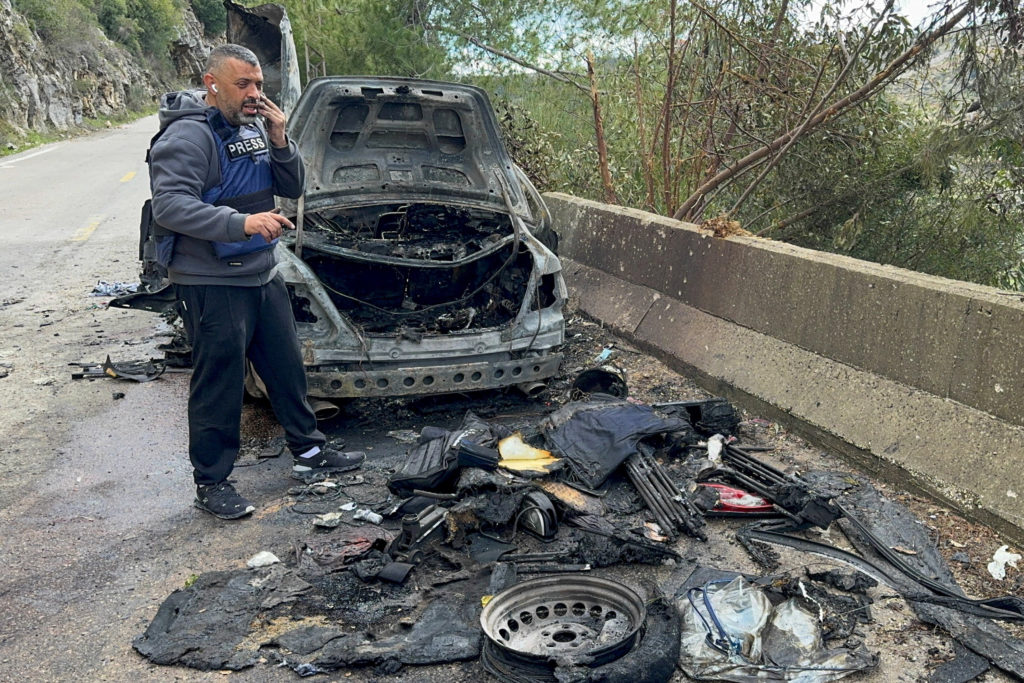
An Israeli airstrike in southern Lebanon has killed three journalists who were reporting on the ongoing conflict linked to the war involving Iran, highlighting growing risks faced by media professionals covering one of the most volatile geopolitical crises in recent years.
According to multiple reports, the strike occurred near the town of Jezzine, where journalists were documenting military developments related to the expanding regional conflict. The victims were identified as Ali Shoeib, a correspondent for Al-Manar TV, and Fatima Ftouni, a reporter for Al-Mayadeen TV, along with her brother Mohammed Ftouni, a video journalist working alongside her.
Media organizations stated that the journalists were traveling in a clearly marked press vehicle when the airstrike occurred. The incident has raised serious concerns among press freedom groups and international observers regarding the safety of reporters working in conflict zones, particularly as hostilities in the Middle East continue to intensify.
Israeli officials reportedly said the strike targeted one of the individuals based on alleged links to Hezbollah intelligence activities, though no publicly verified evidence has been released to support the claim. Lebanese authorities and several international organizations have condemned the strike, arguing that journalists are protected under international humanitarian law and should not be targeted during armed conflicts.
The incident comes amid escalating regional tensions as clashes connected to the Iran war increasingly affect neighboring countries, including Lebanon, Syria, and areas surrounding key strategic routes. Military activity in southern Lebanon has intensified in recent weeks as Israeli forces conduct operations aimed at limiting the influence of Hezbollah, an Iran-backed group involved in cross-border confrontations.
Press freedom organizations warn that the dangers facing journalists in war zones are increasing as conflicts become more complex and geographically widespread. The Committee to Protect Journalists has documented multiple cases of reporters killed or injured while covering developments related to the expanding Middle East war since late February 2026.
The deaths of the three journalists have intensified debate about the protection of civilians and media workers in armed conflicts. International law generally considers journalists to be non-combatants, provided they do not directly participate in hostilities. Advocacy groups are calling for transparent investigations to determine whether the strike complied with international legal standards governing military conduct.
As the Iran war enters a critical stage, analysts suggest the conflict is increasingly affecting neighboring regions, creating broader humanitarian and political implications. The risks to journalists underscore the challenges of reporting from active conflict zones, where accurate information remains essential for global understanding of rapidly evolving geopolitical developments.
Watch video below :