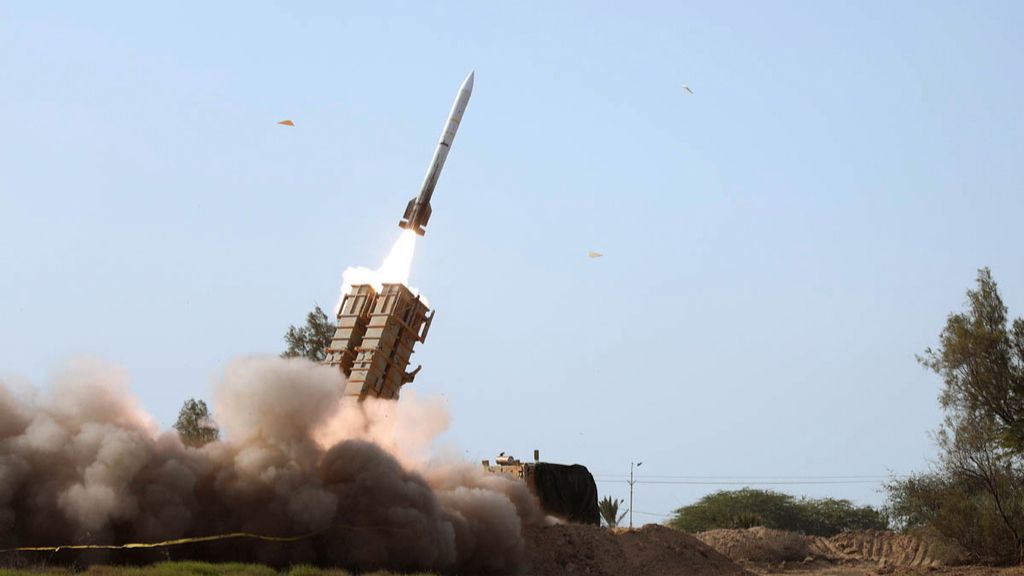
Iran continues to maintain significant missile launching capabilities despite weeks of sustained military strikes targeting its defense infrastructure, according to recent intelligence assessments cited by multiple media reports. The findings suggest that while Iran’s military assets have suffered damage, a substantial portion of its missile and drone arsenal remains operational, posing ongoing security concerns across the Middle East.
Sources familiar with the intelligence indicate that nearly half of Iran’s missile launchers are still intact, enabling the country to continue deploying ballistic missiles and one-way attack drones. Analysts estimate that thousands of drones remain available, providing Iran with continued strike capabilities even after repeated air attacks on key military facilities.
The assessment highlights the resilience of Iran’s missile infrastructure, much of which is designed to survive sustained bombardment. Many launch systems are mobile or stored in fortified underground facilities, making them more difficult to detect and destroy. Experts say this decentralized structure allows Iran to maintain operational flexibility and sustain retaliatory capability even under heavy pressure.
Recent military operations have reportedly targeted missile production facilities, launch bases, and storage locations, reducing Iran’s launch frequency compared to the early days of the conflict. However, intelligence officials emphasize that the decline in missile launches does not necessarily indicate the elimination of capability, but rather a strategic adjustment in how Iran deploys its remaining arsenal.
Iran’s missile program has long been considered one of the largest in the Middle East and a central component of its defense strategy. Ballistic missiles provide Tehran with a deterrent against regional adversaries and compensate for limitations in its air force caused by decades of sanctions. Some estimates suggest Iran possessed more than 3,000 missiles of various ranges prior to the current conflict, including short- and medium-range systems capable of striking targets across the region.
Security analysts note that missile and drone technology plays a critical role in Iran’s asymmetric warfare doctrine, enabling the country to project power without relying on traditional air superiority. Recent incidents involving attacks on regional infrastructure and military assets demonstrate that Iran’s capabilities continue to present strategic challenges for opposing forces.
Despite significant damage to some production sites and launch facilities, intelligence assessments suggest Iran retains the capacity to continue limited missile operations. Analysts warn that the remaining launch systems could still threaten shipping routes, military bases, and critical infrastructure throughout the region, particularly near strategic waterways such as the Strait of Hormuz.
The evolving situation underscores the complexity of modern military conflicts, where advanced weapons systems and hardened infrastructure make it difficult to fully eliminate strategic capabilities. As tensions remain elevated, defense experts expect continued monitoring of Iran’s missile activity and further efforts to limit its operational reach.
Ongoing developments related to Iran’s missile program are likely to influence geopolitical strategy, energy markets, and regional security planning in the months ahead.
Watch video below :