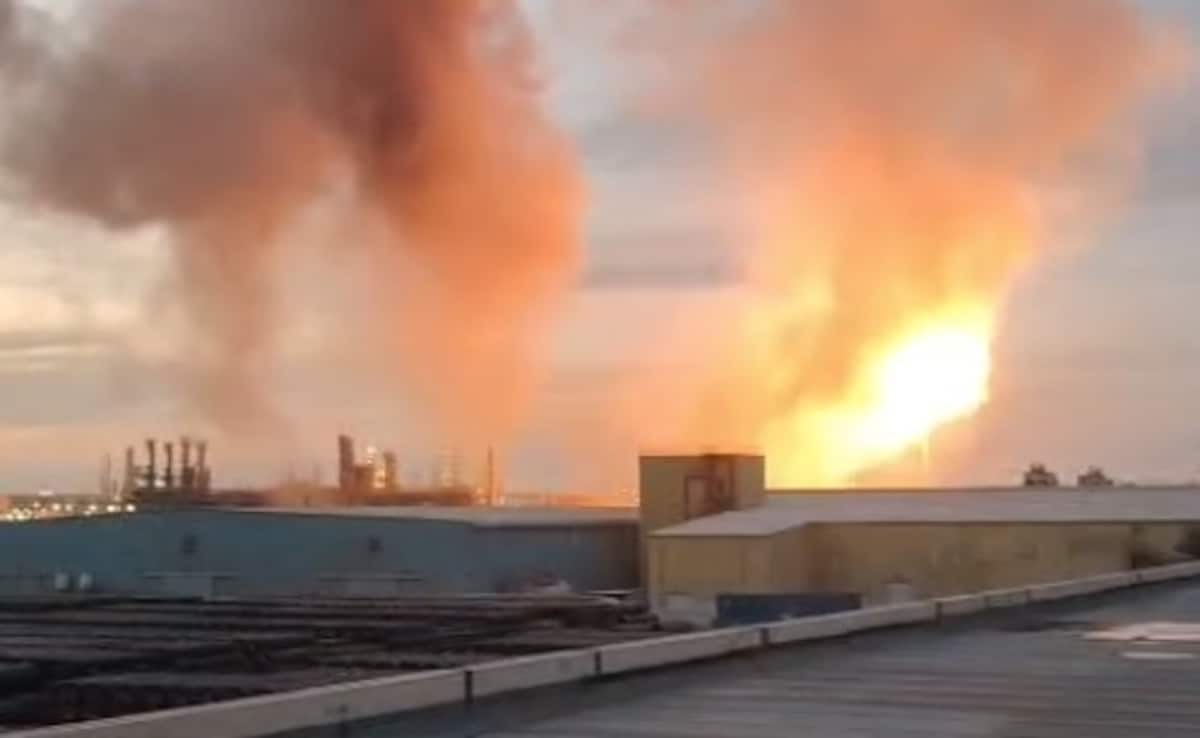
An attack attributed to Iran has ignited a large fire at the only oil refinery in Bahrain, marking a significant escalation in the growing regional conflict and raising fresh concerns about global energy stability.
The strike targeted the refinery operated by Bapco Energies in the Al-Ma’ameer industrial area. Witnesses reported thick smoke rising from the facility as emergency crews rushed to contain the blaze. Authorities confirmed that the attack caused material damage but initially reported no fatalities.
Key Energy Facility Hit
The refinery is Bahrain’s primary oil processing facility and a crucial part of the country’s energy infrastructure. It has a production capacity of roughly 350,000–380,000 barrels of oil per day, supplying fuel domestically and for export.
Because the plant plays such an important role in the regional oil supply chain, the attack immediately triggered alarm across global energy markets.
Following the strike, Bapco declared force majeure on some oil shipments, a legal step that allows companies to suspend contractual deliveries when extraordinary events disrupt operations.
Fire and Damage After Strike
According to Bahrain’s state media, the attack caused a fire at the refinery complex and damaged parts of the facility. Emergency teams were deployed to extinguish the blaze and secure the surrounding industrial zone.
Video footage circulating online showed large flames and dark smoke rising above the refinery site, underscoring the scale of the incident.
Officials said the country’s domestic fuel needs would still be met while damage assessments and repairs are carried out.
Part of Wider Regional Conflict
The attack is widely seen as part of a broader wave of Iranian strikes targeting energy infrastructure in Gulf countries amid intensifying tensions across the Middle East.
Recent attacks and counterstrikes involving Iran, Israel, and Western allies have expanded the conflict beyond traditional battle zones, increasingly affecting economic targets such as oil refineries, fuel depots, and shipping routes.
Impact on Global Oil Markets
Energy analysts warn that attacks on Gulf oil facilities could disrupt supply chains and drive volatility in global markets. Bahrain’s refinery is a key export hub, and disruptions there may influence international fuel prices.
In recent days, oil prices have already surged amid fears that conflict could threaten critical shipping routes such as the Strait of Hormuz, through which roughly one-fifth of the world’s oil supply passes.
What Happens Next
Authorities in Bahrain are continuing to assess the damage while firefighters and engineers work to stabilize operations at the refinery. Meanwhile, regional security forces remain on high alert amid fears of further attacks on energy infrastructure.
The strike highlights how the escalating conflict is now directly impacting global energy systems, raising concerns that additional attacks on oil facilities could further destabilize markets and intensify geopolitical tensions.
Watch video below :