

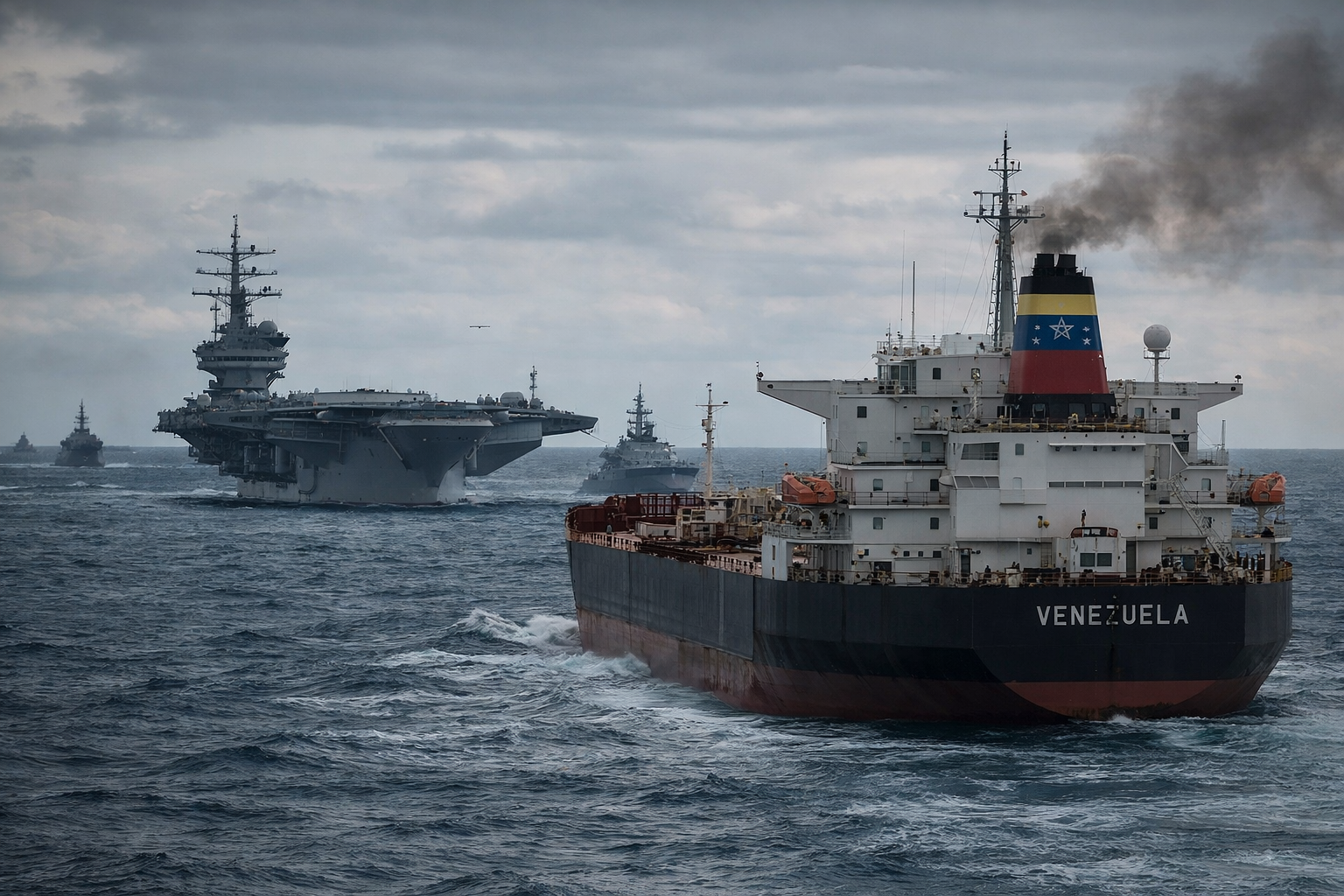
The Trump administration’s naval blockade on Venezuela marks one of the most aggressive U.S. foreign policy moves in the Western Hemisphere in recent years, signaling a sharp escalation in Washington’s efforts to isolate and pressure President Nicolás Maduro’s government.
Under the strategy, U.S. naval and maritime forces were deployed to intercept and disrupt shipments linked to Venezuela, particularly those suspected of involving illegal oil exports, drug trafficking, or sanctioned trade. The operation was framed by Trump officials as a national security measure designed to combat transnational crime and weaken a regime accused of corruption, authoritarianism, and human rights abuses.
According to administration statements, the blockade was not a traditional act of war but a targeted maritime enforcement campaign. U.S. forces worked alongside regional allies to monitor shipping routes in the Caribbean and surrounding waters, increasing inspections and surveillance of vessels believed to be connected to the Venezuelan state or its allies. The goal: choke off critical revenue streams keeping Maduro in power.
Trump repeatedly described Venezuela as a “narco-state”, accusing top officials of collaborating with criminal networks and using oil profits to fund illicit activities. The naval pressure campaign was presented as part of a broader strategy that included economic sanctions, diplomatic isolation, and support for Venezuela’s opposition leadership.
Supporters of the blockade argued it was a necessary show of force. They claimed years of sanctions alone had failed to produce political change in Caracas, and that stronger action was required to protect U.S. interests and regional stability. From this perspective, maritime enforcement offered a way to apply pressure without deploying ground troops or launching direct military strikes.
Critics, however, warned the blockade carried serious risks. International law experts questioned whether the operation could be interpreted as an act of war, while humanitarian groups expressed concern that tighter controls could worsen Venezuela’s already dire economic and humanitarian crisis. Millions of Venezuelans have faced shortages of food, medicine, and basic services, and opponents argued the blockade could deepen civilian suffering.
The move also raised tensions with U.S. rivals, including countries accused of maintaining economic ties with Caracas. Any confrontation at sea, analysts warned, could escalate quickly, drawing the United States into a broader conflict it claimed to be avoiding.
Inside the Pentagon and the State Department, the operation reflected Trump’s preference for hard-power pressure combined with economic warfare. Rather than pursuing prolonged negotiations, the administration sought to force rapid concessions by making it increasingly difficult for Maduro’s government to operate financially and logistically.
Politically, the naval blockade played well with Trump’s base, reinforcing his image as a leader willing to take decisive action against socialist governments and criminal networks. It also sent a clear message to Latin America that Washington was prepared to reassert its influence in the region.
Whether the strategy would succeed remained uncertain. While the blockade intensified pressure on Venezuela’s leadership, it also highlighted the limits of coercive power. As history has shown, isolating a regime does not always lead to its collapse — and can sometimes harden resistance.
Still, Trump’s naval blockade on Venezuela stands as a defining moment in his foreign policy legacy: bold, confrontational, and deeply controversial, reshaping the geopolitical landscape of the Americas while leaving long-term consequences still unfolding.
Watch video below :


