

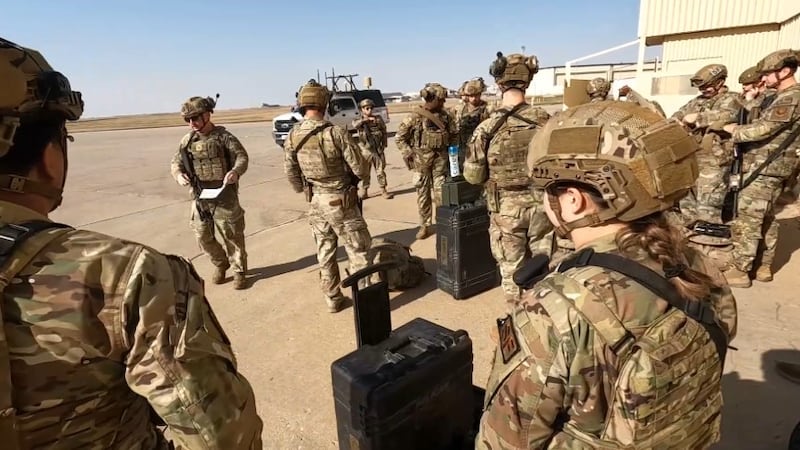
President Donald Trump’s proposed “Warrior Dividend” has emerged as one of the most talked-about — and controversial — ideas tied to his vision for military reform and national defense. Framed as a way to reward service members while streamlining defense spending, the proposal has sparked sharp debate in Washington and beyond.
At its core, the Warrior Dividend is designed to redirect savings from military reforms directly to U.S. troops and veterans. Trump has argued that decades of bureaucratic waste, inefficient procurement, and overseas commitments have drained resources without adequately benefiting the men and women who serve. The dividend, he says, would reverse that imbalance.
What Is the ‘Warrior Dividend’?
The Warrior Dividend proposes that money saved through:
-
Reduced overseas military deployments
-
Cuts to long-term foreign engagements
-
Streamlined defense contracts and procurement reform
would be returned to American service members in the form of direct financial benefits. These could include bonuses, expanded benefits, or tax relief targeted specifically at active-duty troops and veterans.
Trump has framed the plan as both a reward for service and a strategic incentive, arguing that a leaner, more focused military can still remain dominant while spending less on prolonged foreign conflicts.
How It Would Be Funded
Rather than raising taxes or expanding the defense budget, the Warrior Dividend relies on cost savings. Supporters claim that winding down “endless wars” and renegotiating defense contracts could free up billions of dollars. That surplus, under the proposal, would then be redistributed to those who have borne the burden of combat and deployment.
Critics question whether such savings are realistic, warning that reductions could weaken readiness or shift costs rather than eliminate them.
Supporters’ Arguments
Backers of the Warrior Dividend say the proposal:
-
Puts service members first, rather than defense contractors
-
Encourages responsible military engagement abroad
-
Aligns financial incentives with a more restrained foreign policy
Many conservatives and veterans supportive of Trump view the idea as long overdue, arguing that troops deserve direct compensation instead of symbolic praise.
Critics’ Concerns
Opponents raise several red flags:
-
Uncertainty over how much money could realistically be saved
-
Risks of underfunding training, maintenance, and modernization
-
Potential politicization of military pay and benefits
Some defense experts argue that any “dividend” could prove temporary, while long-term costs remain.
Political Impact
Politically, the Warrior Dividend reinforces Trump’s image as a leader focused on America First defense priorities. It also appeals to working-class voters and military families by offering tangible benefits rather than abstract promises.
However, the proposal faces significant legislative hurdles and would require congressional approval, detailed budgeting, and Pentagon cooperation.
Bottom Line
President Trump’s Warrior Dividend is a bold attempt to reshape how the U.S. rewards military service — shifting resources away from foreign entanglements and toward those in uniform. Whether it becomes policy or remains a campaign-driven concept, it has already succeeded in reigniting debate over military spending, national priorities, and how the nation values its warriors.
As with many Trump proposals, the idea is simple, the execution complex — and the political battle just beginning.
Watch video below :


