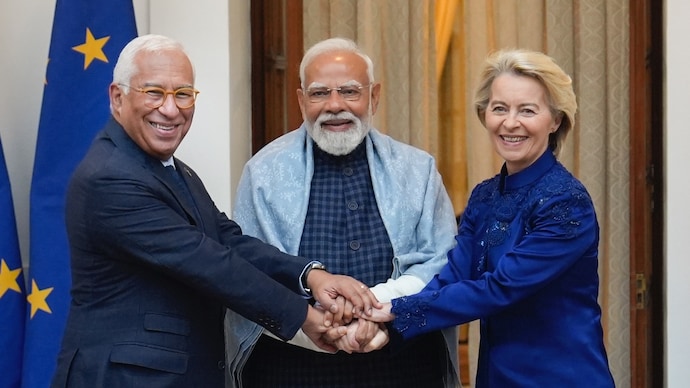
India and the European Union have finalized a sweeping trade agreement widely described by officials as the “mother of all deals,” marking a historic milestone in economic relations between two of the world’s largest markets. The agreement is expected to significantly deepen trade, investment, and strategic cooperation at a time of shifting global supply chains and geopolitical uncertainty.
Negotiators from both sides confirmed that the deal follows years of complex discussions aimed at reducing trade barriers, expanding market access, and strengthening regulatory cooperation. Once fully implemented, the agreement is projected to impact hundreds of billions of dollars in trade, making it one of the most ambitious economic partnerships ever concluded by the EU with a major emerging economy.
At the core of the agreement are commitments to lower tariffs on a wide range of goods, including industrial products, automobiles, pharmaceuticals, and agricultural exports. European companies are expected to gain improved access to India’s rapidly growing consumer market, while Indian exporters will benefit from reduced duties and streamlined rules when entering the EU’s single market.
Beyond trade in goods, the deal includes provisions on services, digital trade, and investment protection. Officials said these measures are designed to encourage cross-border investment, support innovation, and provide clearer legal frameworks for businesses operating across both jurisdictions.
Leaders on both sides framed the agreement as more than a commercial pact. European officials highlighted its strategic importance, describing it as a signal of closer cooperation with India amid global economic fragmentation. Indian leaders, meanwhile, emphasized the deal’s potential to boost manufacturing, create jobs, and integrate the country more deeply into global value chains.
The agreement also addresses sustainability and labor standards, reflecting growing pressure within the EU to link trade policy with environmental and social commitments. While some business groups have welcomed these provisions as a step toward long-term stability, critics caution that implementation could prove challenging, particularly for smaller firms.
Economists say the timing of the deal is significant. With global trade patterns being reshaped by geopolitical tensions and supply chain disruptions, both India and the EU are seeking reliable partners to diversify economic ties. The agreement could help reduce dependence on single markets while strengthening resilience on both sides.
However, challenges remain. The deal must still undergo legal review and ratification processes within the EU and India. Some sectors, including agriculture and data governance, may continue to face political scrutiny as lawmakers and interest groups assess the agreement’s potential impact.
Despite these hurdles, analysts agree that the agreement represents a major step forward. “This is a transformative moment for India–EU relations,” one trade expert said. “It sends a clear message about the future direction of global trade partnerships.”
As the agreement moves toward implementation, businesses across Europe and India are preparing to adapt to new opportunities and competitive pressures. If successfully executed, the “mother of all deals” could redefine economic cooperation between India and the EU for decades to come.
Watch video below :