

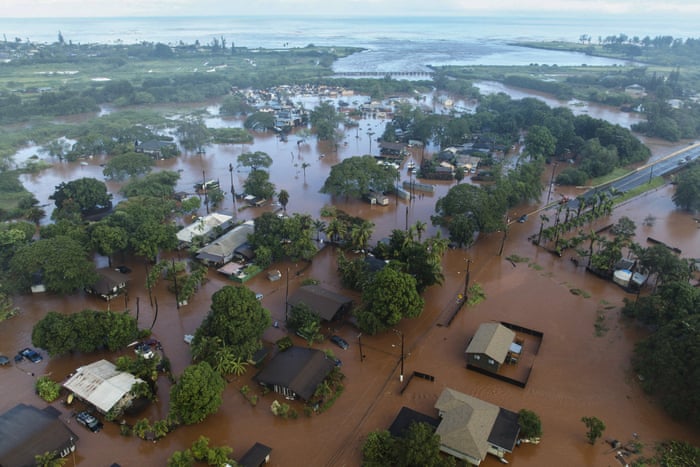
Emergency crews across Hawaii are continuing intensive search and rescue operations after severe flash flooding caused widespread damage, disrupted transportation, and forced evacuations in multiple communities. Authorities say the extreme weather event developed rapidly, overwhelming drainage systems and leaving residents trapped in homes, vehicles, and flooded neighborhoods.
Heavy rainfall triggered dangerous floodwaters across low-lying areas, with several regions experiencing sudden surges that turned streets into fast-moving rivers. Local emergency services, supported by federal response teams, have been working around the clock to locate missing individuals and assist families displaced by the disaster. Rescue teams are using helicopters, boats, and specialized equipment to reach areas cut off by floodwaters and debris.
Officials report that the flooding damaged homes, businesses, and public infrastructure, including roads and bridges. Power outages have also affected thousands of residents, complicating communication and slowing recovery efforts. Authorities have urged residents to remain cautious as floodwaters may continue to pose hidden dangers such as unstable structures, contaminated water, and blocked evacuation routes.
Weather experts say the flash floods were caused by an intense storm system that produced unusually high rainfall within a short period of time. Such sudden downpours can overwhelm natural waterways and urban drainage systems, particularly in island environments where mountainous terrain accelerates water flow toward coastal communities. Emergency management agencies continue to monitor weather conditions in case additional rainfall worsens the situation.
Local government leaders emphasized the importance of community cooperation during recovery efforts. Emergency shelters have been established for families forced to leave their homes, providing food, medical assistance, and temporary housing. Volunteers and humanitarian organizations are also supporting relief operations, helping distribute supplies and assist vulnerable populations.
Search teams remain focused on locating individuals who may still be missing, while engineers assess structural damage to ensure buildings and transportation routes are safe to use. Officials warn that recovery may take time due to the extent of the damage and the need for safety inspections before residents can fully return to affected areas.
Flash floods are among the most dangerous natural disasters because they can occur with little warning, leaving limited time for evacuation. Authorities stress that residents should continue following official guidance and avoid driving through flooded roads, where water depth and road stability may be difficult to judge.
Climate specialists note that extreme rainfall events have become more frequent in recent years, increasing the importance of preparedness and infrastructure resilience. Investments in early warning systems and flood prevention measures are considered essential to reduce risks in vulnerable regions.
As rescue operations continue, communities across Hawaii are working together to support recovery efforts and ensure the safety of residents. Officials say updates will be provided as more information becomes available about the number of people affected and the full extent of the damage.
Watch video below :