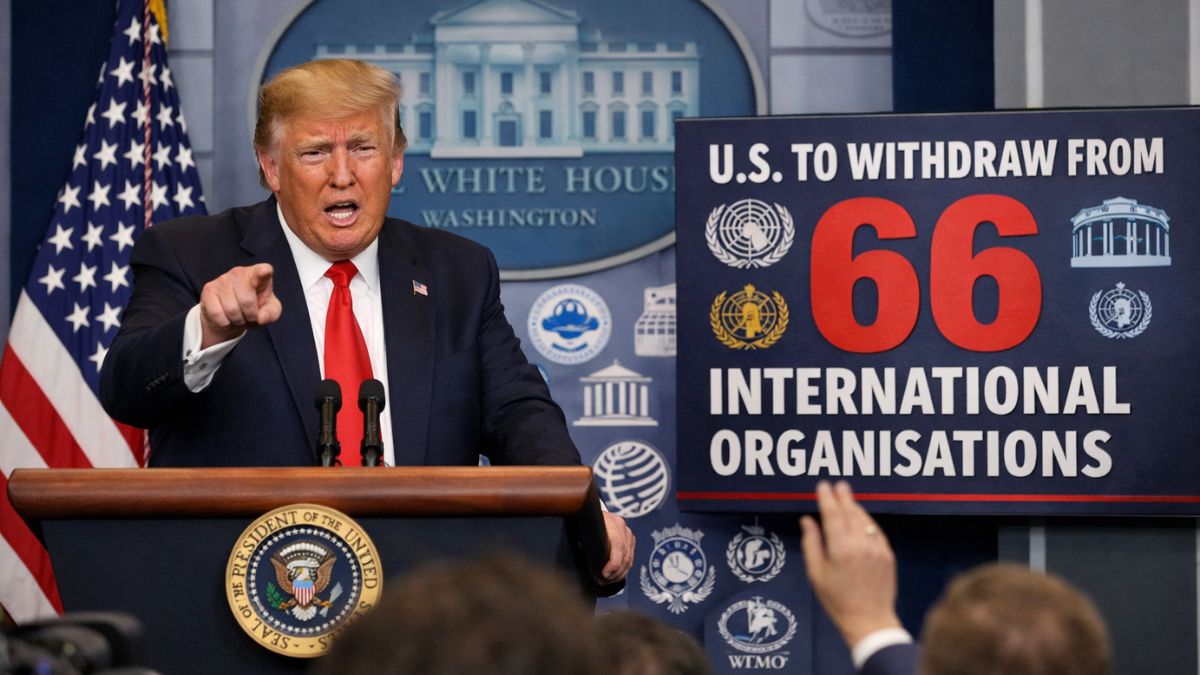
In a seismic shift that promises to redefine the landscape of global diplomacy, the United States has unveiled plans to withdraw from 66 international organizations. This drastic recalibration of foreign policy signals a move toward aggressive isolationism, fundamentally altering Washington’s relationship with the rest of the world. The decision marks one of the most significant retreats from international cooperation in modern history, sending shockwaves through capitals from Brussels to Beijing.
A Radical Reassessment of Alliances
The withdrawal proposal targets a broad spectrum of agencies, ranging from the well-known to the obscure. While the specific list remains fluid, reports indicate that the cuts could deeply affect participation in the United Nations (UN) specialized agencies, developmental banks, and environmental bodies. The administration argues that these organizations have overstepped their mandates, infringing on U.S. sovereignty and imposing financial burdens on American taxpayers without delivering tangible benefits. By severing these ties, the administration aims to prioritize “America First,” reclaiming autonomy from what it terms “globalist bureaucracy.”
The Geopolitical Vacuum
Critics and foreign policy experts warn that the sudden departure from 66 organizations will create a dangerous power vacuum. For decades, the U.S. has used its influence within these bodies to shape international norms, promote human rights, and check the aggression of rival powers. Without a seat at the table, adversaries like China and Russia are poised to fill the void, potentially rewriting the rules of global trade, maritime law, and human rights to favor authoritarian regimes.
Economic and Security Fallout
The ramifications of this withdrawal extend far beyond politics. Economically, U.S. businesses could lose access to critical forums that set standards for trade, telecommunications, and aviation, potentially putting American companies at a competitive disadvantage. On the security front, abandoning bodies involved in arms control and nuclear verification could lead to a new era of instability, as channels for dialogue and inspection are dismantled.
Allies in Disarray
European allies have reacted with alarm, viewing the move as an abandonment of the post-World War II international order. Diplomatic cables suggest frantic behind-the-scenes efforts to persuade the U.S. to reconsider, but the current administration appears resolved to dismantle the framework of multilateral engagement.
The End of an Era
As the machinery of withdrawal begins to turn, the world faces an uncertain future. This bold retreat marks the end of an era of American-led globalization. Whether this isolationist pivot will strengthen the U.S. or lead to its diminished standing on the world stage remains the most pressing question in international relations today. One thing is certain: the global order is fracturing, and the pieces are being picked up by those willing to lead.
Watch video below :