

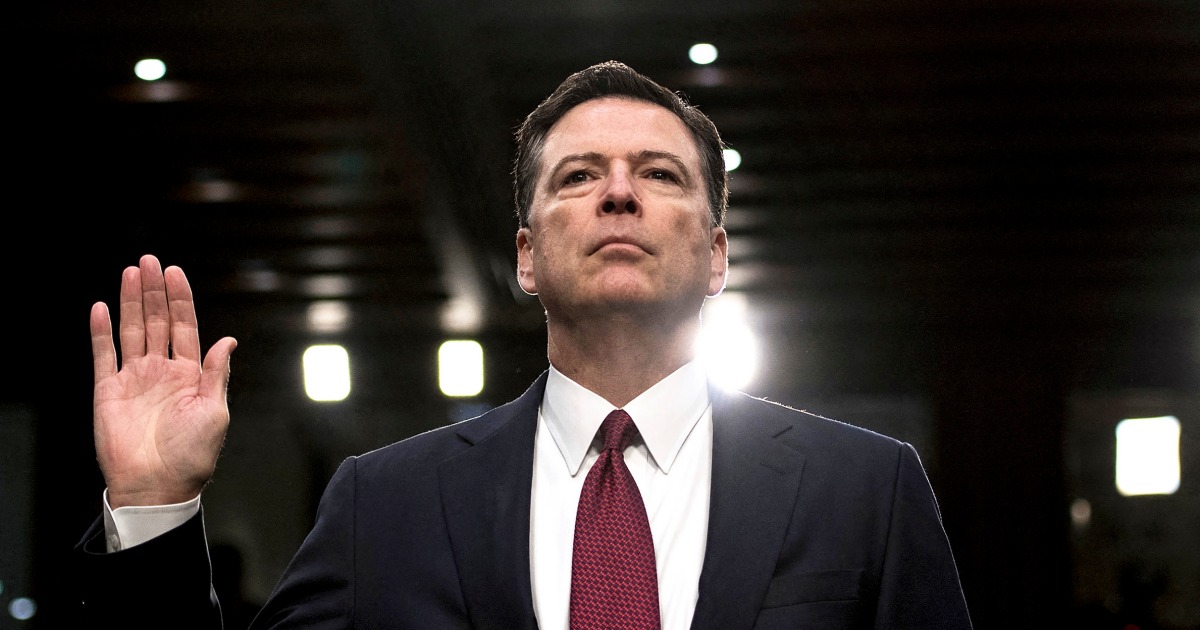
Former FBI Director James Comey has pleaded not guilty to federal charges accusing him of lying to Congress and obstructing a congressional investigation, marking another explosive chapter in the long-running political battle surrounding the former top law enforcement official.
Comey entered his plea Wednesday morning in federal court in Alexandria, Virginia, where he appeared calm and composed. Dressed in a dark suit and flanked by his legal team, Comey stood before U.S. District Judge Michael Nachmanoff as the charges were read aloud.
“I do, Your Honor,” Comey replied when asked if he understood the accusations.
The indictment, filed late last month, alleges that Comey knowingly misled lawmakers during a 2020 Senate Judiciary Committee hearing about his authorization for subordinates to discuss FBI investigations with the media — particularly regarding inquiries tied to Donald Trump and Hillary Clinton.
He faces two felony counts: making false statements to Congress and obstructing a congressional proceeding. If convicted, Comey could face significant fines and potential prison time.
Defense Claims the Case Is Politically Driven
Comey’s attorney, Patrick Fitzgerald, immediately denounced the charges as a “political hit job”, arguing that the case was resurrected by Trump-aligned officials inside the Justice Department.
“This is not justice — it’s retribution,” Fitzgerald told reporters outside the courthouse. “James Comey acted within his authority as FBI Director, and we intend to prove that this prosecution is driven by politics, not evidence.”
The defense team is expected to file motions to dismiss the case, citing selective prosecution and lack of credible proof that Comey’s testimony was intentionally misleading.
The Political Fallout
The case has reignited fierce partisan debate. Critics of the indictment — including former Justice Department officials — have warned that targeting a past FBI director risks undermining public confidence in the nation’s justice system.
Comey has long been a controversial figure in Washington, having led the FBI’s investigations into both Hillary Clinton’s email use and possible Trump campaign ties to Russia. His public fallout with Trump in 2017 led to his abrupt firing — an event that still shapes political divisions today.
Supporters of the prosecution argue that Comey must be held accountable if he lied under oath, stressing that “no one is above the law.” Meanwhile, his defenders insist the charges are an attempt to rewrite history and punish a vocal Trump critic.
What Comes Next
Comey was released on his own recognizance and is set to return to court for pretrial hearings in December. A tentative jury trial date has been set for January 5, 2026, though the defense hopes to have the charges thrown out before then.
As the political firestorm builds, Comey’s case could become a major flashpoint heading into the 2026 election season, testing both the boundaries of congressional oversight and the credibility of America’s justice system.
Watch video below :


