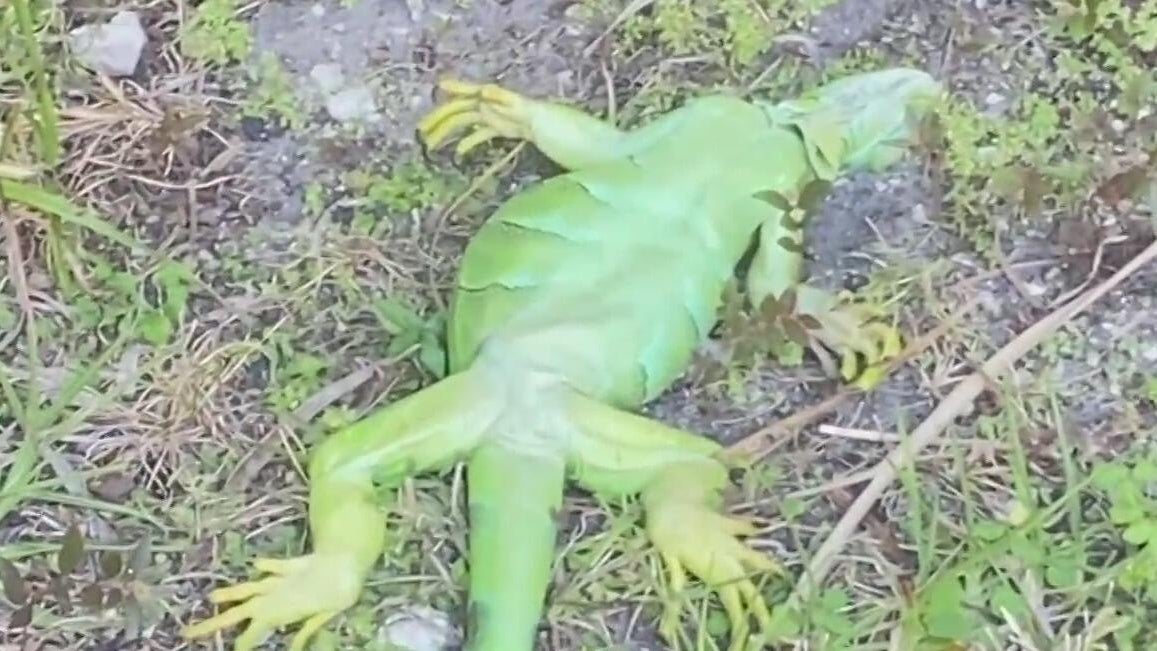
Florida officials have issued an emergency order authorizing the removal of cold-stunned iguanas as an unusual wave of winter weather sweeps across the state, causing temperatures to drop low enough to immobilize the cold-blooded reptiles.
The order comes as parts of Florida experience unseasonably cold conditions, particularly in central and southern regions where green iguanas, an invasive species, are commonly found. When temperatures fall below roughly 50 degrees Fahrenheit, iguanas can enter a state known as cold stunning, in which they become lethargic or temporarily immobile.
During these cold snaps, iguanas often lose their grip on tree branches and fall to the ground, sometimes startling residents and creating potential hazards in public areas. State wildlife officials stressed that while the animals may appear dead, many are still alive and could recover once temperatures rise.
Under the emergency order, trained professionals and authorized contractors are permitted to humanely remove cold-stunned iguanas from public spaces, roadways, and government properties. Officials say the measure is intended to protect public safety while addressing the environmental impact of the invasive species.
“Iguanas falling from trees can pose risks to pedestrians, drivers, and property,” one state official said. “This order allows for a swift response during extreme weather conditions.”
Green iguanas are not native to Florida and have long been considered a problematic invasive species. Wildlife experts say the reptiles damage infrastructure by burrowing into seawalls, sidewalks, and building foundations, while also threatening native vegetation and wildlife.
Florida has previously encouraged residents to humanely kill iguanas on private property without a permit, provided local laws are followed. However, officials emphasize that members of the public should not attempt to handle cold-stunned iguanas themselves, as the animals can still bite or scratch when threatened.
Authorities are urging residents to leave the animals alone and contact wildlife professionals if an iguana is found in a dangerous location. “If you see an iguana that appears lifeless, do not assume it is dead,” officials warned. “Many recover once the weather warms.”
The emergency order will remain in effect throughout the duration of the cold weather event. Meteorologists say temperatures are expected to gradually rebound, which will allow surviving iguanas to regain mobility.
Animal welfare groups have called for humane treatment during removals, while acknowledging the challenges Florida faces in managing invasive species. The state maintains that the order balances public safety, environmental protection, and responsible wildlife management.
The situation highlights the broader impact of extreme weather on Florida’s ecosystem, particularly on non-native species that are less adaptable to sudden temperature changes. As climate variability increases, officials say similar emergency measures may become more common.
For now, residents are advised to stay alert during cold mornings, especially in areas with dense vegetation, and to report any hazardous situations involving wildlife to local authorities.
Watch video below :