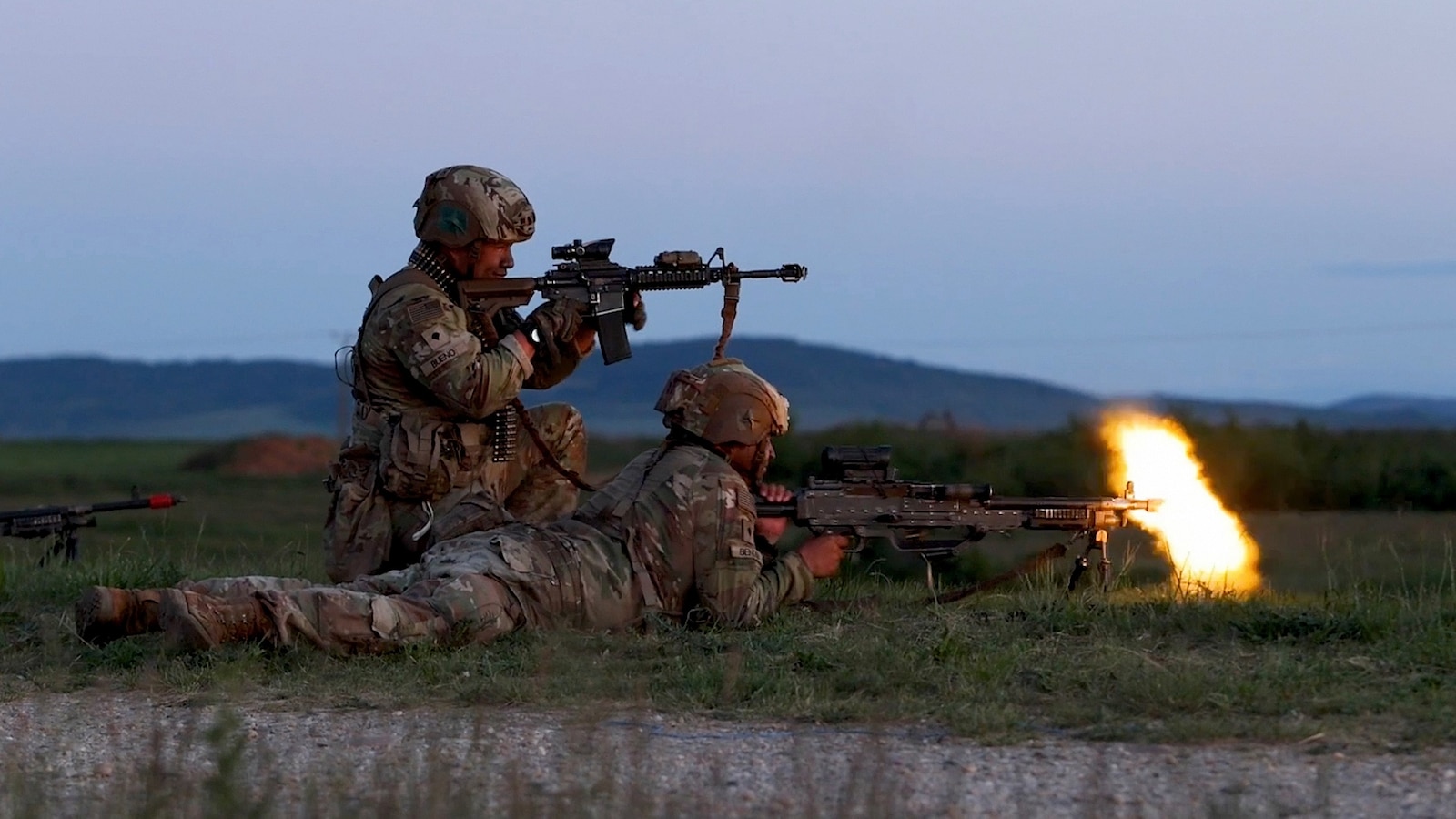
The first US ground forces have arrived in the Iran region as the conflict enters its second month, marking a potentially significant turning point in the ongoing war. The deployment signals a possible shift from primarily air and naval operations toward a broader military strategy that could involve limited ground missions.
According to defense sources, thousands of American troops, including Marines and rapid-response units, have been positioned in strategic locations across the Middle East. Military planners are reportedly preparing options for operations that could last several weeks, though officials emphasize that this does not necessarily indicate a full-scale invasion.
The arrival of ground forces comes after weeks of escalating tensions between Washington and Tehran. Since the conflict began, both sides have exchanged missile strikes and conducted operations targeting military infrastructure. Analysts say the deployment of troops on the ground gives military leaders greater flexibility in responding to changing battlefield conditions.
Iranian officials have responded with strong warnings, stating that any foreign ground presence would be met with force. Political leaders in Tehran claim their military is prepared to confront American troops if they enter Iranian territory. The statements highlight the risk that further escalation could expand the conflict beyond its current scope.
Reports indicate that approximately 3,500 Marines were recently deployed aboard amphibious assault ships to reinforce existing forces in the region. Additional airborne units are also believed to be on standby, providing rapid deployment capability if the situation deteriorates. Military experts note that such preparations are often designed to create strategic leverage during negotiations as well as to deter adversaries.
Diplomatic efforts to reduce tensions are ongoing. Regional powers including Pakistan, Saudi Arabia, Turkey, and Egypt have engaged in discussions aimed at preventing a wider war. However, progress toward a ceasefire remains uncertain, as both sides continue to maintain military readiness while publicly expressing openness to dialogue.
The conflict has also raised concerns about global energy stability. The strategic Strait of Hormuz remains a focal point due to its importance in international oil transportation. Any disruption to shipping routes could significantly impact global fuel prices and economic stability, increasing pressure on policymakers to avoid prolonged confrontation.
Security analysts suggest that the introduction of ground forces represents a critical phase in the conflict’s development. While officials have indicated that large-scale occupation is unlikely, even limited ground operations could increase the risk of miscalculation or unintended escalation. The presence of additional troops also signals that military planners are preparing for multiple scenarios, including rapid response missions or protection of key infrastructure.
As the war passes the one-month mark, global attention remains focused on whether diplomatic channels can reduce tensions before the conflict expands further. The deployment of US ground forces underscores the seriousness of the situation and highlights the growing uncertainty surrounding the trajectory of the Iran war.
Watch video below :