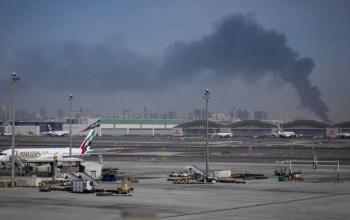
In a sobering development in the rapidly escalating conflict with Iran, the U.S. military confirmed the first American combat casualties since the joint U.S.–Israeli offensive began. Three U.S. service members have been killed and five others were seriously wounded during operations linked to the campaign, officials said Sunday, marking a major escalation in the conflict and underscoring the growing human cost of the confrontation.
The announcement came from U.S. Central Command (CENTCOM), which said the casualties occurred after Iranian forces launched retaliatory strikes on U.S. military positions and allies in the region following the initial U.S.–Israeli bombardment. Officials have not yet released the identities of the fallen U.S. troops, citing the standard practice of waiting until 24 hours after families are notified.
Details of the U.S. Casualties
According to CENTCOM, the three soldiers killed in action were part of combat operations against Iranian forces and proxy groups in the Middle East. Five additional U.S. service members were listed as “seriously wounded,” while several others sustained minor injuries, including shrapnel wounds and concussions.
The conflict that led to these casualties began late last week when the United States and Israel launched a coordinated military campaign against strategic Iranian military targets. The offensive, dubbed Operation Epic Fury by U.S. officials, reportedly included aerial bombardments on missile facilities, air defense positions, and command centers across Iran. Iranian state media has also reported significant damage and casualties within its own territory.
Iranian forces have responded with waves of ballistic missile and drone attacks targeting U.S. and allied military bases across the Gulf region, including locations in Kuwait, Bahrain, Qatar, and Iraq. These counterattacks appear to have been instrumental in the U.S. casualties, as Iranian strikes intensified in recent days.
Political Fallout and National Reaction
The confirmation of American deaths has already triggered political debate in the United States. President Donald Trump expressed grief and honored the fallen as “true patriots” in a public address, while also warning that the conflict could continue for several weeks. Trump acknowledged that U.S. forces might suffer additional losses as operations persist.
Domestic critics, including lawmakers and advocacy groups, have questioned the administration’s legal authority for a large-scale military campaign without explicit congressional approval. Some analysts argue that the heavy U.S. involvement risks drawing the country deeper into a broader regional war.
Regional and Global Impact
The impact of these first U.S. casualties extends beyond the battlefield. Markets reacted sharply to the news, with spikes in global oil prices and heightened volatility in financial sectors tied to geopolitical risk. Meanwhile, world leaders have urged restraint even as military operations continue.
As the conflict evolves, U.S. military officials emphasized that forces remain committed to defending personnel and allies in the Middle East. However, the announcement of the first American deaths highlights the unpredictable and deadly nature of the confrontation — one that could reshape regional security dynamics for years to come.
Watch video below :