

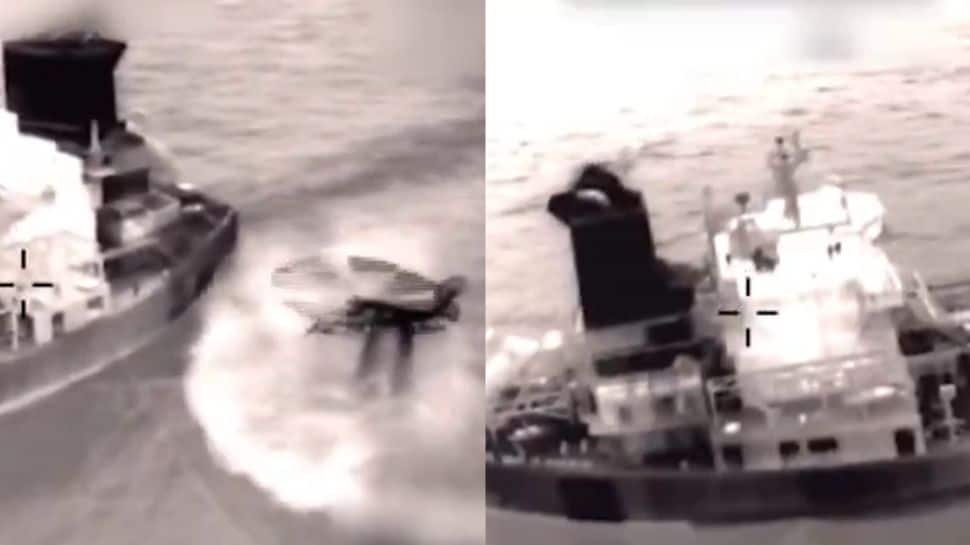
In a bold demonstration of maritime enforcement, United States authorities have seized another oil tanker in the Caribbean Sea, marking a significant escalation in the ongoing battle against illicit oil trafficking. The interception, carried out by U.S. federal agents and naval forces, underscores the Biden administration’s commitment to enforcing strict economic sanctions targeting rogue nations and their revenue streams. This latest operation sends a clear message to the global shipping industry: the waters of the Western Hemisphere remain heavily monitored, and violations of international law will not be tolerated.
The vessel, which was reportedly navigating through strategic shipping lanes, was intercepted based on intelligence indicating it was transporting illicit cargo. While the specific destination and origin of the oil are subject to ongoing verification, sources suggest the shipment was part of a sophisticated network designed to bypass U.S. sanctions. Such operations are typically linked to nations like Iran or Venezuela, who have increasingly turned to shadow fleets and deceptive shipping practices to monetize their natural resources amidst crippling economic embargoes.
A High-Stakes Game of Cat and Mouse
The seizure highlights the complex, high-stakes game of cat and mouse playing out on the high seas. Smuggling networks have become increasingly adept at masking their activities, utilizing techniques such as disabling Automatic Identification Systems (AIS), falsifying shipping documents, and conducting ship-to-ship transfers in remote areas to evade detection. However, the success of this recent interception points to the enhanced capabilities of U.S. surveillance and interdiction teams.
By seizing this tanker, the U.S. has not only disrupted a specific shipment but has likely struck a financial blow to the smuggling syndicate involved. The confiscation of the vessel and its cargo represents a multi-million dollar loss for the perpetrators, serving as a powerful deterrent against future sanctions evasion attempts.
Geopolitical Implications and Strategic Dominance
The Caribbean Sea serves as a critical maritime chokepoint, acting as a gateway for commerce destined for the U.S. East Coast and the Gulf of Mexico. By asserting control over this region, the United States safeguards its economic interests and national security. The seizure of the tanker is not merely a law enforcement action; it is a geopolitical maneuver designed to assert dominance and limit the financial reach of adversarial regimes.
Legal experts note that the process of seizing a foreign-flagged vessel in international waters involves intricate legal frameworks, often requiring cooperation from allied nations and rigorous evidence gathering. The fact that the U.S. proceeded with the seizure indicates strong intelligence and the political will to follow through on complex litigation.
The Future of Maritime Security
As this latest incident proves, the era of unchecked sanctions evasion is drawing to a close. The U.S. Department of Justice and the Navy are likely to continue ramping up operations in the region, employing advanced technology and interagency cooperation to track and intercept suspicious vessels.
For the energy markets and international shipping communities, this development serves as a stark reminder of the risks associated with non-compliance. As the investigation into the seized tanker unfolds, the world will be watching to see how this enforcement action shapes the behavior of maritime traders and the flow of illicit oil in the months to come.
Watch video below :


