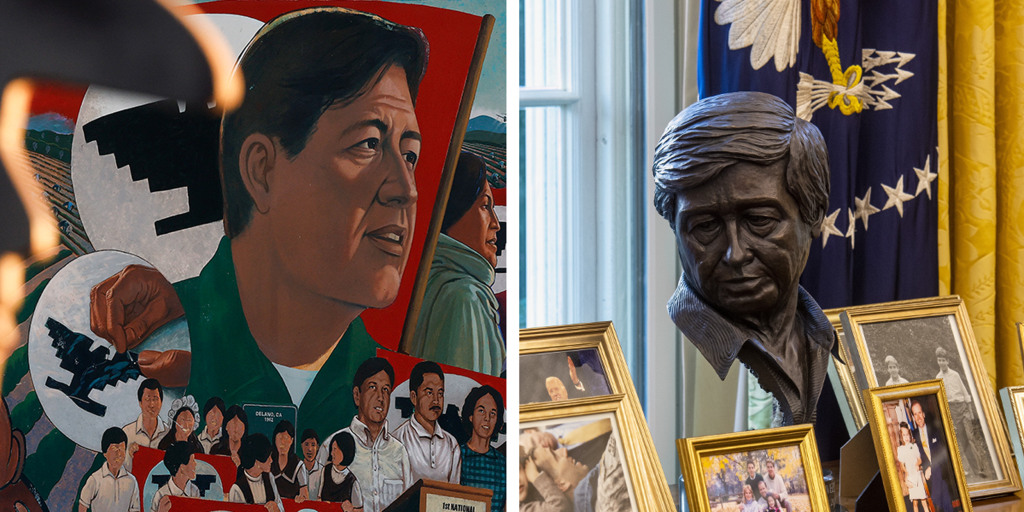
A growing political and social movement across California is pushing to remove the name of César Chávez from public spaces, including streets, schools, parks, and holidays, following explosive allegations that have triggered a statewide and national backlash.
The controversy erupted after a major investigative report revealed multiple allegations of sexual abuse against Chávez, a historically revered civil rights leader and co-founder of the United Farm Workers. The accusations include claims from several women, including prominent labor activist Dolores Huerta, who alleged misconduct dating back to the 1960s and 1970s.
In response, California lawmakers and local officials have moved quickly to distance public institutions from Chávez’s legacy. One of the most immediate actions is a proposal to rename “César Chávez Day” to “Farmworkers Day,” shifting the focus from an individual figure to the broader labor movement.
Beyond symbolic changes, cities across the state are now actively considering renaming streets, schools, and public buildings that bear Chávez’s name. In San Francisco, officials have already renamed the annual César Chávez Day Parade and are discussing potential changes to major landmarks, including streets and elementary schools.
Meanwhile, in Fresno—a region deeply tied to the farmworker movement—local leaders have taken decisive action. The city council has voted to remove Chávez’s name from a major boulevard, marking one of the most significant official reversals to date.
Educational institutions are also reassessing their connections to Chávez. Universities such as University of California, Berkeley and California State University, Fresno have begun reviewing programs, statues, and buildings named after him, with some already removing or covering tributes.
The scale of the potential changes is significant. According to reports, more than 130 locations across the United States—including dozens in California—are named after Chávez, ranging from schools and libraries to highways and community centers.
Supporters of the renaming efforts argue that public honors should reflect values of justice and accountability, especially in light of the allegations. Many leaders emphasize that the farmworker rights movement itself should still be recognized, but without elevating a single controversial figure.
However, the movement is not without opposition. Critics caution against making sweeping decisions based on allegations that have not been fully adjudicated, while others argue that Chávez’s historical contributions to labor rights should not be erased entirely.
The debate highlights a broader national reckoning over how historical figures are remembered. As communities weigh the balance between legacy and accountability, California has become the focal point of a rapidly evolving conversation about public memory, social justice, and the standards by which influential leaders are judged.
With legislative proposals advancing and local governments taking action, the removal of César Chávez’s name from public spaces could mark one of the most significant symbolic shifts in modern U.S. history.
Watch video below :