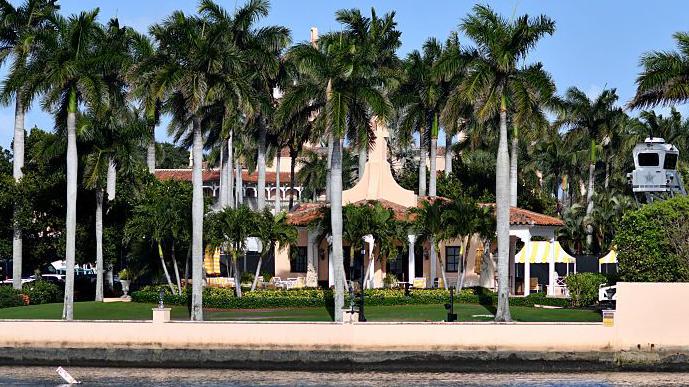
In a surprising political development, a Democratic candidate has flipped a key Florida legislative district that includes President Donald Trump’s Mar-a-Lago residence, marking a significant upset in a traditionally Republican stronghold. The victory is being widely interpreted as an early signal of shifting political momentum ahead of the 2026 midterm elections.
Democrat Emily Gregory secured victory in a special election for Florida’s 87th House District, defeating Republican candidate Jon Maples, who had received backing from Trump. The district, located in Palm Beach County, has historically leaned Republican and was previously won by a GOP candidate by a large margin in 2024.
Gregory’s win represents a notable shift in voter sentiment in an area closely associated with Trump, whose Mar-a-Lago estate is located within the district. Political analysts view the result as an important indicator of voter attitudes toward economic issues such as rising housing costs, insurance premiums, and general cost-of-living pressures, which were central themes in the Democratic campaign.
The closely watched race attracted national attention due to its symbolic significance. Mar-a-Lago has long served as a political hub for Trump and his allies, making the district a key battleground in assessing grassroots support for both major parties. Gregory’s victory margin was narrow, reportedly by only a few percentage points, but its impact could extend beyond local politics.
Democratic organizations described the outcome as evidence that traditionally conservative areas may be more competitive than previously expected. Some analysts suggest the result could energize Democratic efforts to compete in similar districts across the country, particularly in suburban areas where economic concerns are influencing voting patterns.
Republican strategists, however, have cautioned against drawing broad conclusions from a single special election, noting that turnout levels in such contests are typically lower than in general elections. They argue that local factors, candidate dynamics, and campaign strategies often play a larger role in special elections than national political trends.
The race also drew attention because Trump publicly supported the Republican candidate, underscoring the broader political significance of the contest. Despite the endorsement, the Democratic candidate was able to secure enough support to flip the seat, highlighting potential vulnerabilities for Republicans in certain regions ahead of upcoming electoral battles.
Gregory, a first-time candidate and small business owner, emphasized practical policy concerns during her campaign, focusing on affordability issues affecting Florida residents. Her campaign messaging resonated with voters who expressed concerns about rising everyday expenses and economic uncertainty.
The outcome adds to growing speculation about the competitiveness of the 2026 election cycle, particularly in districts that have historically favored Republican candidates. While it remains unclear whether the result signals a broader trend, the election has intensified national attention on Florida as a potential battleground state in upcoming contests.
As political campaigns accelerate toward the midterm elections, both parties are expected to closely analyze the results of this race as they refine strategies aimed at persuading undecided voters and strengthening their support base.
Watch video below :