

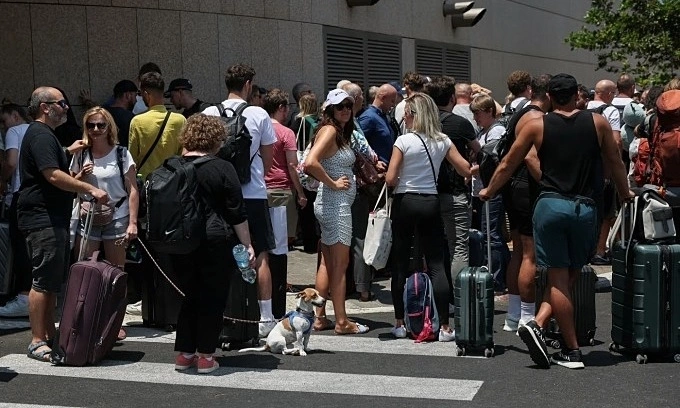
Flights departing from Atlanta to destinations across the Middle East have been cancelled or significantly disrupted following missile strikes in Iran, triggering a wave of regional airspace closures and global aviation alerts.
Airlines moved quickly to suspend operations after escalating military activity raised serious safety concerns for civilian aircraft. Several Middle Eastern countries temporarily shut down or restricted their airspace as a precautionary measure, forcing carriers to cancel, delay, or reroute long-haul flights that typically pass through the region.
As one of the busiest aviation hubs in the world, Hartsfield–Jackson Atlanta International Airport serves as a key departure point for travelers heading to major Middle Eastern cities. Routes connecting Atlanta to hubs such as Dubai, Doha, and Tel Aviv have been directly impacted by the unfolding crisis.
Major U.S. airlines, including Delta Air Lines, United Airlines, and American Airlines, announced temporary suspensions or operational adjustments for select Middle East routes. In some cases, flights were cancelled outright; in others, aircraft were rerouted to avoid restricted airspace, leading to extended travel times and logistical challenges.
The disruption stems from heightened security risks following missile launches and retaliatory strikes tied to the escalating conflict involving Iran. Aviation authorities determined that flying through affected corridors could pose unacceptable safety threats, prompting swift and widespread action across the industry.
Beyond Atlanta, airports across the United States and Europe have reported ripple effects. The Middle East functions as a critical transit corridor linking North America with Asia and parts of Africa. When that corridor is compromised, global flight networks are forced to adapt quickly — often resulting in widespread delays, stranded passengers, and mounting costs for airlines.
Travelers scheduled to depart from Atlanta to Middle Eastern destinations are being advised to check directly with their airline before heading to the airport. Carriers are offering rebooking options, refunds, or alternative routing depending on availability and evolving conditions. However, experts warn that schedule instability may continue until regional airspace restrictions are lifted and security conditions improve.
Industry analysts note that aviation disruptions can have broader economic consequences. Airlines face increased fuel expenses from rerouted flights, potential crew displacement issues, and logistical strain. In turn, passengers may experience higher ticket prices if prolonged instability affects capacity and operational costs.
For now, aviation authorities continue to monitor developments closely. The duration of cancellations will depend on how the geopolitical situation unfolds in the coming days. Until stability returns to the region, travelers from Atlanta and other major U.S. hubs should prepare for continued uncertainty when flying to or through the Middle East.
As the situation remains fluid, airlines are expected to issue ongoing updates, adjusting schedules in real time to ensure passenger safety remains the top priority.
Watch video below :


