

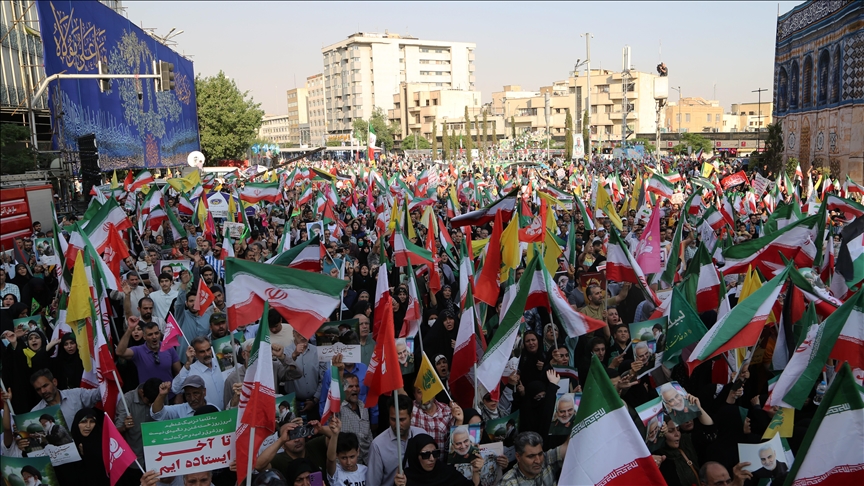
Tens of anti-war protesters gathered in Los Angeles and other U.S. cities over the weekend to condemn the recent military strikes by the United States and Israel against Iran. The demonstrations reflect growing public concern that the conflict in the Middle East could escalate into a broader and more destructive war.
Although specific Los Angeles reporting is limited in available sources, anti-war demonstrations have been documented across the United States, with crowds taking to the streets to oppose the joint military action against Iran and urge political leaders to pursue diplomacy instead of violence. Large rallies and marches occurred in major cities such as New York, Chicago, and Washington, D.C., with protestors holding signs demanding an end to war and chanting for peace.
At these protests, participants expressed deep concern about the human, economic, and geopolitical impacts of the strikes. Demonstrators carried slogans like “Stop the War on Iran,” “No New U.S. War in the Middle East,” and “Invest in Education and Healthcare, Not War.” Many emphasized that military intervention should not be used as a first resort, especially after decades of costly and prolonged conflicts in the region.
Activists also raised worries about civilian casualties in Iran and beyond, highlighting recent reports of harm to non-military targets in the wake of the attacks. Protesters argued that continued military escalation only deepens instability and fuels anti-American sentiment, potentially leading to further violence and geopolitical fallout.
Organized groups, including peace coalitions, student organizations, and community activists, helped mobilize the crowds. Some marchers in Los Angeles and nationwide linked their demonstrations to broader calls for reallocating government spending toward social services and infrastructure rather than conflict.
While these protests represent a significant and vocal segment of public opinion, they are part of a wider national response that also includes counter-demonstrations by supporters of the military strikes. In capitals like Washington, D.C., both pro-war and anti-war groups have publicly debated U.S. foreign policy direction, underscoring deep divisions over the country’s role in international conflicts.
In Los Angeles, the anti-war movement has drawn solidarity from diverse communities, reflecting not only opposition to the specific strikes on Iran but also a broader desire for peaceful resolution and diplomatic engagement. As the situation in the Middle East continues to unfold, protests are likely to continue, with organizers planning additional rallies and actions to press political leaders for peaceful alternatives to military escalation.
Watch video below :


