

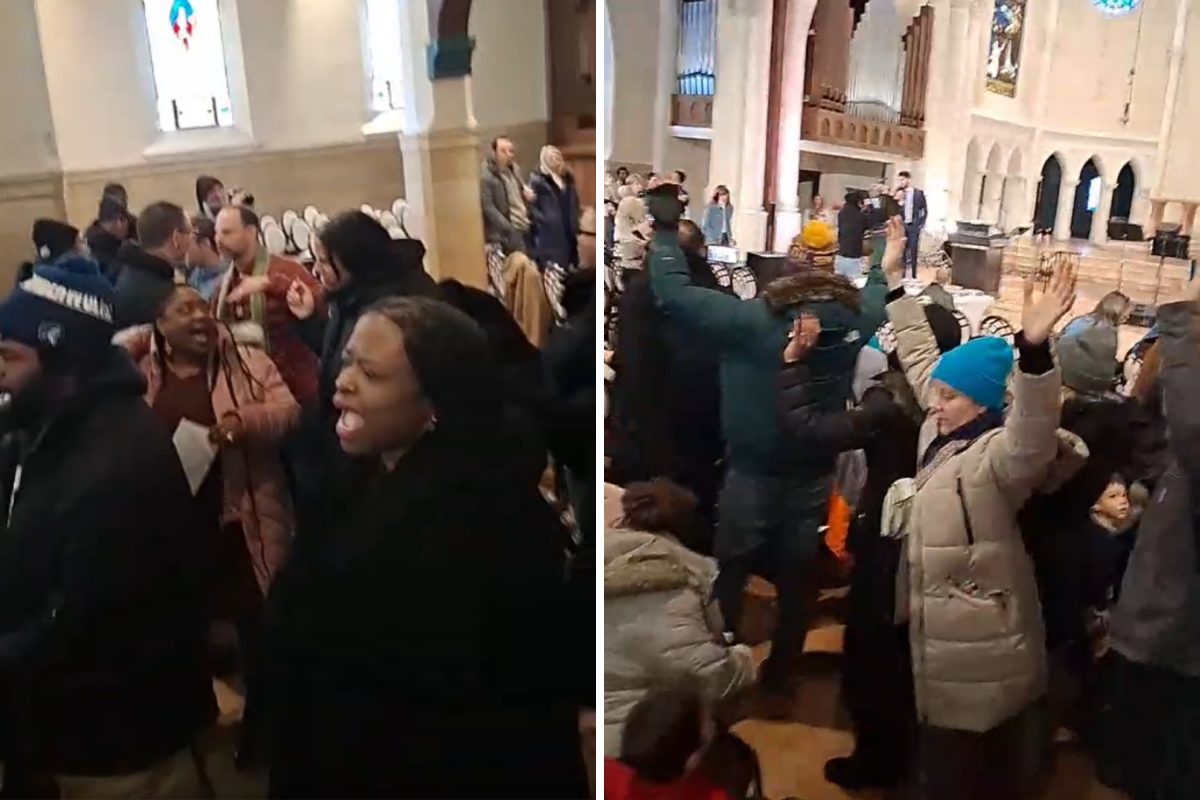
A controversial protest in Minnesota has drawn national attention after anti-ICE activists disrupted a church service in St. Paul, raising intense debate over immigration policy, civil rights, and religious freedom as demonstrations against federal enforcement continue across the state.
The incident occurred on a recent Sunday at Cities Church in St. Paul, where a group of activists entered the sanctuary during worship. Protesters chanted slogans referencing ICE (U.S. Immigration and Customs Enforcement) and statements demanding justice over recent actions by federal agents. Demonstrators said they were targeting the church because one of its leaders, David Easterwood, is alleged to also serve as a senior ICE official overseeing local operations—an overlap that critics described as a troubling conflict given rising tensions over immigration enforcement in the Twin Cities.
Video circulating on social media shows protesters chanting “ICE out!” and “Justice for Renee Good,” referring to a woman previously killed by an ICE agent during a federal operation in Minneapolis earlier this month. The disruption forced the worship service to conclude early as congregants and families were confronted with the unexpected interruption.
The U.S. Department of Justice quickly responded, announcing an investigation into whether the protest violated federal civil rights laws protecting religious worship. DOJ officials described the disruption as a possible desecration of a house of worship and pledged that those responsible could face charges. In the days that followed, at least two activists were arrested in connection with the event, including prominent community figures involved in the protest.
Legal experts note that churches and places of worship are protected under federal law from obstruction and interference, and authorities have emphasized that peaceful protest does not extend to interrupting a religious service. However, activists and supporters of the demonstration argue that bringing attention to federal immigration enforcement practices—especially in light of recent fatalities and high-profile raids—is a form of political speech that should not be ignored.
The church’s leadership issued statements condemning the action, emphasizing that worship spaces should remain respectful and free from political disruption. Religious leaders from other denominations also voiced support for protecting the sanctity of worship and criticized the protest as an overreach that could intimidate congregations and families.
The protest comes amid broader unrest in Minnesota, where thousands of residents have participated in marches, strikes, and economic shutdowns to oppose federal immigration policies. Recent demonstrations have included large protests in Minneapolis and surrounding areas, with some calling for ICE’s removal from the state and demanding accountability for actions taken by federal agents during enforcement operations.
An appeals court recently rejected a Justice Department effort to bring additional charges against more protesters involved in the church disruption, ruling that the evidence presented was insufficient to justify new warrants. The DOJ may pursue further legal action, but the court’s decision highlights the complex legal terrain surrounding protests, civil liberties, and federal enforcement.
As protests continue to unfold across the Twin Cities, the church disruption remains a flashpoint in the broader national discussion over immigration enforcement, protest rights, and the boundaries of lawful activism in public and private spaces.
Watch video below :


